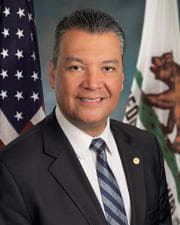
What’s My Rep Doing

Last sync: Oct 29, 2026, 10:27 PM UTC

Members

P000145

Alex Padilla

DemocraticCaliforniaCurrent Member
Sponsored
114
Cosponsored
696
Birth Year
1973

Stated Priorities & Legislative Record

Congress 119 · Automated analysis

Reviewed comparisons point both waysAll topics

511 reviewed comparisons · 184 scored · 178 measures

Comparison balance
+1.2/ 2
Supportive
180
Mixed
3
Opposing
1
Unscored
327

Civil Rights

Sponsored
3
Cosponsored
26
Linked House votes
0

What they say Official statements

Expand and preserve voting rights.

Stated commitment

“That’s why he’s spent his career fighting to expand and preserve voting rights.”

Alex Padilla U.S. Senator for California · Captured 2026-10-28

Protect the civil rights of all Americans.

Stated commitment

“And because Alex believes in an America made stronger by its diversity, he’s consistently fought to protect the civil rights of all Americans.”

Alex Padilla U.S. Senator for California · Captured 2026-10-28

Protect access to abortion services throughout the United States.

Stated commitment

“As a cosponsor of the Women’s Health Protection Act, Alex is fighting to protect access to abortion services throughout the United States.”

Alex Padilla U.S. Senator for California · Captured 2026-10-28

Protect a patient's right to travel freely between states to access care.

Stated commitment

“While Republican-led state legislatures work to strip away reproductive rights, he’s also fighting to protect a patient’s right to travel freely between states to access care.”

Alex Padilla U.S. Senator for California · Captured 2026-10-28

Take bold action from Congress to protect one of our most basic freedoms.

Stated commitment

“As the radical right wing of the Supreme Court strips away the rights of Americans, Alex believes we need bold action from Congress to protect one of our most basic freedoms.”

Alex Padilla U.S. Senator for California · Captured 2026-10-28

What they do Legislative evidence

SRES 781 · A resolution commemorating June 19, 2026, as "Juneteenth National Independence Day" in recognition of June 19, 1865, the date on which news of the end of slavery reached the slaves in the Southwestern States.

Cosponsor

No direct connectionCosponsorship · Reviewed automated analysis

Compared with: Protect access to abortion services throughout the United States.

The stated policy goal is to protect access to abortion services throughout the United States, but the only cited action is cosponsoring a Juneteenth commemoration resolution. That resolution concerns a historical commemoration and does not contain a substantive abortion-policy mechanism, so there is no direct connection to the specific goal. The supplied passage is summary-only and offers no evidence about abortion access.

“As a cosponsor of the Women’s Health Protection Act, Alex is fighting to protect access to abortion services throughout the United States.”

Official statement · Captured 2026-10-28

Opposing provisions

“This resolution commemorates June 19, 2026, as Juneteenth National Independence Day to recognize and observe the end of slavery in the United States.”
Official legislative summary

Summary-based analysis · Action predates captured statement

Assessed 2026-10-28 · Review: User-authorized automated publication. Published at the user request after the bounded production backfill. Automated evidence validation passed; comparisons have not been individually audited.

No direct connectionCosponsorship · Reviewed automated analysis

Compared with: Expand and preserve voting rights.

The stated policy goal is to expand and preserve voting rights, but the cosponsored item is a commemorative resolution about Juneteenth and the end of slavery. The provided passage does not describe any voting-rights mechanism, enforcement, access rule, or election-related provision, so there is no direct basis to compare the action to the specific policy goal.

“That’s why he’s spent his career fighting to expand and preserve voting rights.”

Official statement · Captured 2026-10-28

Official legislative summary

Summary-based analysis · Action predates captured statement

Assessed 2026-10-28 · Review: User-authorized automated publication. Published at the user request after the bounded production backfill. Automated evidence validation passed; comparisons have not been individually audited.

No direct connectionCosponsorship · Reviewed automated analysis

Compared with: Protect a patient's right to travel freely between states to access care.

The stated policy goal is to protect a patient’s right to travel freely between states to access care, which is a reproductive/access-to-care issue. The cosponsored resolution only commemorates Juneteenth and recognizes the end of slavery; it does not address interstate travel, patient access, or reproductive rights, so there is no direct substantive connection to the specific policy goal.

“While Republican-led state legislatures work to strip away reproductive rights, he’s also fighting to protect a patient’s right to travel freely between states to access care.”

Official statement · Captured 2026-10-28

Official legislative summary

Summary-based analysis · Action predates captured statement

Assessed 2026-10-28 · Review: User-authorized automated publication. Published at the user request after the bounded production backfill. Automated evidence validation passed; comparisons have not been individually audited.

Partly supportsCosponsorship · Reviewed automated analysis

Compared with: Protect the civil rights of all Americans.

The cosponsorship of a resolution commemorating Juneteenth is a meaningful, but narrow, symbolic support for recognizing the end of slavery and the historical struggle for freedom. That aligns with a general civil-rights framing, but it does not directly advance a broad policy program to protect the civil rights of all Americans through enforceable legal protections. The evidence is limited to commemorative recognition rather than substantive civil-rights legislation.

“And because Alex believes in an America made stronger by its diversity, he’s consistently fought to protect the civil rights of all Americans.”

Official statement · Captured 2026-10-28

Supporting provisions

“This resolution commemorates June 19, 2026, as Juneteenth National Independence Day to recognize and observe the end of slavery in the United States.”
Official legislative summary

Summary-based analysis · Action predates captured statement · Narrower scope

Assessed 2026-10-28 · Review: User-authorized automated publication. Published at the user request after the bounded production backfill. Automated evidence validation passed; comparisons have not been individually audited.

No direct connectionCosponsorship · Reviewed automated analysis

Compared with: Take bold action from Congress to protect one of our most basic freedoms.

The stated policy goal is a broad call for Congress to take bold action to protect a basic freedom, but the only cited action is cosponsoring a commemorative Juneteenth resolution. That resolution recognizes the end of slavery and a historic observance; it does not itself enact or advance a specific freedom-protection measure. Because the action is ceremonial rather than a direct policy mechanism, a defensible substantive comparison cannot be made.

“As the radical right wing of the Supreme Court strips away the rights of Americans, Alex believes we need bold action from Congress to protect one of our most basic freedoms.”

Official statement · Captured 2026-10-28

Opposing provisions

“This resolution commemorates June 19, 2026, as Juneteenth National Independence Day to recognize and observe the end of slavery in the United States.”
Official legislative summary

Summary-based analysis · Action predates captured statement

Assessed 2026-10-28 · Review: User-authorized automated publication. Published at the user request after the bounded production backfill. Automated evidence validation passed; comparisons have not been individually audited.

“This resolution commemorates June 19, 2026, as Juneteenth National Independence Day to recognize and observe the end of slavery in the United States.”
Official summary source
S 4701 · Freedom to Travel for Health Care Act of 2026

Cosponsor

No direct connectionCosponsorship · Reviewed automated analysis

Compared with: Expand and preserve voting rights.

The quoted priority is about expanding and preserving voting rights, but the cosponsored bill concerns access to out-of-state reproductive health care and enforcement against interference with that access. That is a different policy area, so this action does not directly support or oppose the stated voting-rights goal.

“That’s why he’s spent his career fighting to expand and preserve voting rights.”

Official statement · Captured 2026-10-28

Supporting provisions

“Freedom to Travel for Health Care Act of 2026 This bill prohibits anyone from interfering with a person's ability to access out-of-state reproductive health care.”
“Specifically, the bill prohibits anyone from restricting, discriminating against, or otherwise disadvantaging anyone who receives, provides, or assists with out-of-state reproductive health care that is legal in the state in which it is provided.”
“The bill allows the Department of Justice to bring a civil action and establishes a private right of action for violations.”
“The bill specifically waives any applicable governmental immunity and preempts any contravening state laws.”
Official legislative summary

Summary-based analysis · Action predates captured statement

Assessed 2026-10-28 · Review: User-authorized automated publication. Published at the user request after the bounded production backfill. Automated evidence validation passed; comparisons have not been individually audited.

Partly supportsCosponsorship · Reviewed automated analysis

Compared with: Protect access to abortion services throughout the United States.

The cosponsorship meaningfully supports access to abortion services in one important way: it would protect people’s ability to obtain legal out-of-state reproductive health care, including the termination of a pregnancy, and would bar interference or discrimination tied to that travel. However, the action is narrower than the stated goal of protecting access to abortion services throughout the United States because it addresses interstate access to legal out-of-state care rather than a broader nationwide right or availability of abortion services in every state.

“As a cosponsor of the Women’s Health Protection Act, Alex is fighting to protect access to abortion services throughout the United States.”

Official statement · Captured 2026-10-28

Supporting provisions

“Freedom to Travel for Health Care Act of 2026 This bill prohibits anyone from interfering with a person's ability to access out-of-state reproductive health care.”
“(Reproductive health care is defined as medical, surgical, counseling, or referral services and care related to pregnancy, including the prevention or termination of a pregnancy, and other reproductive care.)”
“Specifically, the bill prohibits anyone from restricting, discriminating against, or otherwise disadvantaging anyone who receives, provides, or assists with out-of-state reproductive health care that is legal in the state in which it is provided.”
“The bill allows the Department of Justice to bring a civil action and establishes a private right of action for violations.”
“The bill specifically waives any applicable governmental immunity and preempts any contravening state laws.”
Official legislative summary

Summary-based analysis · Action predates captured statement · Narrower scope

Assessed 2026-10-28 · Review: User-authorized automated publication. Published at the user request after the bounded production backfill. Automated evidence validation passed; comparisons have not been individually audited.

Partly supportsCosponsorship · Reviewed automated analysis

Compared with: Protect the civil rights of all Americans.

The cosponsored bill would protect access to out-of-state reproductive health care by banning interference, discrimination, and disadvantage against people who receive, provide, or assist with that care, with enforcement through DOJ and a private right of action. That meaningfully advances civil-rights protections for a specific area of personal liberty and equal treatment, but it is narrower than a broad pledge to protect the civil rights of all Americans because it focuses on reproductive health care and travel rather than civil rights generally.

“And because Alex believes in an America made stronger by its diversity, he’s consistently fought to protect the civil rights of all Americans.”

Official statement · Captured 2026-10-28

Supporting provisions

“Freedom to Travel for Health Care Act of 2026 This bill prohibits anyone from interfering with a person's ability to access out-of-state reproductive health care.”
“Specifically, the bill prohibits anyone from restricting, discriminating against, or otherwise disadvantaging anyone who receives, provides, or assists with out-of-state reproductive health care that is legal in the state in which it is provided.”
“The bill allows the Department of Justice to bring a civil action and establishes a private right of action for violations.”
“The bill specifically waives any applicable governmental immunity and preempts any contravening state laws.”
Official legislative summary

Summary-based analysis · Action predates captured statement · Narrower scope

Assessed 2026-10-28 · Review: User-authorized automated publication. Published at the user request after the bounded production backfill. Automated evidence validation passed; comparisons have not been individually audited.

Strongly supportsCosponsorship · Reviewed automated analysis

Compared with: Protect a patient's right to travel freely between states to access care.

The cosponsored bill directly advances the stated goal by protecting a patient's ability to travel out of state to obtain reproductive health care. Its core mechanism is to prohibit interference with access to out-of-state reproductive health care, and it also bars restrictions or discrimination against people who receive, provide, or assist with that care. The preemption of conflicting state laws further strengthens that protection. The bill is narrower than a general interstate travel right because it is limited to reproductive health care, but it still directly supports the quoted policy goal.

“While Republican-led state legislatures work to strip away reproductive rights, he’s also fighting to protect a patient’s right to travel freely between states to access care.”

Official statement · Captured 2026-10-28

Supporting provisions

“Freedom to Travel for Health Care Act of 2026 This bill prohibits anyone from interfering with a person's ability to access out-of-state reproductive health care.”
“Specifically, the bill prohibits anyone from restricting, discriminating against, or otherwise disadvantaging anyone who receives, provides, or assists with out-of-state reproductive health care that is legal in the state in which it is provided.”
“The bill specifically waives any applicable governmental immunity and preempts any contravening state laws.”
Official legislative summary

Summary-based analysis · Action predates captured statement · Narrower scope

Assessed 2026-10-28 · Review: User-authorized automated publication. Published at the user request after the bounded production backfill. Automated evidence validation passed; comparisons have not been individually audited.

Strongly supportsCosponsorship · Reviewed automated analysis

Compared with: Take bold action from Congress to protect one of our most basic freedoms.

The stated goal is to take bold action from Congress to protect a basic freedom, and the cosponsored bill directly advances that by prohibiting interference with access to out-of-state reproductive health care, including travel for legal care, and by creating enforcement mechanisms. This is a direct substantive fit, not merely thematic.

“As the radical right wing of the Supreme Court strips away the rights of Americans, Alex believes we need bold action from Congress to protect one of our most basic freedoms.”

Official statement · Captured 2026-10-28

Supporting provisions

“Freedom to Travel for Health Care Act of 2026 This bill prohibits anyone from interfering with a person's ability to access out-of-state reproductive health care.”
“Specifically, the bill prohibits anyone from restricting, discriminating against, or otherwise disadvantaging anyone who receives, provides, or assists with out-of-state reproductive health care that is legal in the state in which it is provided.”
“The bill allows the Department of Justice to bring a civil action and establishes a private right of action for violations.”
“The bill specifically waives any applicable governmental immunity and preempts any contravening state laws.”
Official legislative summary

Summary-based analysis · Action predates captured statement

Assessed 2026-10-28 · Review: User-authorized automated publication. Published at the user request after the bounded production backfill. Automated evidence validation passed; comparisons have not been individually audited.

“Freedom to Travel for Health Care Act of 2026 This bill prohibits anyone from interfering with a person's ability to access out-of-state reproductive health care.”
Official summary source
SRES 720 · A resolution recognizing the significance of Asian American, Native Hawaiian, and Pacific Islander Heritage Month as an important time to celebrate the significant contributions of Asian Americans, Native Hawaiians, and Pacific Islanders to the history of the United States.

Cosponsor

No direct connectionCosponsorship · Reviewed automated analysis

Compared with: Protect access to abortion services throughout the United States.

The stated policy goal is to protect access to abortion services throughout the United States. The cited action is cosponsorship of a heritage-month resolution about Asian American, Native Hawaiian, and Pacific Islander contributions, which has no direct substantive connection to abortion access. No supporting or opposing abortion-policy mechanism appears in the supplied passage.

“As a cosponsor of the Women’s Health Protection Act, Alex is fighting to protect access to abortion services throughout the United States.”

Official statement · Captured 2026-10-28

Opposing provisions

“This resolution recognizes the significance of Asian American, Native Hawaiian, and Pacific Islander Heritage Month as an important time to celebrate the significant contributions of Asian Americans, Native Hawaiians, and Pacific Islanders to the history of the United States.”
Official legislative summary

Summary-based analysis · Action predates captured statement

Assessed 2026-10-28 · Review: User-authorized automated publication. Published at the user request after the bounded production backfill. Automated evidence validation passed; comparisons have not been individually audited.

No direct connectionCosponsorship · Reviewed automated analysis

Compared with: Expand and preserve voting rights.

The stated goal is to expand and preserve voting rights, but the cited action is cosponsoring a heritage-month resolution about recognizing and celebrating Asian American, Native Hawaiian, and Pacific Islander contributions. That is a symbolic commemoration and does not directly address voting rights policy or protections.

“That’s why he’s spent his career fighting to expand and preserve voting rights.”

Official statement · Captured 2026-10-28

Opposing provisions

“This resolution recognizes the significance of Asian American, Native Hawaiian, and Pacific Islander Heritage Month as an important time to celebrate the significant contributions of Asian Americans, Native Hawaiians, and Pacific Islanders to the history of the United States.”
Official legislative summary

Summary-based analysis · Action predates captured statement

Assessed 2026-10-28 · Review: User-authorized automated publication. Published at the user request after the bounded production backfill. Automated evidence validation passed; comparisons have not been individually audited.

No direct connectionCosponsorship · Reviewed automated analysis

Compared with: Protect the civil rights of all Americans.

The cited action is a cosponsorship of a heritage-month resolution celebrating the contributions of Asian American, Native Hawaiian, and Pacific Islander communities. That is a broad recognition/commemoration measure, not a direct policy action protecting civil rights, and the supplied passage does not address legal rights, enforcement, or civil-rights protections for all Americans.

“And because Alex believes in an America made stronger by its diversity, he’s consistently fought to protect the civil rights of all Americans.”

Official statement · Captured 2026-10-28

Opposing provisions

“This resolution recognizes the significance of Asian American, Native Hawaiian, and Pacific Islander Heritage Month as an important time to celebrate the significant contributions of Asian Americans, Native Hawaiians, and Pacific Islanders to the history of the United States.”
Official legislative summary

Summary-based analysis · Action predates captured statement · Narrower scope

Assessed 2026-10-28 · Review: User-authorized automated publication. Published at the user request after the bounded production backfill. Automated evidence validation passed; comparisons have not been individually audited.

No direct connectionCosponsorship · Reviewed automated analysis

Compared with: Protect a patient's right to travel freely between states to access care.

The stated policy goal is about protecting interstate travel to access care, which is a reproductive-rights/access issue. The cosponsored action is a heritage-month resolution celebrating Asian American, Native Hawaiian, and Pacific Islander contributions. That resolution does not address travel rights, access to care, or reproductive policy, so there is no direct substantive connection to compare.

“While Republican-led state legislatures work to strip away reproductive rights, he’s also fighting to protect a patient’s right to travel freely between states to access care.”

Official statement · Captured 2026-10-28

Official legislative summary

Summary-based analysis · Action predates captured statement

Assessed 2026-10-28 · Review: User-authorized automated publication. Published at the user request after the bounded production backfill. Automated evidence validation passed; comparisons have not been individually audited.

No direct connectionCosponsorship · Reviewed automated analysis

Compared with: Take bold action from Congress to protect one of our most basic freedoms.

The stated policy goal is to have Congress take bold action to protect a basic freedom, but the cosponsored measure is a commemorative resolution about Asian American, Native Hawaiian, and Pacific Islander Heritage Month. That action does not directly advance or impede protection of a constitutional freedom; it is celebratory and unrelated to the specific freedom-protection claim.

“As the radical right wing of the Supreme Court strips away the rights of Americans, Alex believes we need bold action from Congress to protect one of our most basic freedoms.”

Official statement · Captured 2026-10-28

Opposing provisions

“This resolution recognizes the significance of Asian American, Native Hawaiian, and Pacific Islander Heritage Month as an important time to celebrate the significant contributions of Asian Americans, Native Hawaiians, and Pacific Islanders to the history of the United States.”
Official legislative summary

Summary-based analysis · Action predates captured statement · Narrower scope

Assessed 2026-10-28 · Review: User-authorized automated publication. Published at the user request after the bounded production backfill. Automated evidence validation passed; comparisons have not been individually audited.

“This resolution recognizes the significance of Asian American, Native Hawaiian, and Pacific Islander Heritage Month as an important time to celebrate the significant contributions of Asian Americans, Native Hawaiians, and Pacific Islanders to the history of the United States.”
Official summary source
SJRES 186 · A joint resolution proposing an amendment to the Constitution of the United States relative to the fundamental right to vote.

Cosponsor

Strongly supportsCosponsorship · Reviewed automated analysis

Compared with: Expand and preserve voting rights.

The cosponsored resolution directly advances the stated goal of expanding and preserving voting rights by proposing a constitutional amendment that would grant every eligible U.S. citizen a fundamental right to vote, bar denial or abridgment absent a compelling interest using the least restrictive means, and repeal the Fourteenth Amendment provision tied to felony-based vote denial.

“That’s why he’s spent his career fighting to expand and preserve voting rights.”

Official statement · Captured 2026-10-28

Supporting provisions

“Specifically, it grants every U.S. citizen of legal voting age the fundamental right to vote in any public election held in the jurisdiction in which the citizen resides.”
“Next, it specifies that the fundamental right to vote shall not be denied or abridged by the United States, a state, or a political subdivision of a state, unless the denial or abridgment is in furtherance of a compelling governmental interest by the least restrictive means.”
“Finally, it repeals a specific portion of the Fourteenth Amendment to the Constitution, which allows for the denial of the right to vote based on crime.”
Official legislative summary

Summary-based analysis · Action predates captured statement

Assessed 2026-10-28 · Review: User-authorized automated publication. Published at the user request after the bounded production backfill. Automated evidence validation passed; comparisons have not been individually audited.

No direct connectionCosponsorship · Reviewed automated analysis

Compared with: Protect access to abortion services throughout the United States.

The stated policy goal is protecting access to abortion services, but the supplied action is cosponsoring a constitutional amendment about the fundamental right to vote. The resolution’s provisions concern voting rights and do not directly advance or restrict abortion access.

“As a cosponsor of the Women’s Health Protection Act, Alex is fighting to protect access to abortion services throughout the United States.”

Official statement · Captured 2026-10-28

Opposing provisions

“This joint resolution proposes a constitutional amendment related to the fundamental right to vote.”
“Specifically, it grants every U.S. citizen of legal voting age the fundamental right to vote in any public election held in the jurisdiction in which the citizen resides.”
“Next, it specifies that the fundamental right to vote shall not be denied or abridged by the United States, a state, or a political subdivision of a state, unless the denial or abridgment is in furtherance of a compelling governmental interest by the least restrictive means.”
“Finally, it repeals a specific portion of the Fourteenth Amendment to the Constitution, which allows for the denial of the right to vote based on crime.”
“(Currently, some states disallow individuals from voting, either temporarily or indefinitely, after incarceration for a felony.)”
Official legislative summary

Summary-based analysis · Action predates captured statement · Narrower scope

Assessed 2026-10-28 · Review: User-authorized automated publication. Published at the user request after the bounded production backfill. Automated evidence validation passed; comparisons have not been individually audited.

Strongly supportsCosponsorship · Reviewed automated analysis

Compared with: Protect the civil rights of all Americans.

Cosponsoring this resolution directly advances the stated goal of protecting civil rights, because the resolution would constitutionally protect the fundamental right to vote, bar denial or abridgment of that right except under strict scrutiny, and repeal the Fourteenth Amendment’s crime-related voting exclusion. Those mechanisms provide a direct civil-rights protection in the voting context.

“And because Alex believes in an America made stronger by its diversity, he’s consistently fought to protect the civil rights of all Americans.”

Official statement · Captured 2026-10-28

Supporting provisions

“Specifically, it grants every U.S. citizen of legal voting age the fundamental right to vote in any public election held in the jurisdiction in which the citizen resides.”
“Next, it specifies that the fundamental right to vote shall not be denied or abridged by the United States, a state, or a political subdivision of a state, unless the denial or abridgment is in furtherance of a compelling governmental interest by the least restrictive means.”
“Finally, it repeals a specific portion of the Fourteenth Amendment to the Constitution, which allows for the denial of the right to vote based on crime.”
Official legislative summary

Summary-based analysis · Action predates captured statement · Narrower scope

Assessed 2026-10-28 · Review: User-authorized automated publication. Published at the user request after the bounded production backfill. Automated evidence validation passed; comparisons have not been individually audited.

No direct connectionCosponsorship · Reviewed automated analysis

Compared with: Protect a patient's right to travel freely between states to access care.

The stated policy goal is to protect a patient's right to travel freely between states to access care. The cosponsored resolution concerns a constitutional amendment on the fundamental right to vote, including voting rights in a state of residence and limits on denial or abridgment of voting. That is a different subject matter, and the supplied summary does not connect the resolution to interstate travel or access to care. Because there is no direct substantive link between the action and the specific policy goal, a defensible comparison cannot be made.

“While Republican-led state legislatures work to strip away reproductive rights, he’s also fighting to protect a patient’s right to travel freely between states to access care.”

Official statement · Captured 2026-10-28

Opposing provisions

“This joint resolution proposes a constitutional amendment related to the fundamental right to vote.”
“Specifically, it grants every U.S. citizen of legal voting age the fundamental right to vote in any public election held in the jurisdiction in which the citizen resides.”
“Next, it specifies that the fundamental right to vote shall not be denied or abridged by the United States, a state, or a political subdivision of a state, unless the denial or abridgment is in furtherance of a compelling governmental interest by the least restrictive means.”
“Finally, it repeals a specific portion of the Fourteenth Amendment to the Constitution, which allows for the denial of the right to vote based on crime.”
“(Currently, some states disallow individuals from voting, either temporarily or indefinitely, after incarceration for a felony.)”
Official legislative summary

Summary-based analysis · Action predates captured statement · Narrower scope

Assessed 2026-10-28 · Review: User-authorized automated publication. Published at the user request after the bounded production backfill. Automated evidence validation passed; comparisons have not been individually audited.

Strongly supportsCosponsorship · Reviewed automated analysis

Compared with: Take bold action from Congress to protect one of our most basic freedoms.

The cosponsorship of a joint resolution proposing a constitutional amendment to protect the fundamental right to vote is a direct substantive advancement of the stated goal of taking bold congressional action to protect a basic freedom. The resolution would explicitly establish a fundamental right to vote, bar denial or abridgment except under a compelling-interest/least-restrictive-means test, and repeal the constitutional provision allowing voting denial based on crime. That matches the broad policy objective and is not merely procedural or indirect.

“As the radical right wing of the Supreme Court strips away the rights of Americans, Alex believes we need bold action from Congress to protect one of our most basic freedoms.”

Official statement · Captured 2026-10-28

Supporting provisions

“This joint resolution proposes a constitutional amendment related to the fundamental right to vote.”
“Specifically, it grants every U.S. citizen of legal voting age the fundamental right to vote in any public election held in the jurisdiction in which the citizen resides.”
“Next, it specifies that the fundamental right to vote shall not be denied or abridged by the United States, a state, or a political subdivision of a state, unless the denial or abridgment is in furtherance of a compelling governmental interest by the least restrictive means.”
“Finally, it repeals a specific portion of the Fourteenth Amendment to the Constitution, which allows for the denial of the right to vote based on crime.”
Official legislative summary

Summary-based analysis · Action predates captured statement

Assessed 2026-10-28 · Review: User-authorized automated publication. Published at the user request after the bounded production backfill. Automated evidence validation passed; comparisons have not been individually audited.

“Specifically, it grants every U.S. citizen of legal voting age the fundamental right to vote in any public election held in the jurisdiction in which the citizen resides.”
Official summary source
SRES 650 · A resolution recognizing the heritage, culture, and contributions of American Indian, Alaska Native, and Native Hawaiian women in the United States.

Cosponsor

No direct connectionCosponsorship · Reviewed automated analysis

Compared with: Protect access to abortion services throughout the United States.

The cited action is a cosponsorship of a resolution recognizing and celebrating American Indian, Alaska Native, and Native Hawaiian women, with a general statement about safety and interests. It does not address abortion services or the Women’s Health Protection Act, so there is no direct policy connection to the stated goal of protecting access to abortion services throughout the United States.

“As a cosponsor of the Women’s Health Protection Act, Alex is fighting to protect access to abortion services throughout the United States.”

Official statement · Captured 2026-10-28

Official legislative summary

Summary-based analysis · Action predates captured statement

Assessed 2026-10-28 · Review: User-authorized automated publication. Published at the user request after the bounded production backfill. Automated evidence validation passed; comparisons have not been individually audited.

No direct connectionCosponsorship · Reviewed automated analysis

Compared with: Expand and preserve voting rights.

The cited cosponsorship is for a resolution recognizing and celebrating American Indian, Alaska Native, and Native Hawaiian women and mentioning their safety and interests. It does not address voting rights, election access, voter registration, ballot access, or any comparable voting-rights mechanism, so there is no direct substantive connection to the stated policy goal.

“That’s why he’s spent his career fighting to expand and preserve voting rights.”

Official statement · Captured 2026-10-28

Official legislative summary

Summary-based analysis · Action predates captured statement

Assessed 2026-10-28 · Review: User-authorized automated publication. Published at the user request after the bounded production backfill. Automated evidence validation passed; comparisons have not been individually audited.

No direct connectionCosponsorship · Reviewed automated analysis

Compared with: Protect the civil rights of all Americans.

The stated policy goal is to protect the civil rights of all Americans. The cosponsored resolution is a ceremonial measure recognizing the heritage, culture, and contributions of specific groups of women, with a general statement about safety and interests. That is not a direct substantive civil-rights mechanism, and the passages do not show enforcement, protections, or legal rights advancement. The connection is therefore too indirect to score as support or opposition.

“And because Alex believes in an America made stronger by its diversity, he’s consistently fought to protect the civil rights of all Americans.”

Official statement · Captured 2026-10-28

Supporting provisions

“This resolution celebrates the successes of American Indian, Alaska Native, and Native Hawaiian women and the contributions they have made in the United States.”
“The resolution also recognizes the importance of providing for the safety and upholding the interests of these women.”
Official legislative summary

Summary-based analysis · Action predates captured statement · Narrower scope

Assessed 2026-10-28 · Review: User-authorized automated publication. Published at the user request after the bounded production backfill. Automated evidence validation passed; comparisons have not been individually audited.

No direct connectionCosponsorship · Reviewed automated analysis

Compared with: Protect a patient's right to travel freely between states to access care.

The stated policy goal concerns protecting interstate travel for patients to access care, especially in a reproductive-rights context. The cited action is cosponsoring a resolution honoring American Indian, Alaska Native, and Native Hawaiian women and generally recognizing their safety and interests. That is a positive but unrelated thematic statement, not a substantive provision advancing or opposing interstate travel for medical access. Because there is no direct policy mechanism linking the resolution to the travel-rights goal, a comparison cannot be made.

“While Republican-led state legislatures work to strip away reproductive rights, he’s also fighting to protect a patient’s right to travel freely between states to access care.”

Official statement · Captured 2026-10-28

Official legislative summary

Summary-based analysis · Action predates captured statement

Assessed 2026-10-28 · Review: User-authorized automated publication. Published at the user request after the bounded production backfill. Automated evidence validation passed; comparisons have not been individually audited.

No direct connectionCosponsorship · Reviewed automated analysis

Compared with: Take bold action from Congress to protect one of our most basic freedoms.

The stated policy goal is to take bold congressional action to protect a basic freedom in response to Supreme Court decisions. The cosponsored resolution instead only celebrates and recognizes the heritage, culture, contributions, safety, and interests of American Indian, Alaska Native, and Native Hawaiian women. It does not advance the cited freedom-protection goal or identify any legislative mechanism related to it.

“As the radical right wing of the Supreme Court strips away the rights of Americans, Alex believes we need bold action from Congress to protect one of our most basic freedoms.”

Official statement · Captured 2026-10-28

Opposing provisions

“This resolution celebrates the successes of American Indian, Alaska Native, and Native Hawaiian women and the contributions they have made in the United States.”
“The resolution also recognizes the importance of providing for the safety and upholding the interests of these women.”
Official legislative summary

Summary-based analysis · Action predates captured statement

Assessed 2026-10-28 · Review: User-authorized automated publication. Published at the user request after the bounded production backfill. Automated evidence validation passed; comparisons have not been individually audited.

“This resolution celebrates the successes of American Indian, Alaska Native, and Native Hawaiian women and the contributions they have made in the United States.”
Official summary source

Prepared Legislative Analysis

119th Congress · computed from the latest committed analytics snapshot

Updated Oct 29, 2026, 11:00 AM

Sponsored
114
Cosponsored
696
Progressed
196
Floor or later
124
Final success
87
Bill actions
2,891

Top Policy Areas

Health

104

Government Operations and Politics

69

Crime and Law Enforcement

64

Education

57

Public Lands and Natural Resources

45

Agriculture and Food

40

Armed Forces and National Security

40

Labor and Employment

37

Monthly Bill Activity

Jan 2025
105
Feb 2025
178
Mar 2025
130
Apr 2025
155
May 2025
146
Jun 2025
115
Jul 2025
142
Aug 2025
12
Sep 2025
186
Oct 2025
88
Nov 2025
62
Dec 2025
143
Jan 2026
96
Feb 2026
103
Mar 2026
152
Apr 2026
147
May 2026
211
Jun 2026
204
Jul 2026
141
Aug 2026
133
Sep 2026
230
Oct 2026
12

Terms

119th

Senate

Senator · California

2021
118th

Senate

Senator · California

2021 - 2025
117th

Senate

Senator · California

2021 - 2023

Committee Assignments

Committee on Energy and Natural Resources

Member · Senate.gov

0 bills · 1,625 reports · 610 nominations · 7,981 communications

Committee on Environment and Public Works

Member · Senate.gov

0 bills · 437 reports · 620 nominations · 10,126 communications

Committee on Rules and Administration

Member · Senate.gov

0 bills · 27 reports · 108 nominations · 782 communications

Committee on the Budget

Member · Senate.gov

0 bills · 0 reports · 0 nominations · 0 communications

Committee on the Judiciary

Member · Senate.gov

0 bills · 180 reports · 5,536 nominations · 2,179 communications

Joint Committee of Congress on the Library

Member · Senate.gov

0 bills · 0 reports · 0 nominations · 0 communications

Joint Committee on Printing

Member · Senate.gov

0 bills · 0 reports · 0 nominations · 0 communications