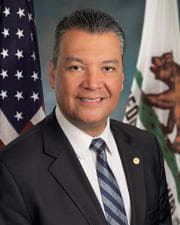
What’s My Rep Doing

Last sync: Oct 29, 2026, 10:22 PM UTC

Members

P000145

Alex Padilla

DemocraticCaliforniaCurrent Member
Sponsored
114
Cosponsored
696
Birth Year
1973

Stated Priorities & Legislative Record

Congress 119 · Automated analysis

Reviewed comparisons point both waysAll topics

511 reviewed comparisons · 184 scored · 178 measures

Comparison balance
+1.2/ 2
Supportive
180
Mixed
3
Opposing
1
Unscored
327

Health

Sponsored
1
Cosponsored
36
Linked House votes
0

What they say Official statements

Support for Medicare for All and increased access to mental health care.

Stated priority

“He is proud to support Medicare for All and is a champion for increased access to mental health care.”

Alex Padilla U.S. Senator for California · Captured 2026-10-28

Addressing systemic disparities that affect health care access.

Stated priority

“In the Senate, Alex has prioritized addressing the systemic disparities that affect health care access.”

Alex Padilla U.S. Senator for California · Captured 2026-10-28

Guaranteeing quality, affordable, and equitable health care for every American.

Stated priority

“Alex is working to guarantee quality, affordable, and equitable health care for every American.”

Alex Padilla U.S. Senator for California · Captured 2026-10-28

What they do Legislative evidence

S 4472 · Accelerating Access to Critical Therapies for ALS Reauthorization Act of 2026

Cosponsor

No direct connectionCosponsorship · Reviewed automated analysis

Compared with: Support for Medicare for All and increased access to mental health care.

The stated priority is support for Medicare for All and increased access to mental health care. The cosponsored bill is an ALS-focused research and drug-development reauthorization that supports investigational therapies for ALS and other neurodegenerative diseases, with FDA/NIH reporting and planning provisions. It does not establish Medicare for All, expand health insurance coverage generally, or specifically target mental health care access, so there is no direct substantive connection to the quoted policy goal.

“He is proud to support Medicare for All and is a champion for increased access to mental health care.”

Official statement · Captured 2026-10-28

Supporting provisions

“Accelerating Access to Critical Therapies for ALS Reauthorization Act of 2026 This bill reauthorizes through FY2031 and revises programs that support research and development of drugs and other therapies to address amyotrophic lateral sclerosis (also known as ALS or Lou Gehrig's disease) and other neurodegenerative diseases.”
“The bill reauthorizes grants from the National Institutes of Health (NIH) for scientific research on investigational drugs to prevent or treat ALS for individuals not otherwise eligible for clinical trials, grants from the Food and Drug Administration (FDA) for research and development of therapies to prevent and treat ALS and other neurodegenerative diseases, and a Public-Private Partnership including the FDA and NIH that supports development and regulatory review of treatments for neurodegenerative diseases.”
“Additionally, every five years, the FDA must publish a plan describing actions it will take over a five-year period to foster development of safe and effective drugs, and facilitate access to investigational drugs, for ALS and other rare neurodegenerative diseases.”
Official legislative summary

Summary-based analysis · Action predates captured statement · Narrower scope

Assessed 2026-10-28 · Review: User-authorized automated publication. Published at the user request after the bounded production backfill. Automated evidence validation passed; comparisons have not been individually audited.

Partly supportsCosponsorship · Reviewed automated analysis

Compared with: Addressing systemic disparities that affect health care access.

The cosponsored bill would advance access to treatments for ALS and other rare neurodegenerative diseases, including FDA planning to foster development of safe and effective drugs and facilitate access to investigational drugs. That supports broader access to care and therapies, but it is disease-specific and focused on research/therapeutics rather than directly addressing systemic disparities across health care access generally, so the alignment is meaningful but narrower than the stated priority.

“In the Senate, Alex has prioritized addressing the systemic disparities that affect health care access.”

Official statement · Captured 2026-10-28

Supporting provisions

“Accelerating Access to Critical Therapies for ALS Reauthorization Act of 2026 This bill reauthorizes through FY2031 and revises programs that support research and development of drugs and other therapies to address amyotrophic lateral sclerosis (also known as ALS or Lou Gehrig's disease) and other neurodegenerative diseases.”
“The bill reauthorizes grants from the National Institutes of Health (NIH) for scientific research on investigational drugs to prevent or treat ALS for individuals not otherwise eligible for clinical trials, grants from the Food and Drug Administration (FDA) for research and development of therapies to prevent and treat ALS and other neurodegenerative diseases, and a Public-Private Partnership including the FDA and NIH that supports development and regulatory review of treatments for neurodegenerative diseases.”
“Additionally, every five years, the FDA must publish a plan describing actions it will take over a five-year period to foster development of safe and effective drugs, and facilitate access to investigational drugs, for ALS and other rare neurodegenerative diseases.”
Official legislative summary

Summary-based analysis · Action predates captured statement · Narrower scope

Assessed 2026-10-28 · Review: User-authorized automated publication. Published at the user request after the bounded production backfill. Automated evidence validation passed; comparisons have not been individually audited.

Partly supportsCosponsorship · Reviewed automated analysis

Compared with: Guaranteeing quality, affordable, and equitable health care for every American.

The cosponsored bill meaningfully supports access to therapies for ALS by reauthorizing NIH and FDA research grants, requiring safety and efficacy review, and directing the FDA to plan actions to foster development of safe and effective drugs and facilitate access to investigational drugs. This advances affordable/accessible care in a narrow disease-specific way, but it is limited to ALS and other rare neurodegenerative diseases rather than guaranteeing quality, affordable, and equitable health care for every American.

“Alex is working to guarantee quality, affordable, and equitable health care for every American.”

Official statement · Captured 2026-10-28

Supporting provisions

“The bill reauthorizes grants from the National Institutes of Health (NIH) for scientific research on investigational drugs to prevent or treat ALS for individuals not otherwise eligible for clinical trials, grants from the Food and Drug Administration (FDA) for research and development of therapies to prevent and treat ALS and other neurodegenerative diseases, and a Public-Private Partnership including the FDA and NIH that supports development and regulatory review of treatments for neurodegenerative diseases.”
“Also, the bill revises the NIH grants to require (1) the NIH, in considering grant renewal, to assess available information on the safety and efficacy of the investigational drugs; (2) grantees to promptly report available safety data from ongoing clinical trials; and (3) the NIH to determine the timeframe for enrollment in clinical trials for the investigational drugs.”
“Additionally, every five years, the FDA must publish a plan describing actions it will take over a five-year period to foster development of safe and effective drugs, and facilitate access to investigational drugs, for ALS and other rare neurodegenerative diseases.”
Official legislative summary

Summary-based analysis · Action predates captured statement · Narrower scope

Assessed 2026-10-28 · Review: User-authorized automated publication. Published at the user request after the bounded production backfill. Automated evidence validation passed; comparisons have not been individually audited.

“The bill reauthorizes grants from the National Institutes of Health (NIH) for scientific research on investigational drugs to prevent or treat ALS for individuals not otherwise eligible for clinical trials, grants from the Food and Drug Administration (FDA) for research and development of therapies to prevent and treat ALS and other neurodegenerative diseases, and a Public-Private Partnership including the FDA and NIH that supports development and regulatory review of treatments for neurodegenerative diseases.”
Official summary source
S 494 · National Plan for Epilepsy Act

Cosponsor

No direct connectionCosponsorship · Reviewed automated analysis

Compared with: Support for Medicare for All and increased access to mental health care.

The stated policy goal is support for Medicare for All and increased access to mental health care. The cosponsored bill is about a national plan for epilepsy, including research, care, and services for epilepsy, and does not directly advance Medicare for All or mental health access in the supplied passages. Any connection would be too indirect to score as support or opposition.

“He is proud to support Medicare for All and is a champion for increased access to mental health care.”

Official statement · Captured 2026-10-28

Official legislative summary

Summary-based analysis · Action predates captured statement

Assessed 2026-10-28 · Review: User-authorized automated publication. Published at the user request after the bounded production backfill. Automated evidence validation passed; comparisons have not been individually audited.

No direct connectionCosponsorship · Reviewed automated analysis

Compared with: Addressing systemic disparities that affect health care access.

The stated policy goal is addressing systemic disparities that affect health care access. The cosponsored bill creates a national epilepsy plan, an advisory council, and reporting/research coordination for epilepsy, but the supplied summary does not indicate any specific provision targeting systemic health care disparities or access inequities. This is a health-related bill, but the connection to the specific disparity/access goal is too indirect to score as support.

“In the Senate, Alex has prioritized addressing the systemic disparities that affect health care access.”

Official statement · Captured 2026-10-28

Official legislative summary

Summary-based analysis · Action predates captured statement · Narrower scope

Assessed 2026-10-28 · Review: User-authorized automated publication. Published at the user request after the bounded production backfill. Automated evidence validation passed; comparisons have not been individually audited.

Partly supportsCosponsorship · Reviewed automated analysis

Compared with: Guaranteeing quality, affordable, and equitable health care for every American.

The cosponsored bill advances access to care in a narrow, disease-specific way by directing HHS to create a national epilepsy plan that explicitly includes preventing, diagnosing, treating, and curing epilepsy, along with coordinating research and services. That is a meaningful health-care support action, but it is limited to one condition and does not itself establish broad, general health care affordability, equity, or universal coverage for every American.

“Alex is working to guarantee quality, affordable, and equitable health care for every American.”

Official statement · Captured 2026-10-28

Supporting provisions

“National Plan for Epilepsy Act This bill requires the Department of Health and Human Services (HHS) to establish a national plan, form an advisory council, and take other actions to address epilepsy.”
“The requirements sunset on December 31, 2035. Specifically, the bill requires HHS to carry out a National Plan for Epilepsy to prevent, diagnose, treat, and cure epilepsy.”
“In carrying out the plan, HHS must implement activities such as coordinating research and services across all federal agencies and soliciting public comments.”
“Also, HHS must establish an Advisory Council on Epilepsy Research, Care, and Services.”
“The advisory council must report to HHS and Congress every two years with an evaluation of federally funded efforts.”
“Additionally, HHS must annually report to Congress with recommended actions based on its assessments of the nation’s progress on epilepsy.”
Official legislative summary

Summary-based analysis · Action predates captured statement · Narrower scope

Assessed 2026-10-28 · Review: User-authorized automated publication. Published at the user request after the bounded production backfill. Automated evidence validation passed; comparisons have not been individually audited.

“The requirements sunset on December 31, 2035. Specifically, the bill requires HHS to carry out a National Plan for Epilepsy to prevent, diagnose, treat, and cure epilepsy.”
Official summary source
S 4986 · Mamas First Act

Cosponsor

Insufficient evidenceCosponsorship · Reviewed automated analysis

Compared with: Support for Medicare for All and increased access to mental health care.

The cited cosponsorship is for the Mamas First Act, which would require Medicaid coverage for doula, midwife, and lactation support services around pregnancy and childbirth. That is not direct evidence of support for Medicare for All, and it is only a narrow maternal-health access measure rather than a demonstrated commitment to increased mental health care access. The supplied material does not mention mental health services, broader universal coverage, or Medicare for All.

“He is proud to support Medicare for All and is a champion for increased access to mental health care.”

Official statement · Captured 2026-10-28

Supporting provisions

“Mamas First Act This bill requires state Medicaid programs to cover services furnished by doulas, midwives, and lactation support providers, including prenatal, delivery, and postpartum services, in a variety of settings.”
Official legislative summary

Summary-based analysis · Action predates captured statement · Narrower scope

Assessed 2026-10-28 · Review: User-authorized automated publication. Published at the user request after the bounded production backfill. Automated evidence validation passed; comparisons have not been individually audited.

Partly supportsCosponsorship · Reviewed automated analysis

Compared with: Addressing systemic disparities that affect health care access.

The cosponsored bill would expand Medicaid coverage for maternal support services like doulas, midwives, and lactation support across prenatal, delivery, and postpartum care. That meaningfully advances access to care for a specific population and can help reduce some disparities in maternal health access. However, the cited priority is broader—addressing systemic disparities affecting health care access generally—while this bill is narrower and focused on maternal services, so it is partial rather than direct full coverage of the stated goal.

“In the Senate, Alex has prioritized addressing the systemic disparities that affect health care access.”

Official statement · Captured 2026-10-28

Supporting provisions

“Mamas First Act This bill requires state Medicaid programs to cover services furnished by doulas, midwives, and lactation support providers, including prenatal, delivery, and postpartum services, in a variety of settings.”
Official legislative summary

Summary-based analysis · Action predates captured statement · Narrower scope

Assessed 2026-10-28 · Review: User-authorized automated publication. Published at the user request after the bounded production backfill. Automated evidence validation passed; comparisons have not been individually audited.

Partly supportsCosponsorship · Reviewed automated analysis

Compared with: Guaranteeing quality, affordable, and equitable health care for every American.

The cosponsored bill would expand Medicaid coverage for maternity-related support services, which meaningfully advances access to care and affordability for a subset of Americans. However, it is narrower than a general guarantee of quality, affordable, and equitable health care for every American because it applies specifically to state Medicaid programs and pregnancy-related services, not the full health system or all Americans.

“Alex is working to guarantee quality, affordable, and equitable health care for every American.”

Official statement · Captured 2026-10-28

Supporting provisions

“Mamas First Act This bill requires state Medicaid programs to cover services furnished by doulas, midwives, and lactation support providers, including prenatal, delivery, and postpartum services, in a variety of settings.”
Official legislative summary

Summary-based analysis · Action predates captured statement · Narrower scope

Assessed 2026-10-28 · Review: User-authorized automated publication. Published at the user request after the bounded production backfill. Automated evidence validation passed; comparisons have not been individually audited.

“Mamas First Act This bill requires state Medicaid programs to cover services furnished by doulas, midwives, and lactation support providers, including prenatal, delivery, and postpartum services, in a variety of settings.”
Official summary source
S 825 · Fighting Post-Traumatic Stress Disorder Act of 2025

Cosponsor

Partly supportsCosponsorship · Reviewed automated analysis

Compared with: Support for Medicare for All and increased access to mental health care.

The cosponsored bill is narrowly about expanding access to mental health care by requiring DOJ to develop/report on proposed programs that provide treatment and preventative care for job-related PTSD or acute stress disorder for public safety officers and telecommunicators. That meaningfully supports the mental health access portion of the stated goal, but it does not address Medicare for All and is limited to a specific population and condition, so the support is partial rather than direct on the full claim.

“He is proud to support Medicare for All and is a champion for increased access to mental health care.”

Official statement · Captured 2026-10-28

Supporting provisions

“Fighting Post-Traumatic Stress Disorder Act of 2025 This bill requires the Office of Community Oriented Policing Services within the Department of Justice (DOJ) to report on one or more proposed programs for providing mental health care to public safety officers and related personnel.”
“Under the bill, a proposed program must be administered by DOJ and must make treatment and preventative care available to public safety officers and public safety telecommunicators for job-related post-traumatic stress disorder or acute stress disorder.”
Official legislative summary

Summary-based analysis · Action predates captured statement · Narrower scope

Assessed 2026-10-28 · Review: User-authorized automated publication. Published at the user request after the bounded production backfill. Automated evidence validation passed; comparisons have not been individually audited.

No direct connectionCosponsorship · Reviewed automated analysis

Compared with: Addressing systemic disparities that affect health care access.

The cited cosponsorship concerns a bill directing DOJ to report on proposed mental health care programs for public safety officers and telecommunicators with job-related PTSD or acute stress disorder. That is a specific mental health/public safety proposal, but the supplied policy goal is about addressing systemic disparities affecting health care access generally. The bill summary does not indicate it targets disparities in health care access, expands access across disadvantaged groups, or otherwise directly advances that specific goal. Any connection is too indirect to score confidently.

“In the Senate, Alex has prioritized addressing the systemic disparities that affect health care access.”

Official statement · Captured 2026-10-28

Supporting provisions

“Fighting Post-Traumatic Stress Disorder Act of 2025 This bill requires the Office of Community Oriented Policing Services within the Department of Justice (DOJ) to report on one or more proposed programs for providing mental health care to public safety officers and related personnel.”
“Under the bill, a proposed program must be administered by DOJ and must make treatment and preventative care available to public safety officers and public safety telecommunicators for job-related post-traumatic stress disorder or acute stress disorder.”
Official legislative summary

Summary-based analysis · Action predates captured statement · Narrower scope

Assessed 2026-10-28 · Review: User-authorized automated publication. Published at the user request after the bounded production backfill. Automated evidence validation passed; comparisons have not been individually audited.

No direct connectionCosponsorship · Reviewed automated analysis

Compared with: Guaranteeing quality, affordable, and equitable health care for every American.

The cosponsored bill is narrowly about reporting on proposed DOJ programs to provide mental health care for public safety officers and telecommunicators with job-related PTSD or acute stress disorder. That is a specific occupational mental health policy, not a direct measure guaranteeing quality, affordable, and equitable health care for every American. The scope is limited to a particular group and does not address nationwide affordability, equity, or universal coverage.

“Alex is working to guarantee quality, affordable, and equitable health care for every American.”

Official statement · Captured 2026-10-28

Supporting provisions

“Fighting Post-Traumatic Stress Disorder Act of 2025 This bill requires the Office of Community Oriented Policing Services within the Department of Justice (DOJ) to report on one or more proposed programs for providing mental health care to public safety officers and related personnel.”
“Under the bill, a proposed program must be administered by DOJ and must make treatment and preventative care available to public safety officers and public safety telecommunicators for job-related post-traumatic stress disorder or acute stress disorder.”
“The bill requires the report to also include draft legislative language related to each proposed program, as well as the estimated cost for administering each proposed program.”
Official legislative summary

Summary-based analysis · Action predates captured statement · Narrower scope

Assessed 2026-10-28 · Review: User-authorized automated publication. Published at the user request after the bounded production backfill. Automated evidence validation passed; comparisons have not been individually audited.

“Under the bill, a proposed program must be administered by DOJ and must make treatment and preventative care available to public safety officers and public safety telecommunicators for job-related post-traumatic stress disorder or acute stress disorder.”
Official summary source
SRES 758 · A resolution expressing support for the designation of the month of June 2026 as "National Post-Traumatic Stress Awareness Month" and June 27, 2026, as "National Post-Traumatic Stress Awareness Day".

Cosponsor

No direct connectionCosponsorship · Reviewed automated analysis

Compared with: Support for Medicare for All and increased access to mental health care.

The cosponsorship is of a resolution recognizing post-traumatic stress awareness and encouraging support for treatment of affected service members and veterans. That is a mental-health-related awareness action, but it does not directly advance the specific stated goal of increased access to mental health care in a broader sense, and it has no evident connection to Medicare for All. Because the action is symbolic and narrowly focused on PTSD awareness rather than general coverage or access policy, a defensible comparison cannot be made.

“He is proud to support Medicare for All and is a champion for increased access to mental health care.”

Official statement · Captured 2026-10-28

Supporting provisions

“The resolution supports (1) the education of members of the Armed Forces, veterans, their families, and the public about post-traumatic stress; and (2) efforts by the Department of Veterans Affairs and the Department of Defense to foster cultural change around the issue of post-traumatic stress.”
“The resolution also encourages the leadership of the Armed Forces to support treatment of members of the Armed Forces who suffer from post-traumatic stress.”

Opposing provisions

“This resolution designates June 2026 as National Post-Traumatic Stress Awareness Month and June 27, 2026, as National Post-Traumatic Stress Awareness Day.”
Official legislative summary

Summary-based analysis · Action predates captured statement · Narrower scope

Assessed 2026-10-28 · Review: User-authorized automated publication. Published at the user request after the bounded production backfill. Automated evidence validation passed; comparisons have not been individually audited.

No direct connectionCosponsorship · Reviewed automated analysis

Compared with: Addressing systemic disparities that affect health care access.

The stated priority is about addressing systemic disparities that affect health care access. The cosponsored resolution is a commemorative measure focused on post-traumatic stress awareness, education, and encouraging treatment support for service members and veterans. While it touches on treatment awareness, it does not directly advance broader health care access disparities or target systemic access barriers.

“In the Senate, Alex has prioritized addressing the systemic disparities that affect health care access.”

Official statement · Captured 2026-10-28

Supporting provisions

“The resolution supports (1) the education of members of the Armed Forces, veterans, their families, and the public about post-traumatic stress; and (2) efforts by the Department of Veterans Affairs and the Department of Defense to foster cultural change around the issue of post-traumatic stress.”
“The resolution also encourages the leadership of the Armed Forces to support treatment of members of the Armed Forces who suffer from post-traumatic stress.”

Opposing provisions

“This resolution designates June 2026 as National Post-Traumatic Stress Awareness Month and June 27, 2026, as National Post-Traumatic Stress Awareness Day.”
Official legislative summary

Summary-based analysis · Action predates captured statement · Narrower scope

Assessed 2026-10-28 · Review: User-authorized automated publication. Published at the user request after the bounded production backfill. Automated evidence validation passed; comparisons have not been individually audited.

No direct connectionCosponsorship · Reviewed automated analysis

Compared with: Guaranteeing quality, affordable, and equitable health care for every American.

The cosponsorship concerns a resolution designating Post-Traumatic Stress Awareness Month/Day and encouraging education, cultural change, and support for treatment of military personnel with post-traumatic stress. That is related to health awareness and treatment support in a limited veterans/military context, but it does not directly advance the specific policy goal of guaranteeing quality, affordable, and equitable health care for every American. The measure is symbolic and narrowly scoped rather than a general health-care access or affordability policy.

“Alex is working to guarantee quality, affordable, and equitable health care for every American.”

Official statement · Captured 2026-10-28

Supporting provisions

“The resolution supports (1) the education of members of the Armed Forces, veterans, their families, and the public about post-traumatic stress; and (2) efforts by the Department of Veterans Affairs and the Department of Defense to foster cultural change around the issue of post-traumatic stress.”
“The resolution also encourages the leadership of the Armed Forces to support treatment of members of the Armed Forces who suffer from post-traumatic stress.”

Opposing provisions

“This resolution designates June 2026 as National Post-Traumatic Stress Awareness Month and June 27, 2026, as National Post-Traumatic Stress Awareness Day.”
Official legislative summary

Summary-based analysis · Action predates captured statement · Narrower scope

Assessed 2026-10-28 · Review: User-authorized automated publication. Published at the user request after the bounded production backfill. Automated evidence validation passed; comparisons have not been individually audited.

“The resolution supports (1) the education of members of the Armed Forces, veterans, their families, and the public about post-traumatic stress; and (2) efforts by the Department of Veterans Affairs and the Department of Defense to foster cultural change around the issue of post-traumatic stress.”
Official summary source

Prepared Legislative Analysis

119th Congress · computed from the latest committed analytics snapshot

Updated Oct 29, 2026, 11:00 AM

Sponsored
114
Cosponsored
696
Progressed
196
Floor or later
124
Final success
87
Bill actions
2,891

Top Policy Areas

Health

104

Government Operations and Politics

69

Crime and Law Enforcement

64

Education

57

Public Lands and Natural Resources

45

Agriculture and Food

40

Armed Forces and National Security

40

Labor and Employment

37

Monthly Bill Activity

Jan 2025
105
Feb 2025
178
Mar 2025
130
Apr 2025
155
May 2025
146
Jun 2025
115
Jul 2025
142
Aug 2025
12
Sep 2025
186
Oct 2025
88
Nov 2025
62
Dec 2025
143
Jan 2026
96
Feb 2026
103
Mar 2026
152
Apr 2026
147
May 2026
211
Jun 2026
204
Jul 2026
141
Aug 2026
133
Sep 2026
230
Oct 2026
12

Terms

119th

Senate

Senator · California

2021
118th

Senate

Senator · California

2021 - 2025
117th

Senate

Senator · California

2021 - 2023

Committee Assignments

Committee on Energy and Natural Resources

Member · Senate.gov

0 bills · 1,625 reports · 610 nominations · 7,981 communications

Committee on Environment and Public Works

Member · Senate.gov

0 bills · 437 reports · 620 nominations · 10,126 communications

Committee on Rules and Administration

Member · Senate.gov

0 bills · 27 reports · 108 nominations · 782 communications

Committee on the Budget

Member · Senate.gov

0 bills · 0 reports · 0 nominations · 0 communications

Committee on the Judiciary

Member · Senate.gov

0 bills · 180 reports · 5,536 nominations · 2,179 communications

Joint Committee of Congress on the Library

Member · Senate.gov

0 bills · 0 reports · 0 nominations · 0 communications

Joint Committee on Printing

Member · Senate.gov

0 bills · 0 reports · 0 nominations · 0 communications