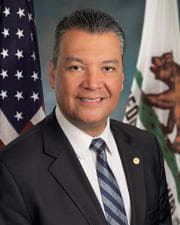
What’s My Rep Doing

Last sync: Oct 29, 2026, 10:22 PM UTC

Members

P000145

Alex Padilla

DemocraticCaliforniaCurrent Member
Sponsored
114
Cosponsored
696
Birth Year
1973

Stated Priorities & Legislative Record

Congress 119 · Automated analysis

Reviewed comparisons point both waysAll topics

511 reviewed comparisons · 184 scored · 178 measures

Comparison balance
+1.2/ 2
Supportive
180
Mixed
3
Opposing
1
Unscored
327

Education

Sponsored
1
Cosponsored
26
Linked House votes
0

What they say Official statements

Support funding for teachers and staff, school infrastructure, and student well-being.

Stated priority

“He is proud to advocate for funding to support teachers and staff, school infrastructure, and student well-being.”

Alex Padilla U.S. Senator for California · Captured 2026-10-28

Make higher education accessible for all.

Stated priority

“As a first-generation college graduate, Alex knows the hurdles that too many Californians face in accessing quality, affordable higher education, and he is determined to make higher education accessible for all.”

Alex Padilla U.S. Senator for California · Captured 2026-10-28

Support STEM educational opportunities inside and outside the classroom.

Stated priority

“As a graduate of the Massachusetts Institute of Technology with a degree in mechanical engineering, Alex is a strong supporter of Science, Technology, Engineering, and Math (STEM) educational opportunities inside and outside the classroom.”

Alex Padilla U.S. Senator for California · Captured 2026-10-28

What they do Legislative evidence

S 5614 · Beyond the Box for Higher Education Act of 2026

Cosponsor

No direct connectionCosponsorship · Reviewed automated analysis

Compared with: Support funding for teachers and staff, school infrastructure, and student well-being.

The stated goal is funding for teachers and staff, school infrastructure, and student well-being. The cosponsored bill concerns higher education admissions guidance to remove criminal and juvenile justice questions from applications. That is a policy on college admissions screening, not funding for K-12 personnel, facilities, or student support services. Because the action does not directly advance the specific funding objective, a substantive comparison cannot be made.

“He is proud to advocate for funding to support teachers and staff, school infrastructure, and student well-being.”

Official statement · Captured 2026-10-28

Opposing provisions

“Beyond the Box for Higher Education Act of 2026 This bill requires the Department of Education to issue guidance and recommendations for institutions of higher education to remove criminal and juvenile justice questions from their admission applications.”
Official legislative summary

Summary-based analysis · Action predates captured statement · Narrower scope

Assessed 2026-10-28 · Review: User-authorized automated publication. Published at the user request after the bounded production backfill. Automated evidence validation passed; comparisons have not been individually audited.

Partly supportsCosponsorship · Reviewed automated analysis

Compared with: Make higher education accessible for all.

The cosponsored bill would remove criminal and juvenile justice questions from college admission applications, which can reduce a barrier to access for some applicants. That is a meaningful but limited step toward making higher education more accessible, since it addresses one admissions hurdle rather than affordability, capacity, or universal access more broadly.

“As a first-generation college graduate, Alex knows the hurdles that too many Californians face in accessing quality, affordable higher education, and he is determined to make higher education accessible for all.”

Official statement · Captured 2026-10-28

Supporting provisions

“Beyond the Box for Higher Education Act of 2026 This bill requires the Department of Education to issue guidance and recommendations for institutions of higher education to remove criminal and juvenile justice questions from their admission applications.”
Official legislative summary

Summary-based analysis · Action predates captured statement · Narrower scope

Assessed 2026-10-28 · Review: User-authorized automated publication. Published at the user request after the bounded production backfill. Automated evidence validation passed; comparisons have not been individually audited.

No direct connectionCosponsorship · Reviewed automated analysis

Compared with: Support STEM educational opportunities inside and outside the classroom.

The stated policy goal is to support STEM educational opportunities inside and outside the classroom. The cosponsored bill, as summarized, concerns removing criminal and juvenile justice questions from higher education admissions applications. That is an admissions-policy reform, not a STEM education measure, so there is no direct substantive connection to the claimed STEM priority. Because the bill summary does not show a STEM-specific educational mechanism, support cannot be inferred from this action.

“As a graduate of the Massachusetts Institute of Technology with a degree in mechanical engineering, Alex is a strong supporter of Science, Technology, Engineering, and Math (STEM) educational opportunities inside and outside the classroom.”

Official statement · Captured 2026-10-28

Official legislative summary

Summary-based analysis · Action predates captured statement

Assessed 2026-10-28 · Review: User-authorized automated publication. Published at the user request after the bounded production backfill. Automated evidence validation passed; comparisons have not been individually audited.

“Beyond the Box for Higher Education Act of 2026 This bill requires the Department of Education to issue guidance and recommendations for institutions of higher education to remove criminal and juvenile justice questions from their admission applications.”
Official summary source
S 5634 · SPELL Act

Primary sponsor

No direct connectionSponsorship · Reviewed automated analysis

Compared with: Support funding for teachers and staff, school infrastructure, and student well-being.

The stated priority is broad funding for teachers and staff, school infrastructure, and student well-being. The sponsored SPELL Act, as summarized, provides additional student loan forgiveness and loan cancellation for certain teachers; it does not direct funding to teachers and staff generally, school infrastructure, or student well-being programs. That makes the connection too indirect and narrower than the specific goal stated.

“He is proud to advocate for funding to support teachers and staff, school infrastructure, and student well-being.”

Official statement · Captured 2026-10-28

Opposing provisions

“Supporting Providers of English Language Learning Act or the SPELL Act This bill allows elementary and secondary school teachers who teach English learners, bilingual students, or dual language immersion students to receive additional amounts of student loan forgiveness and loan cancellation.”
Official legislative summary

Summary-based analysis · Action predates captured statement · Narrower scope

Assessed 2026-10-28 · Review: User-authorized automated publication. Published at the user request after the bounded production backfill. Automated evidence validation passed; comparisons have not been individually audited.

No direct connectionSponsorship · Reviewed automated analysis

Compared with: Make higher education accessible for all.

The stated goal is to make higher education accessible for all. The sponsored bill passage concerns loan forgiveness and loan cancellation for elementary and secondary school teachers who teach English learners, bilingual students, or dual language immersion students. That is a teacher-targeted debt relief measure, not a direct expansion of access to higher education for the general public. The connection to the priority is too indirect and narrow to support a substantive comparison.

“As a first-generation college graduate, Alex knows the hurdles that too many Californians face in accessing quality, affordable higher education, and he is determined to make higher education accessible for all.”

Official statement · Captured 2026-10-28

Opposing provisions

“Supporting Providers of English Language Learning Act or the SPELL Act This bill allows elementary and secondary school teachers who teach English learners, bilingual students, or dual language immersion students to receive additional amounts of student loan forgiveness and loan cancellation.”
Official legislative summary

Summary-based analysis · Action predates captured statement · Narrower scope

Assessed 2026-10-28 · Review: User-authorized automated publication. Published at the user request after the bounded production backfill. Automated evidence validation passed; comparisons have not been individually audited.

No direct connectionSponsorship · Reviewed automated analysis

Compared with: Support STEM educational opportunities inside and outside the classroom.

The stated policy goal is support for STEM educational opportunities inside and outside the classroom. The sponsored bill, the SPELL Act, is about additional student loan forgiveness for teachers of English learners, bilingual students, and dual language immersion students. That is an education-related measure, but the supplied summary does not show any STEM-specific educational opportunity or mechanism, so a direct comparison cannot be made.

“As a graduate of the Massachusetts Institute of Technology with a degree in mechanical engineering, Alex is a strong supporter of Science, Technology, Engineering, and Math (STEM) educational opportunities inside and outside the classroom.”

Official statement · Captured 2026-10-28

Official legislative summary

Summary-based analysis · Action predates captured statement

Assessed 2026-10-28 · Review: User-authorized automated publication. Published at the user request after the bounded production backfill. Automated evidence validation passed; comparisons have not been individually audited.

“Supporting Providers of English Language Learning Act or the SPELL Act This bill allows elementary and secondary school teachers who teach English learners, bilingual students, or dual language immersion students to receive additional amounts of student loan forgiveness and loan cancellation.”
Official summary source
S 5403 · Debt-Free College Act of 2026

Cosponsor

No direct connectionCosponsorship · Reviewed automated analysis

Compared with: Support funding for teachers and staff, school infrastructure, and student well-being.

The cosponsored bill focuses on college affordability and federal student aid for higher education, including grants to cover unmet financial need and support for institutions like HBCUs and minority-serving institutions. It does not directly address funding for K-12 teachers and staff, school infrastructure, or student well-being in the school-systems sense described in the stated priority.

“He is proud to advocate for funding to support teachers and staff, school infrastructure, and student well-being.”

Official statement · Captured 2026-10-28

Supporting provisions

“Debt-Free College Act of 2026 This bill establishes measures to cover the unmet financial need of students who are enrolled at certain institutions of higher education (IHEs).”
“First, the bill requires the Department of Education (ED) to award grants for state-federal partnerships with a goal of providing debt-free college for all eligible students at in-state public IHEs.”
“Next, the bill requires ED to award grants to historically Black colleges and universities and minority-serving institutions to cover the unmet financial need of enrolled students.”
Official legislative summary

Summary-based analysis · Action predates captured statement · Narrower scope

Assessed 2026-10-28 · Review: User-authorized automated publication. Published at the user request after the bounded production backfill. Automated evidence validation passed; comparisons have not been individually audited.

Strongly supportsCosponsorship · Reviewed automated analysis

Compared with: Make higher education accessible for all.

The cosponsored bill directly advances the stated goal of making higher education accessible by expanding federal aid and covering unmet financial need. It creates state-federal grants aimed at debt-free college for eligible students at in-state public institutions, and also targets aid to students at HBCUs and MSIs. The bill further makes certain Dreamer students eligible for federal financial aid, which broadens access. These provisions meaningfully support broader access to higher education, though they are limited to specified eligibility categories and institutions rather than all students everywhere.

“As a first-generation college graduate, Alex knows the hurdles that too many Californians face in accessing quality, affordable higher education, and he is determined to make higher education accessible for all.”

Official statement · Captured 2026-10-28

Supporting provisions

“Debt-Free College Act of 2026 This bill establishes measures to cover the unmet financial need of students who are enrolled at certain institutions of higher education (IHEs).”
“In addition, the bill makes certain Dreamer students (i.e., students who have been granted Deferred Action for Childhood Arrivals status and who entered the United States before the age of 16) eligible for federal financial aid.”
“First, the bill requires the Department of Education (ED) to award grants for state-federal partnerships with a goal of providing debt-free college for all eligible students at in-state public IHEs.”
“Next, the bill requires ED to award grants to historically Black colleges and universities and minority-serving institutions to cover the unmet financial need of enrolled students.”
“ED must establish an office to administer grants and provide oversight. In addition, the bill makes Dreamer students who entered the United States before the age of 16 who meet certain educational criteria eligible for federal student aid.”
Official legislative summary

Summary-based analysis · Action predates captured statement · Narrower scope

Assessed 2026-10-28 · Review: User-authorized automated publication. Published at the user request after the bounded production backfill. Automated evidence validation passed; comparisons have not been individually audited.

Partly supportsCosponsorship · Reviewed automated analysis

Compared with: Support STEM educational opportunities inside and outside the classroom.

The cosponsorship meaningfully supports STEM educational opportunities by backing a bill that expands access to college funding and federal student aid, which can help students pursue STEM degrees. However, the bill is a broad higher-education affordability measure rather than a STEM-specific education initiative, so the support is indirect and narrower than the stated priority.

“As a graduate of the Massachusetts Institute of Technology with a degree in mechanical engineering, Alex is a strong supporter of Science, Technology, Engineering, and Math (STEM) educational opportunities inside and outside the classroom.”

Official statement · Captured 2026-10-28

Supporting provisions

“Debt-Free College Act of 2026 This bill establishes measures to cover the unmet financial need of students who are enrolled at certain institutions of higher education (IHEs).”
“In addition, the bill makes certain Dreamer students (i.e., students who have been granted Deferred Action for Childhood Arrivals status and who entered the United States before the age of 16) eligible for federal financial aid.”
“First, the bill requires the Department of Education (ED) to award grants for state-federal partnerships with a goal of providing debt-free college for all eligible students at in-state public IHEs.”
“Next, the bill requires ED to award grants to historically Black colleges and universities and minority-serving institutions to cover the unmet financial need of enrolled students.”
“ED must establish an office to administer grants and provide oversight. In addition, the bill makes Dreamer students who entered the United States before the age of 16 who meet certain educational criteria eligible for federal student aid.”
Official legislative summary

Summary-based analysis · Action predates captured statement · Narrower scope

Assessed 2026-10-28 · Review: User-authorized automated publication. Published at the user request after the bounded production backfill. Automated evidence validation passed; comparisons have not been individually audited.

“Debt-Free College Act of 2026 This bill establishes measures to cover the unmet financial need of students who are enrolled at certain institutions of higher education (IHEs).”
Official summary source
S 5317 · INSPIRES Act

Cosponsor

Partly supportsCosponsorship · Reviewed automated analysis

Compared with: Support funding for teachers and staff, school infrastructure, and student well-being.

The cosponsorship supports school infrastructure in a narrow way by funding renovation, repair, and modernization of education facilities, especially STEM and rural/Native American secondary schools. It does not directly address teacher and staff funding or student well-being, so the match is meaningful but limited to the infrastructure component of the stated goal.

“He is proud to advocate for funding to support teachers and staff, school infrastructure, and student well-being.”

Official statement · Captured 2026-10-28

Supporting provisions

“Inspiring New STEM Professionals by Investing in Renovation of Education Spaces Act or the INSPIRES Act This bill directs the Department of Education to establish grant programs (1) for the modernization, renovation, or repair of career- and technical-education facilities; and (2) to enable secondary schools that are located in rural areas or that serve Native American students to improve facilities that provide science, technology, engineering, and mathematics (STEM) education and to support high-speed internet in STEM facilities.”
Official legislative summary

Summary-based analysis · Action predates captured statement · Narrower scope

Assessed 2026-10-28 · Review: User-authorized automated publication. Published at the user request after the bounded production backfill. Automated evidence validation passed; comparisons have not been individually audited.

Partly supportsCosponsorship · Reviewed automated analysis

Compared with: Make higher education accessible for all.

The cosponsored bill supports higher education access only indirectly and in a limited way. The INSPIRES Act creates grant programs for renovating and modernizing education spaces, including career and technical education facilities, which can improve educational capacity and affordability-related access barriers. But the bill is focused on facility improvements in K-12 and career/technical settings, not directly on making higher education broadly accessible for all. So the connection is supportive but narrower than the stated policy goal.

“As a first-generation college graduate, Alex knows the hurdles that too many Californians face in accessing quality, affordable higher education, and he is determined to make higher education accessible for all.”

Official statement · Captured 2026-10-28

Supporting provisions

“Inspiring New STEM Professionals by Investing in Renovation of Education Spaces Act or the INSPIRES Act This bill directs the Department of Education to establish grant programs (1) for the modernization, renovation, or repair of career- and technical-education facilities; and (2) to enable secondary schools that are located in rural areas or that serve Native American students to improve facilities that provide science, technology, engineering, and mathematics (STEM) education and to support high-speed internet in STEM facilities.”
Official legislative summary

Summary-based analysis · Action predates captured statement · Narrower scope

Assessed 2026-10-28 · Review: User-authorized automated publication. Published at the user request after the bounded production backfill. Automated evidence validation passed; comparisons have not been individually audited.

Partly supportsCosponsorship · Reviewed automated analysis

Compared with: Support STEM educational opportunities inside and outside the classroom.

The cosponsored bill meaningfully supports STEM educational opportunities by creating grant programs to modernize and improve school facilities that provide STEM education and to support high-speed internet in STEM facilities. That advances STEM opportunities inside the classroom, but the cited text does not clearly extend to outside-the-classroom STEM opportunities, so the support is narrower than the stated goal.

“As a graduate of the Massachusetts Institute of Technology with a degree in mechanical engineering, Alex is a strong supporter of Science, Technology, Engineering, and Math (STEM) educational opportunities inside and outside the classroom.”

Official statement · Captured 2026-10-28

Supporting provisions

“Inspiring New STEM Professionals by Investing in Renovation of Education Spaces Act or the INSPIRES Act This bill directs the Department of Education to establish grant programs (1) for the modernization, renovation, or repair of career- and technical-education facilities; and (2) to enable secondary schools that are located in rural areas or that serve Native American students to improve facilities that provide science, technology, engineering, and mathematics (STEM) education and to support high-speed internet in STEM facilities.”
Official legislative summary

Summary-based analysis · Action predates captured statement · Narrower scope

Assessed 2026-10-28 · Review: User-authorized automated publication. Published at the user request after the bounded production backfill. Automated evidence validation passed; comparisons have not been individually audited.

“Inspiring New STEM Professionals by Investing in Renovation of Education Spaces Act or the INSPIRES Act This bill directs the Department of Education to establish grant programs (1) for the modernization, renovation, or repair of career- and technical-education facilities; and (2) to enable secondary schools that are located in rural areas or that serve Native American students to improve facilities that provide science, technology, engineering, and mathematics (STEM) education and to support high-speed internet in STEM facilities.”
Official summary source
S 4914 · Green Ribbon Act of 2026

Cosponsor

Partly supportsCosponsorship · Reviewed automated analysis

Compared with: Support funding for teachers and staff, school infrastructure, and student well-being.

The cosponsored bill has some direct alignment with the stated goal because it expands a program focused in part on health and wellness and establishes an Office of School Infrastructure and Sustainability, which can support school infrastructure-related objectives. However, the bill’s main mechanism is a recognition and grant program for green schools, not direct funding for teachers and staff or broad student well-being funding, so the support is meaningful but narrower than the full priority.

“He is proud to advocate for funding to support teachers and staff, school infrastructure, and student well-being.”

Official statement · Captured 2026-10-28

Supporting provisions

“Green Ribbon Act of 2026 This bill provides statutory authority for and expands the Department of Education’s (ED’s) Green Ribbon Schools program.”
“(This program was established in 2011 to recognize early learning centers, schools, districts, and postsecondary institutions for excellence in reducing environmental impact, increasing health and wellness, and providing sustainability education.)”
“In conducting the Green Ribbon Schools program, ED must (1) reserve funding for the Department of the Interior to carry out activities with respect to schools operated or funded by the Bureau of Indian Education; (2) award grants to state educational agencies for the purpose of supporting and engaging eligible entities as green schools; and (3) provide an honorarium to each award winner, subject to appropriations.”
“The bill also establishes within ED the Office of School Infrastructure and Sustainability.”
Official legislative summary

Summary-based analysis · Action predates captured statement · Narrower scope

Assessed 2026-10-28 · Review: User-authorized automated publication. Published at the user request after the bounded production backfill. Automated evidence validation passed; comparisons have not been individually audited.

No direct connectionCosponsorship · Reviewed automated analysis

Compared with: Make higher education accessible for all.

The stated policy goal is to make higher education accessible for all, but the cosponsored bill mainly expands a Green Ribbon recognition/grant program focused on environmental impact, wellness, sustainability education, and related school infrastructure. It mentions postsecondary institutions as eligible participants, but it does not directly lower tuition, expand aid, improve admissions access, or otherwise materially advance broad higher-education accessibility.

“As a first-generation college graduate, Alex knows the hurdles that too many Californians face in accessing quality, affordable higher education, and he is determined to make higher education accessible for all.”

Official statement · Captured 2026-10-28

Supporting provisions

“(This program was established in 2011 to recognize early learning centers, schools, districts, and postsecondary institutions for excellence in reducing environmental impact, increasing health and wellness, and providing sustainability education.)”

Opposing provisions

“Green Ribbon Act of 2026 This bill provides statutory authority for and expands the Department of Education’s (ED’s) Green Ribbon Schools program.”
“In conducting the Green Ribbon Schools program, ED must (1) reserve funding for the Department of the Interior to carry out activities with respect to schools operated or funded by the Bureau of Indian Education; (2) award grants to state educational agencies for the purpose of supporting and engaging eligible entities as green schools; and (3) provide an honorarium to each award winner, subject to appropriations.”
“The bill also establishes within ED the Office of School Infrastructure and Sustainability.”
Official legislative summary

Summary-based analysis · Action predates captured statement · Narrower scope

Assessed 2026-10-28 · Review: User-authorized automated publication. Published at the user request after the bounded production backfill. Automated evidence validation passed; comparisons have not been individually audited.

No direct connectionCosponsorship · Reviewed automated analysis

Compared with: Support STEM educational opportunities inside and outside the classroom.

The stated policy goal is to support STEM educational opportunities inside and outside the classroom. The cosponsored bill expands the Green Ribbon Schools program and creates a related award program for nonformal learning institutions, but the supplied passages describe sustainability education, environmental impact, health, wellness, and school infrastructure—not STEM education specifically. This is at most a broad educational/supportive overlap, not a direct substantive advancement of STEM opportunities.

“As a graduate of the Massachusetts Institute of Technology with a degree in mechanical engineering, Alex is a strong supporter of Science, Technology, Engineering, and Math (STEM) educational opportunities inside and outside the classroom.”

Official statement · Captured 2026-10-28

Supporting provisions

“(This program was established in 2011 to recognize early learning centers, schools, districts, and postsecondary institutions for excellence in reducing environmental impact, increasing health and wellness, and providing sustainability education.)”
“The bill directs the Institute of Museum and Library Services to establish an award program for nonformal learning institutions (e.g., libraries, museums, and zoos) that is modeled on ED’s program.”

Opposing provisions

“Green Ribbon Act of 2026 This bill provides statutory authority for and expands the Department of Education’s (ED’s) Green Ribbon Schools program.”
“In conducting the Green Ribbon Schools program, ED must (1) reserve funding for the Department of the Interior to carry out activities with respect to schools operated or funded by the Bureau of Indian Education; (2) award grants to state educational agencies for the purpose of supporting and engaging eligible entities as green schools; and (3) provide an honorarium to each award winner, subject to appropriations.”
“The bill also establishes within ED the Office of School Infrastructure and Sustainability.”
Official legislative summary

Summary-based analysis · Action predates captured statement · Narrower scope

Assessed 2026-10-28 · Review: User-authorized automated publication. Published at the user request after the bounded production backfill. Automated evidence validation passed; comparisons have not been individually audited.

“Green Ribbon Act of 2026 This bill provides statutory authority for and expands the Department of Education’s (ED’s) Green Ribbon Schools program.”
Official summary source

Prepared Legislative Analysis

119th Congress · computed from the latest committed analytics snapshot

Updated Oct 29, 2026, 11:00 AM

Sponsored
114
Cosponsored
696
Progressed
196
Floor or later
124
Final success
87
Bill actions
2,891

Top Policy Areas

Health

104

Government Operations and Politics

69

Crime and Law Enforcement

64

Education

57

Public Lands and Natural Resources

45

Agriculture and Food

40

Armed Forces and National Security

40

Labor and Employment

37

Monthly Bill Activity

Jan 2025
105
Feb 2025
178
Mar 2025
130
Apr 2025
155
May 2025
146
Jun 2025
115
Jul 2025
142
Aug 2025
12
Sep 2025
186
Oct 2025
88
Nov 2025
62
Dec 2025
143
Jan 2026
96
Feb 2026
103
Mar 2026
152
Apr 2026
147
May 2026
211
Jun 2026
204
Jul 2026
141
Aug 2026
133
Sep 2026
230
Oct 2026
12

Terms

119th

Senate

Senator · California

2021
118th

Senate

Senator · California

2021 - 2025
117th

Senate

Senator · California

2021 - 2023

Committee Assignments

Committee on Energy and Natural Resources

Member · Senate.gov

0 bills · 1,625 reports · 610 nominations · 7,981 communications

Committee on Environment and Public Works

Member · Senate.gov

0 bills · 437 reports · 620 nominations · 10,126 communications

Committee on Rules and Administration

Member · Senate.gov

0 bills · 27 reports · 108 nominations · 782 communications

Committee on the Budget

Member · Senate.gov

0 bills · 0 reports · 0 nominations · 0 communications

Committee on the Judiciary

Member · Senate.gov

0 bills · 180 reports · 5,536 nominations · 2,179 communications

Joint Committee of Congress on the Library

Member · Senate.gov

0 bills · 0 reports · 0 nominations · 0 communications

Joint Committee on Printing

Member · Senate.gov

0 bills · 0 reports · 0 nominations · 0 communications