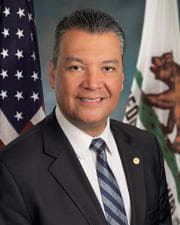
What’s My Rep Doing

Last sync: Oct 29, 2026, 10:22 PM UTC

Members

P000145

Alex Padilla

DemocraticCaliforniaCurrent Member
Sponsored
114
Cosponsored
696
Birth Year
1973

Stated Priorities & Legislative Record

Congress 119 · Automated analysis

Reviewed comparisons point both waysAll topics

511 reviewed comparisons · 184 scored · 178 measures

Comparison balance
+1.2/ 2
Supportive
180
Mixed
3
Opposing
1
Unscored
327

Immigration

Sponsored
1
Cosponsored
5
Linked House votes
0

What they say Official statements

Lead immigration reform and support a pathway to citizenship for immigrants.

Stated priority

“As Ranking Member of the Senate Judiciary Committee’s Subcommittee on Immigration, Citizenship, and Border Safety, he is leading the fight for immigration reform and a pathway to citizenship for immigrants.”

Alex Padilla U.S. Senator for California · Captured 2026-10-28

Improve immigration services for military families

Stated commitment

“From improving immigration services for military families to addressing veteran homelessness and cleaning up harmful PFAS “forever chemicals” on military bases, Alex is working to ensure that service members, veterans, and their families receive the support they deserve.”

Alex Padilla U.S. Senator for California · Captured 2026-10-28

What they do Legislative evidence

S 2106 · SECURE Act

Cosponsor

Partly supportsCosponsorship · Reviewed automated analysis

Compared with: Lead immigration reform and support a pathway to citizenship for immigrants.

The cosponsored SECURE Act advances a pathway to lawful permanent residence for certain immigrants from countries with temporary protected status or deferred enforced departure, which is a narrower legalization path and not full citizenship. That meaningfully supports the stated goal of immigration reform and a pathway to citizenship, but only indirectly and in a limited form because the bill provides green cards and related protections rather than citizenship itself.

“As Ranking Member of the Senate Judiciary Committee’s Subcommittee on Immigration, Citizenship, and Border Safety, he is leading the fight for immigration reform and a pathway to citizenship for immigrants.”

Official statement · Captured 2026-10-28

Supporting provisions

“Safe Environment from Countries Under Repression and Emergency Act or the SECURE Act This bill allows qualified nationals of a country that has or had a temporary protected status designation (certain countries in which nationals experience conflict or other unsafe conditions) to obtain lawful permanent residence (sometimes referred to as a green card).”
“To qualify for a green card, such an individual must (1) have or had temporary protected status, (2) have qualified for such status on certain dates, or (3) have been present in the United States due to having been granted deferred enforced departure status that extended past a certain date.”
“Furthermore, the individual must (1) have been continuously present in the United States for three years before applying for a green card or before being removed after a certain date, (2) not be inadmissible or deportable for certain reasons, and (3) pass applicable background checks.”
“The continuous presence requirement may be waived in certain instances. Such an individual's spouse, domestic partner, child, or unmarried child may also obtain a green card under this bill upon meeting certain requirements.”
“An individual with a pending application shall receive work authorization and be eligible for travel authorization.”
“An individual may not be removed if the individual (1) has a pending application, or (2) is prima facie eligible for a green card under this bill and intends to apply.”
Official legislative summary

Summary-based analysis · Action predates captured statement · Narrower scope

Assessed 2026-10-28 · Review: User-authorized automated publication. Published at the user request after the bounded production backfill. Automated evidence validation passed; comparisons have not been individually audited.

No direct connectionCosponsorship · Reviewed automated analysis

Compared with: Improve immigration services for military families

The stated priority is to improve immigration services for military families. The cosponsored SECURE Act is an immigration measure for people with TPS or deferred enforced departure status, allowing eligible individuals and certain family members to obtain lawful permanent residence and related work/travel protections. The supplied passages do not show any mechanism focused on military families or military-connected immigration services, so the connection is too indirect to score as supporting that specific policy goal.

“From improving immigration services for military families to addressing veteran homelessness and cleaning up harmful PFAS “forever chemicals” on military bases, Alex is working to ensure that service members, veterans, and their families receive the support they deserve.”

Official statement · Captured 2026-10-28

Supporting provisions

“The continuous presence requirement may be waived in certain instances. Such an individual's spouse, domestic partner, child, or unmarried child may also obtain a green card under this bill upon meeting certain requirements.”
“An individual with a pending application shall receive work authorization and be eligible for travel authorization.”
“An individual may not be removed if the individual (1) has a pending application, or (2) is prima facie eligible for a green card under this bill and intends to apply.”
Official legislative summary

Summary-based analysis · Action predates captured statement · Narrower scope

Assessed 2026-10-28 · Review: User-authorized automated publication. Published at the user request after the bounded production backfill. Automated evidence validation passed; comparisons have not been individually audited.

“Safe Environment from Countries Under Repression and Emergency Act or the SECURE Act This bill allows qualified nationals of a country that has or had a temporary protected status designation (certain countries in which nationals experience conflict or other unsafe conditions) to obtain lawful permanent residence (sometimes referred to as a green card).”
Official summary source
S 1297 · Fair Day in Court for Kids Act of 2025

Cosponsor

Partly supportsCosponsorship · Reviewed automated analysis

Compared with: Lead immigration reform and support a pathway to citizenship for immigrants.

The cosponsored bill meaningfully advances part of the stated goal of immigration reform by expanding legal protections in immigration proceedings and requiring government-funded counsel for unaccompanied children, with DHS/HHS obligations that improve access to representation. However, the bill is limited to due-process and representation provisions; it does not establish any pathway to citizenship, so it only partially supports the specific policy goal.

“As Ranking Member of the Senate Judiciary Committee’s Subcommittee on Immigration, Citizenship, and Border Safety, he is leading the fight for immigration reform and a pathway to citizenship for immigrants.”

Official statement · Captured 2026-10-28

Supporting provisions

“Fair Day in Court for Kids Act of 2025 This bill provides legal protections for a non-U.S. national (alien under federal law) who is detained or subject to immigration-related proceedings.”
“The Department of Justice (DOJ), or the Department of Health and Human Services (HHS) in a case involving an unaccompanied child, may appoint or provide counsel at the government's expense to non-U.S. nationals in removal proceedings and related appeals.”
“An unaccompanied child must be represented by counsel paid for and appointed by the government at every stage of such proceedings unless the child has obtained counsel at their own expense.”
“The Department of Homeland Security (DHS) must provide a complete copy of a non-U.S. national's immigration file to the non-U.S. national (or the non-U.S. national's counsel) within seven days of a notice to appear for an immigration proceeding, and failure to provide the file shall result in a delay in the proceeding.”
“DHS must provide access to counsel for all detained non-U.S. nationals. The Office of Refugee Resettlement must develop model guidelines for representing non-U.S. national children in immigration proceedings.”
Official legislative summary

Summary-based analysis · Action predates captured statement · Narrower scope

Assessed 2026-10-28 · Review: User-authorized automated publication. Published at the user request after the bounded production backfill. Automated evidence validation passed; comparisons have not been individually audited.

No direct connectionCosponsorship · Reviewed automated analysis

Compared with: Improve immigration services for military families

The stated goal is to improve immigration services for military families, but the cosponsored bill concerns legal protections and government-appointed counsel for non-U.S. nationals in removal and immigration proceedings generally. The passages do not mention military families, military-dependent immigration services, or any mechanism targeted to that constituency. This is a related immigration policy, but not a direct or specific match to the stated goal.

“From improving immigration services for military families to addressing veteran homelessness and cleaning up harmful PFAS “forever chemicals” on military bases, Alex is working to ensure that service members, veterans, and their families receive the support they deserve.”

Official statement · Captured 2026-10-28

Supporting provisions

“Fair Day in Court for Kids Act of 2025 This bill provides legal protections for a non-U.S. national (alien under federal law) who is detained or subject to immigration-related proceedings.”
“The Department of Justice (DOJ), or the Department of Health and Human Services (HHS) in a case involving an unaccompanied child, may appoint or provide counsel at the government's expense to non-U.S. nationals in removal proceedings and related appeals.”
“An unaccompanied child must be represented by counsel paid for and appointed by the government at every stage of such proceedings unless the child has obtained counsel at their own expense.”
“The Department of Homeland Security (DHS) must provide a complete copy of a non-U.S. national's immigration file to the non-U.S. national (or the non-U.S. national's counsel) within seven days of a notice to appear for an immigration proceeding, and failure to provide the file shall result in a delay in the proceeding.”
“DHS must provide access to counsel for all detained non-U.S. nationals. The Office of Refugee Resettlement must develop model guidelines for representing non-U.S. national children in immigration proceedings.”
Official legislative summary

Summary-based analysis · Action predates captured statement · Narrower scope

Assessed 2026-10-28 · Review: User-authorized automated publication. Published at the user request after the bounded production backfill. Automated evidence validation passed; comparisons have not been individually audited.

“Fair Day in Court for Kids Act of 2025 This bill provides legal protections for a non-U.S. national (alien under federal law) who is detained or subject to immigration-related proceedings.”
Official summary source
S 455 · Protecting Sensitive Locations Act

Cosponsor

Partly supportsCosponsorship · Reviewed automated analysis

Compared with: Lead immigration reform and support a pathway to citizenship for immigrants.

The cosponsored bill meaningfully supports the stated goal of immigration reform only in a limited way: it does not create a pathway to citizenship, but it does advance a specific immigration-policy reform by restricting enforcement near sensitive locations and adding reporting and remedy provisions. Because the action is narrower than the full stated priority and does not address citizenship, it is partial support rather than direct advancement of the full claim.

“As Ranking Member of the Senate Judiciary Committee’s Subcommittee on Immigration, Citizenship, and Border Safety, he is leading the fight for immigration reform and a pathway to citizenship for immigrants.”

Official statement · Captured 2026-10-28

Supporting provisions

“Protecting Sensitive Locations Act This bill prohibits immigration enforcement actions within 1,000 feet of a sensitive location except in exigent circumstances, such as the imminent risk of death, violence, or physical harm to any person.”
“Sensitive locations include health care facilities; schools and school bus stops; places that provide assistance for people such as children, pregnant women, and abuse victims; child care facilities; places that provide disaster or emergency services; places of worship; courthouses and lawyers’ offices; facilities used as polling places; certain labor union facilities; and public assistance offices.”
“The prohibition shall apply to Department of Homeland Security officers and agents, as well as state employees pursuing immigration enforcement actions.”
“If an enforcement action is carried out in violation of this prohibition (1) no information resulting from the action may be entered into the record in a resulting removal proceeding, and (2) the affected individual may move to immediately terminate such a proceeding.”
“U.S. Immigration and Customs Enforcement and U.S. Customs and Border Protection shall annually report to Congress about enforcement actions taken at sensitive locations in the preceding year.”
Official legislative summary

Summary-based analysis · Action predates captured statement · Narrower scope

Assessed 2026-10-28 · Review: User-authorized automated publication. Published at the user request after the bounded production backfill. Automated evidence validation passed; comparisons have not been individually audited.

Partly supportsCosponsorship · Reviewed automated analysis

Compared with: Improve immigration services for military families

The stated goal is to improve immigration services for military families. The cosponsored bill protects immigration-sensitive locations, including public assistance offices and places that provide assistance to vulnerable people, by limiting enforcement actions near those sites. That can indirectly support military families if they seek immigration-related help at covered locations, but the bill does not specifically improve immigration services for military families or target military-family immigration processing, so the fit is narrower than the stated priority.

“From improving immigration services for military families to addressing veteran homelessness and cleaning up harmful PFAS “forever chemicals” on military bases, Alex is working to ensure that service members, veterans, and their families receive the support they deserve.”

Official statement · Captured 2026-10-28

Supporting provisions

“Protecting Sensitive Locations Act This bill prohibits immigration enforcement actions within 1,000 feet of a sensitive location except in exigent circumstances, such as the imminent risk of death, violence, or physical harm to any person.”
“Sensitive locations include health care facilities; schools and school bus stops; places that provide assistance for people such as children, pregnant women, and abuse victims; child care facilities; places that provide disaster or emergency services; places of worship; courthouses and lawyers’ offices; facilities used as polling places; certain labor union facilities; and public assistance offices.”
“The prohibition shall apply to Department of Homeland Security officers and agents, as well as state employees pursuing immigration enforcement actions.”
Official legislative summary

Summary-based analysis · Action predates captured statement · Narrower scope · Conditions or exceptions

Assessed 2026-10-28 · Review: User-authorized automated publication. Published at the user request after the bounded production backfill. Automated evidence validation passed; comparisons have not been individually audited.

“Protecting Sensitive Locations Act This bill prohibits immigration enforcement actions within 1,000 feet of a sensitive location except in exigent circumstances, such as the imminent risk of death, violence, or physical harm to any person.”
Official summary source
S 391 · Access to Counsel Act of 2025

Primary sponsor

Partly supportsSponsorship · Reviewed automated analysis

Compared with: Lead immigration reform and support a pathway to citizenship for immigrants.

The sponsorship modestly supports the stated goal of immigration reform, but it does not directly advance a pathway to citizenship. The bill mainly creates access-to-counsel protections and related procedural rights for certain people undergoing secondary or deferred inspection, including lawful permanent residents, visa holders, returning asylees, and refugees. It is an immigration-related reform measure, but its mechanism is procedural and narrower than a citizenship pathway.

“As Ranking Member of the Senate Judiciary Committee’s Subcommittee on Immigration, Citizenship, and Border Safety, he is leading the fight for immigration reform and a pathway to citizenship for immigrants.”

Official statement · Captured 2026-10-28

Supporting provisions

“Access to Counsel Act of 2025 This bill provides various protections for covered individuals subject to secondary or deferred inspections when seeking admission into the United States.”
“The Department of Homeland Security must ensure that a covered individual subject to secondary or deferred inspection has a meaningful opportunity to consult with counsel and certain related parties, such as a relative, within an hour of the start of the secondary inspection and as necessary during the inspection process.”
“The counsel and related party must be allowed to advocate on behalf of the covered individual, including by providing evidence and information to the examining immigration officer.”
“A lawful permanent resident subject to secondary or deferred inspection may not abandon lawful permanent resident status until the individual has had a meaningful opportunity to seek advice from counsel, unless the individual voluntarily and knowingly waives in writing this opportunity to seek counsel's advice.”
Official legislative summary

Summary-based analysis · Action predates captured statement · Narrower scope

Assessed 2026-10-28 · Review: User-authorized automated publication. Published at the user request after the bounded production backfill. Automated evidence validation passed; comparisons have not been individually audited.

Partly supportsSponsorship · Reviewed automated analysis

Compared with: Improve immigration services for military families

The sponsor action meaningfully advances a specific immigration-service protection: the bill requires DHS to give covered individuals, including some noncitizen service members’ family members such as lawful permanent residents, a prompt meaningful opportunity to consult counsel during secondary or deferred inspection and to have counsel advocate on their behalf. That supports improved immigration services, but it is narrower than a general military-family immigration-services agenda and is not specific to military families as a group.

“From improving immigration services for military families to addressing veteran homelessness and cleaning up harmful PFAS “forever chemicals” on military bases, Alex is working to ensure that service members, veterans, and their families receive the support they deserve.”

Official statement · Captured 2026-10-28

Supporting provisions

“Access to Counsel Act of 2025 This bill provides various protections for covered individuals subject to secondary or deferred inspections when seeking admission into the United States.”
“The Department of Homeland Security must ensure that a covered individual subject to secondary or deferred inspection has a meaningful opportunity to consult with counsel and certain related parties, such as a relative, within an hour of the start of the secondary inspection and as necessary during the inspection process.”
“The counsel and related party must be allowed to advocate on behalf of the covered individual, including by providing evidence and information to the examining immigration officer.”
“A lawful permanent resident subject to secondary or deferred inspection may not abandon lawful permanent resident status until the individual has had a meaningful opportunity to seek advice from counsel, unless the individual voluntarily and knowingly waives in writing this opportunity to seek counsel's advice.”

Opposing provisions

“Covered individuals include U.S. nationals, lawful permanent residents, non-U.S. nationals (aliens under federal law) in possession of a visa, returning asylees, and refugees.”
Official legislative summary

Summary-based analysis · Action predates captured statement · Narrower scope · Conditions or exceptions

Assessed 2026-10-28 · Review: User-authorized automated publication. Published at the user request after the bounded production backfill. Automated evidence validation passed; comparisons have not been individually audited.

“Access to Counsel Act of 2025 This bill provides various protections for covered individuals subject to secondary or deferred inspections when seeking admission into the United States.”
Official summary source
S 398 · NO BAN Act

Cosponsor

No direct connectionCosponsorship · Reviewed automated analysis

Compared with: Lead immigration reform and support a pathway to citizenship for immigrants.

The cited action is a cosponsorship of the NO BAN Act, which would limit presidential authority to suspend or restrict entry and prohibit certain religious discrimination in immigration decisions. That is related to immigration policy generally, but it does not directly advance the specific stated goal of leading immigration reform and supporting a pathway to citizenship for immigrants. The bill summary contains no pathway-to-citizenship provision, so this is at most an indirect immigration-related action rather than evidence of support for the particular policy goal.

“As Ranking Member of the Senate Judiciary Committee’s Subcommittee on Immigration, Citizenship, and Border Safety, he is leading the fight for immigration reform and a pathway to citizenship for immigrants.”

Official statement · Captured 2026-10-28

Supporting provisions

“National Origin-Based Antidiscrimination for Nonimmigrants Act or the NO BAN Act This bill imposes limitations on the President's authority to suspend or restrict aliens from entering the United States.”
“It also prohibits religious discrimination in various immigration-related decisions, such as whether to issue an immigrant or nonimmigrant visa, unless there is a statutory basis for such discrimination.”
“The bill also imposes limitations on such restrictions, such as requiring the President, State Department, and the Department of Homeland Security (DHS) to (1) only issue a restriction when required to address a compelling government interest, and (2) narrowly tailor the suspension to use the least restrictive means to achieve such an interest.”
Official legislative summary

Summary-based analysis · Action predates captured statement · Narrower scope

Assessed 2026-10-28 · Review: User-authorized automated publication. Published at the user request after the bounded production backfill. Automated evidence validation passed; comparisons have not been individually audited.

No direct connectionCosponsorship · Reviewed automated analysis

Compared with: Improve immigration services for military families

The stated priority is improving immigration services for military families, which concerns service delivery and support for that specific group. The cosponsored bill, the NO BAN Act, limits presidential authority to restrict entry and bars religious discrimination in visa and admission decisions, but the supplied summary does not address military-family immigration services specifically, such as processing, benefits, or customer service improvements. It is a broader civil-liberties immigration measure, so any connection is too indirect to score as supporting or opposing the stated policy goal.

“From improving immigration services for military families to addressing veteran homelessness and cleaning up harmful PFAS “forever chemicals” on military bases, Alex is working to ensure that service members, veterans, and their families receive the support they deserve.”

Official statement · Captured 2026-10-28

Supporting provisions

“It also prohibits religious discrimination in various immigration-related decisions, such as whether to issue an immigrant or nonimmigrant visa, unless there is a statutory basis for such discrimination.”
“The bill also imposes limitations on such restrictions, such as requiring the President, State Department, and the Department of Homeland Security (DHS) to (1) only issue a restriction when required to address a compelling government interest, and (2) narrowly tailor the suspension to use the least restrictive means to achieve such an interest.”
Official legislative summary

Summary-based analysis · Action predates captured statement · Narrower scope

Assessed 2026-10-28 · Review: User-authorized automated publication. Published at the user request after the bounded production backfill. Automated evidence validation passed; comparisons have not been individually audited.

“National Origin-Based Antidiscrimination for Nonimmigrants Act or the NO BAN Act This bill imposes limitations on the President's authority to suspend or restrict aliens from entering the United States.”
Official summary source

Prepared Legislative Analysis

119th Congress · computed from the latest committed analytics snapshot

Updated Oct 29, 2026, 11:00 AM

Sponsored
114
Cosponsored
696
Progressed
196
Floor or later
124
Final success
87
Bill actions
2,891

Top Policy Areas

Health

104

Government Operations and Politics

69

Crime and Law Enforcement

64

Education

57

Public Lands and Natural Resources

45

Agriculture and Food

40

Armed Forces and National Security

40

Labor and Employment

37

Monthly Bill Activity

Jan 2025
105
Feb 2025
178
Mar 2025
130
Apr 2025
155
May 2025
146
Jun 2025
115
Jul 2025
142
Aug 2025
12
Sep 2025
186
Oct 2025
88
Nov 2025
62
Dec 2025
143
Jan 2026
96
Feb 2026
103
Mar 2026
152
Apr 2026
147
May 2026
211
Jun 2026
204
Jul 2026
141
Aug 2026
133
Sep 2026
230
Oct 2026
12

Terms

119th

Senate

Senator · California

2021
118th

Senate

Senator · California

2021 - 2025
117th

Senate

Senator · California

2021 - 2023

Committee Assignments

Committee on Energy and Natural Resources

Member · Senate.gov

0 bills · 1,625 reports · 610 nominations · 7,981 communications

Committee on Environment and Public Works

Member · Senate.gov

0 bills · 437 reports · 620 nominations · 10,126 communications

Committee on Rules and Administration

Member · Senate.gov

0 bills · 27 reports · 108 nominations · 782 communications

Committee on the Budget

Member · Senate.gov

0 bills · 0 reports · 0 nominations · 0 communications

Committee on the Judiciary

Member · Senate.gov

0 bills · 180 reports · 5,536 nominations · 2,179 communications

Joint Committee of Congress on the Library

Member · Senate.gov

0 bills · 0 reports · 0 nominations · 0 communications

Joint Committee on Printing

Member · Senate.gov

0 bills · 0 reports · 0 nominations · 0 communications