What’s My Rep Doing

Last sync: Oct 29, 2026, 11:32 PM UTC

Members

P000145

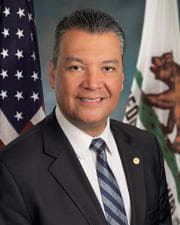
Alex Padilla

DemocraticCaliforniaCurrent Member
Sponsored
114
Cosponsored
696
Birth Year
1973

Stated Priorities & Legislative Record

Congress 119 · Automated analysis

Reviewed comparisons point both waysAll topics

511 reviewed comparisons · 184 scored · 178 measures

Comparison balance
+1.2/ 2
Supportive
180
Mixed
3
Opposing
1
Unscored
327

Health

Sponsored
1
Cosponsored
36
Linked House votes
0

What they say Official statements

Support for Medicare for All and increased access to mental health care.

Stated priority

“He is proud to support Medicare for All and is a champion for increased access to mental health care.”

Alex Padilla U.S. Senator for California · Captured 2026-10-28

Addressing systemic disparities that affect health care access.

Stated priority

“In the Senate, Alex has prioritized addressing the systemic disparities that affect health care access.”

Alex Padilla U.S. Senator for California · Captured 2026-10-28

Guaranteeing quality, affordable, and equitable health care for every American.

Stated priority

“Alex is working to guarantee quality, affordable, and equitable health care for every American.”

Alex Padilla U.S. Senator for California · Captured 2026-10-28

What they do Legislative evidence

SRES 666 · A resolution designating the first week of April as "National Asbestos Awareness Week".

Cosponsor

No direct connectionCosponsorship · Reviewed automated analysis

Compared with: Support for Medicare for All and increased access to mental health care.

The cosponsorship is for a resolution about asbestos awareness and public education on asbestos exposure. That does not directly advance or oppose the stated policy goal of supporting Medicare for All or increasing access to mental health care. It is a health-related awareness measure, but not a substantive policy action on universal coverage or mental health services.

“He is proud to support Medicare for All and is a champion for increased access to mental health care.”

Official statement · Captured 2026-10-28

Supporting provisions

“This resolution designates the first week of April as National Asbestos Awareness Week.”
“It also urges the Office of the Surgeon General to warn and educate people about asbestos exposure, which may be hazardous to their health.”
Official legislative summary

Summary-based analysis · Action predates captured statement · Narrower scope

Assessed 2026-10-28 · Review: User-authorized automated publication. Published at the user request after the bounded production backfill. Automated evidence validation passed; comparisons have not been individually audited.

No direct connectionCosponsorship · Reviewed automated analysis

Compared with: Addressing systemic disparities that affect health care access.

The cosponsorship is of a resolution designating National Asbestos Awareness Week and urging public warning/education about asbestos exposure. That is a public-health awareness action, but it does not directly address systemic disparities in health care access, such as coverage, affordability, provider access, or structural barriers to care. The connection is too indirect to score as support for the stated policy goal.

“In the Senate, Alex has prioritized addressing the systemic disparities that affect health care access.”

Official statement · Captured 2026-10-28

Supporting provisions

“It also urges the Office of the Surgeon General to warn and educate people about asbestos exposure, which may be hazardous to their health.”

Opposing provisions

“This resolution designates the first week of April as National Asbestos Awareness Week.”
Official legislative summary

Summary-based analysis · Action predates captured statement · Narrower scope

Assessed 2026-10-28 · Review: User-authorized automated publication. Published at the user request after the bounded production backfill. Automated evidence validation passed; comparisons have not been individually audited.

No direct connectionCosponsorship · Reviewed automated analysis

Compared with: Guaranteeing quality, affordable, and equitable health care for every American.

The cosponsorship supports awareness about asbestos exposure and public health education, but it does not directly advance the stated goal of guaranteeing quality, affordable, and equitable health care for every American. The resolution is a awareness designation with an advisory public-health message, not a health coverage, access, affordability, or equity policy mechanism. Any connection to the broader health-care goal is too indirect to score as substantive support.

“Alex is working to guarantee quality, affordable, and equitable health care for every American.”

Official statement · Captured 2026-10-28

Supporting provisions

“It also urges the Office of the Surgeon General to warn and educate people about asbestos exposure, which may be hazardous to their health.”

Opposing provisions

“This resolution designates the first week of April as National Asbestos Awareness Week.”
Official legislative summary

Summary-based analysis · Action predates captured statement · Narrower scope · Timing unknown

Assessed 2026-10-28 · Review: User-authorized automated publication. Published at the user request after the bounded production backfill. Automated evidence validation passed; comparisons have not been individually audited.

“It also urges the Office of the Surgeon General to warn and educate people about asbestos exposure, which may be hazardous to their health.”
Official summary source
S 3323 · Family Vaccine Protection Act

Cosponsor

No direct connectionCosponsorship · Reviewed automated analysis

Compared with: Support for Medicare for All and increased access to mental health care.

The stated priority is support for Medicare for All and increased access to mental health care. The cosponsored bill concerns vaccine advisory authority and vaccine injury compensation, which does not directly advance or undermine Medicare for All or mental health access. At most, it is a public health-related measure, but the supplied passages do not connect it to the specific policy goal in a meaningful way.

“He is proud to support Medicare for All and is a champion for increased access to mental health care.”

Official statement · Captured 2026-10-28

Official legislative summary

Summary-based analysis · Action predates captured statement · Narrower scope

Assessed 2026-10-28 · Review: User-authorized automated publication. Published at the user request after the bounded production backfill. Automated evidence validation passed; comparisons have not been individually audited.

MixedCosponsorship · Reviewed automated analysis

Compared with: Addressing systemic disparities that affect health care access.

The cosponsored bill is about vaccine advisory authority, CDC adoption of ACIP recommendations, and limits on removing vaccines from the compensation program based on scientific evidence. That does not directly advance or oppose the specific goal of addressing systemic disparities in health care access. It is a health-policy measure, but the provided summary does not show a meaningful mechanism aimed at disparities or access equity.

“In the Senate, Alex has prioritized addressing the systemic disparities that affect health care access.”

Official statement · Captured 2026-10-28

Supporting provisions

“The ACIP provides advice and recommendations to the Centers for Disease Control and Prevention (CDC) on the use of vaccines and immunization strategies in the United States.”
“Currently, the ACIP is governed by a charter. The bill establishes statutory requirements for the ACIP’s membership, procedures, and responsibilities for providing guidance and recommendations on the use of vaccines, including newly authorized vaccines and vaccines in response to public health emergencies.”
“The bill requires (1) the CDC to adopt any ACIP recommendation unless the CDC determines it is not supported by a preponderance of the best available scientific evidence, and (2) the Department of Health and Human Services (HHS) or the CDC, as applicable, to publish the scientific basis and notify Congress of any action they take that is contrary to an ACIP recommendation.”
“The VICP is a no-fault compensation program allowing individuals to seek federal funds for injuries allegedly caused by covered vaccines.”

Opposing provisions

“Family Vaccine Protection Act This bill provides statutory authority for the Advisory Committee on Immunization Practices (ACIP) and establishes related requirements.”
“The bill also conditions the removal of a vaccine from the National Vaccine Injury Compensation Program (VICP) on supportive scientific evidence.”
“Also, currently, the CDC reviews and decides whether to adopt the ACIP’s recommendations.”
“Currently, HHS may modify via rulemaking the table of vaccines covered under the VICP.”
“The bill requires any removal of a vaccine from the table to be supported by a preponderance of the best available scientific evidence regarding the vaccine’s safety or efficacy.”
Official legislative summary

Summary-based analysis · Action predates captured statement · Narrower scope

Assessed 2026-10-28 · Review: User-authorized automated publication. Published at the user request after the bounded production backfill. Automated evidence validation passed; comparisons have not been individually audited.

Partly supportsCosponsorship · Reviewed automated analysis

Compared with: Guaranteeing quality, affordable, and equitable health care for every American.

Cosponsoring this bill meaningfully supports a policy that can help preserve access to vaccines and the public-health infrastructure around them, which is a limited but relevant contribution to equitable health care. The bill gives ACIP statutory authority and requires CDC to adopt ACIP recommendations unless the science shows otherwise, and it tightens standards for removing vaccines from VICP coverage. However, it does not directly address affordability, universal coverage, or broader health-care access, so the support is narrower than the full stated goal.

“Alex is working to guarantee quality, affordable, and equitable health care for every American.”

Official statement · Captured 2026-10-28

Supporting provisions

“Family Vaccine Protection Act This bill provides statutory authority for the Advisory Committee on Immunization Practices (ACIP) and establishes related requirements.”
“Currently, the ACIP is governed by a charter. The bill establishes statutory requirements for the ACIP’s membership, procedures, and responsibilities for providing guidance and recommendations on the use of vaccines, including newly authorized vaccines and vaccines in response to public health emergencies.”
“The bill requires (1) the CDC to adopt any ACIP recommendation unless the CDC determines it is not supported by a preponderance of the best available scientific evidence, and (2) the Department of Health and Human Services (HHS) or the CDC, as applicable, to publish the scientific basis and notify Congress of any action they take that is contrary to an ACIP recommendation.”
“The bill requires any removal of a vaccine from the table to be supported by a preponderance of the best available scientific evidence regarding the vaccine’s safety or efficacy.”
Official legislative summary

Summary-based analysis · Action predates captured statement · Narrower scope

Assessed 2026-10-28 · Review: User-authorized automated publication. Published at the user request after the bounded production backfill. Automated evidence validation passed; comparisons have not been individually audited.

“The ACIP provides advice and recommendations to the Centers for Disease Control and Prevention (CDC) on the use of vaccines and immunization strategies in the United States.”
Official summary source
S 1552 · Living Donor Protection Act of 2025

Cosponsor

Partly supportsCosponsorship · Reviewed automated analysis

Compared with: Addressing systemic disparities that affect health care access.

The cosponsored bill meaningfully advances health care access for a specific subgroup by prohibiting insurance carriers from denying, canceling, varying premiums, or imposing conditions on coverage because someone is a living organ donor, and by adding job-protected medical leave for recovery. That supports access-related protections, but it is narrower than a general effort to address systemic disparities in health care access, so the fit is partial rather than direct and comprehensive.

“In the Senate, Alex has prioritized addressing the systemic disparities that affect health care access.”

Official statement · Captured 2026-10-28

Supporting provisions

“Living Donor Protection Act of 2025 This bill prohibits life insurance, disability insurance, and long-term insurance carriers from denying or otherwise restricting coverage for living organ donors.”
“Specifically, carriers may not deny, cancel, vary premiums, or otherwise impose conditions on policies based on an individual's status as a living organ donor.”
“The bill also expressly specifies that recovery from organ-donation surgery constitutes a serious health condition that entitles eligible employees to job-protected medical leave.”
“In addition, the Department of Health and Human Services must update educational materials on living organ donation to include information about the benefits and risks of living organ donation and the impact of donation on insurance access, particularly with respect to the bill's changes.”
Official legislative summary

Summary-based analysis · Action predates captured statement · Narrower scope

Assessed 2026-10-28 · Review: User-authorized automated publication. Published at the user request after the bounded production backfill. Automated evidence validation passed; comparisons have not been individually audited.

Partly supportsCosponsorship · Reviewed automated analysis

Compared with: Guaranteeing quality, affordable, and equitable health care for every American.

The cosponsored bill meaningfully supports part of the stated goal by reducing barriers to health-related coverage and leave for living organ donors. It protects donors from insurance denial or premium increases based on donor status and adds job-protected medical leave for recovery, which advances access and affordability in a specific context. However, it is a narrow, population-specific measure rather than a broad guarantee of quality, affordable, and equitable health care for every American, so the support is partial and limited in scope.

“Alex is working to guarantee quality, affordable, and equitable health care for every American.”

Official statement · Captured 2026-10-28

Supporting provisions

“Living Donor Protection Act of 2025 This bill prohibits life insurance, disability insurance, and long-term insurance carriers from denying or otherwise restricting coverage for living organ donors.”
“Specifically, carriers may not deny, cancel, vary premiums, or otherwise impose conditions on policies based on an individual's status as a living organ donor.”
“The bill also expressly specifies that recovery from organ-donation surgery constitutes a serious health condition that entitles eligible employees to job-protected medical leave.”
Official legislative summary

Summary-based analysis · Action predates captured statement · Narrower scope

Assessed 2026-10-28 · Review: User-authorized automated publication. Published at the user request after the bounded production backfill. Automated evidence validation passed; comparisons have not been individually audited.

“The bill also expressly specifies that recovery from organ-donation surgery constitutes a serious health condition that entitles eligible employees to job-protected medical leave.”
Official summary source
SJRES 84 · A joint resolution providing for congressional disapproval under chapter 8 of title 5, United States Code, of the rule submitted by the Centers for Medicare & Medicaid Services relating to "Patient Protection and Affordable Care Act; Marketplace Integrity and Affordability".

Cosponsor

Insufficient evidenceCosponsorship · Reviewed automated analysis

Compared with: Support for Medicare for All and increased access to mental health care.

The quoted policy goal is support for Medicare for All and broader access to mental health care. The cosponsored joint resolution is a disapproval measure aimed at nullifying an ACA marketplace integrity rule affecting enrollment timing, eligibility verification, DACA eligibility, and coverage of certain sex-trait modification procedures. The supplied passages do not show that this action advances or blocks Medicare for All specifically, nor do they address mental health access directly. Because the mechanism is about overturning a marketplace regulation rather than expanding or restricting the stated policy goal, a defensible comparison cannot be made from the provided evidence.

“He is proud to support Medicare for All and is a champion for increased access to mental health care.”

Official statement · Captured 2026-10-28

Official legislative summary

Summary-based analysis · Action predates captured statement · Narrower scope · Timing unknown

Assessed 2026-10-28 · Review: User-authorized automated publication. Published at the user request after the bounded production backfill. Automated evidence validation passed; comparisons have not been individually audited.

Insufficient evidenceCosponsorship · Reviewed automated analysis

Compared with: Addressing systemic disparities that affect health care access.

The quoted policy goal is a broad commitment to addressing systemic disparities in health care access. The cosponsored resolution would disapprove a CMS marketplace rule, but the supplied passages do not establish that this action would specifically advance or undermine disparity-reduction efforts in a way that can be tied directly to the stated goal. Because the evidence is only a summary of the rule and does not show an explicit mechanism connected to systemic disparities, a defensible comparison cannot be made.

“In the Senate, Alex has prioritized addressing the systemic disparities that affect health care access.”

Official statement · Captured 2026-10-28

Official legislative summary

Summary-based analysis · Action predates captured statement

Assessed 2026-10-28 · Review: User-authorized automated publication. Published at the user request after the bounded production backfill. Automated evidence validation passed; comparisons have not been individually audited.

Strongly opposesCosponsorship · Reviewed automated analysis

Compared with: Guaranteeing quality, affordable, and equitable health care for every American.

The cosponsored joint resolution would nullify a CMS rule that expanded marketplace integrity and affordability requirements, but the rule also restricted access by tightening enrollment, adding verification burdens, barring DACA recipients from exchange and Basic Health Program enrollment, and prohibiting certain sex-trait modification procedures as essential health benefits. Because the action is to disapprove the rule as a whole, it directly opposes the rule’s coverage and access limitations; however, the supplied passages do not show a direct, specific mechanism advancing the stated goal of guaranteeing quality, affordable, and equitable health care for every American beyond the general ACA framework, so the fit is strongest as a substantive opposing action to this particular policy package.

“Alex is working to guarantee quality, affordable, and equitable health care for every American.”

Official statement · Captured 2026-10-28

Opposing provisions

“This joint resolution nullifies the rule titled Patient Protection and Affordable Care Act; Marketplace Integrity and Affordability, which was issued by the Centers for Medicare & Medicaid Services on June 25, 2025.”
“The rule makes several changes to enrollment requirements for health insurance exchanges, including (1) requiring annual open enrollment periods for all exchanges to begin by November 1 and end by December 31, (2) requiring all exchanges to conduct pre-enrollment verification of eligibility for at least 75% of new enrollments through special enrollment periods, and (3) prohibiting Deferred Action for Childhood Arrivals (DACA) recipients from enrolling in plans through exchanges or in state Basic Health Programs (state programs for certain low-income residents).”
“The rule also prohibits individual and small group health insurers from covering certain sex-trait modification procedures as an essential health benefit.”
Official legislative summary

Summary-based analysis · Action predates captured statement

Assessed 2026-10-28 · Review: User-authorized automated publication. Published at the user request after the bounded production backfill. Automated evidence validation passed; comparisons have not been individually audited.

“The rule makes several changes to enrollment requirements for health insurance exchanges, including (1) requiring annual open enrollment periods for all exchanges to begin by November 1 and end by December 31, (2) requiring all exchanges to conduct pre-enrollment verification of eligibility for at least 75% of new enrollments through special enrollment periods, and (3) prohibiting Deferred Action for Childhood Arrivals (DACA) recipients from enrolling in plans through exchanges or in state Basic Health Programs (state programs for certain low-income residents).”
Official summary source
S 3492 · Essential Caregivers Act of 2025

Cosponsor

Insufficient evidenceCosponsorship · Reviewed automated analysis

Compared with: Support for Medicare for All and increased access to mental health care.

The cosponsorship supports a narrow access policy for essential caregivers in certain Medicare/Medicaid facilities, including during emergencies, which can be related to access to care in a general sense. However, the stated priority is specifically Medicare for All and increased access to mental health care, and the bill does not directly establish universal coverage or target mental health services. The available passages only show caregiver visitation/access rules in institutional settings, so a defensible comparison to the specific policy goal cannot be made.

“He is proud to support Medicare for All and is a champion for increased access to mental health care.”

Official statement · Captured 2026-10-28

Supporting provisions

“Essential Caregivers Act of 2025 This bill prohibits certain health care facilities from limiting the access of essential caregivers to residents of those facilities, including during designated emergency periods.”
“Specifically, the bill generally prohibits Medicare skilled nursing facilities, Medicaid nursing facilities, Medicaid intermediate care facilities, and associated inpatient rehabilitation facilities from restricting the access of essential caregivers to residents of the facilities, including during emergency periods in which visitation rights are otherwise restricted.”
Official legislative summary

Summary-based analysis · Action predates captured statement · Narrower scope

Assessed 2026-10-28 · Review: User-authorized automated publication. Published at the user request after the bounded production backfill. Automated evidence validation passed; comparisons have not been individually audited.

Partly supportsCosponsorship · Reviewed automated analysis

Compared with: Addressing systemic disparities that affect health care access.

The cosponsored bill meaningfully supports the stated goal by reducing a facility-based access barrier that can worsen disparities in obtaining care, especially for residents in skilled nursing and related facilities. Its mechanism is narrow: it protects access for essential caregivers, including during emergency periods, but only in specified facility types and subject to temporary restrictions and safety protocols. That makes it a partial, not comprehensive, advance toward addressing systemic disparities in health care access.

“In the Senate, Alex has prioritized addressing the systemic disparities that affect health care access.”

Official statement · Captured 2026-10-28

Supporting provisions

“Essential Caregivers Act of 2025 This bill prohibits certain health care facilities from limiting the access of essential caregivers to residents of those facilities, including during designated emergency periods.”
“Specifically, the bill generally prohibits Medicare skilled nursing facilities, Medicaid nursing facilities, Medicaid intermediate care facilities, and associated inpatient rehabilitation facilities from restricting the access of essential caregivers to residents of the facilities, including during emergency periods in which visitation rights are otherwise restricted.”

Opposing provisions

“During emergency periods, facilities may restrict access for an initial period of up to seven days and for one additional maximum seven-day period (if the additional period is approved by the state health department).”
“Facilities may restrict access for a total of 7 days (or 14 days with the approval of the state health department) during an emergency period.”
“Essential caregivers must agree to comply with any safety protocols set by the facility, which may be no more stringent for caregivers compared to those for staff.”
“Caregivers who fail to comply with these requirements may be denied access, subject to an appeals process.”
Official legislative summary

Summary-based analysis · Action predates captured statement · Narrower scope · Conditions or exceptions

Assessed 2026-10-28 · Review: User-authorized automated publication. Published at the user request after the bounded production backfill. Automated evidence validation passed; comparisons have not been individually audited.

Partly supportsCosponsorship · Reviewed automated analysis

Compared with: Guaranteeing quality, affordable, and equitable health care for every American.

The cosponsored bill would expand access to essential caregivers in certain Medicare- and Medicaid-participating facilities, including during emergency periods, and limits facility restrictions on visitation. That modestly advances an affordable/equitable health care goal by improving patient support and access within institutional care settings, but it does not directly guarantee quality, affordability, or equitable care for every American, and it applies only to specific facility types with safety-based limits and exceptions.

“Alex is working to guarantee quality, affordable, and equitable health care for every American.”

Official statement · Captured 2026-10-28

Supporting provisions

“Essential Caregivers Act of 2025 This bill prohibits certain health care facilities from limiting the access of essential caregivers to residents of those facilities, including during designated emergency periods.”
“Specifically, the bill generally prohibits Medicare skilled nursing facilities, Medicaid nursing facilities, Medicaid intermediate care facilities, and associated inpatient rehabilitation facilities from restricting the access of essential caregivers to residents of the facilities, including during emergency periods in which visitation rights are otherwise restricted.”
“Essential caregivers must agree to comply with any safety protocols set by the facility, which may be no more stringent for caregivers compared to those for staff.”

Opposing provisions

“During emergency periods, facilities may restrict access for an initial period of up to seven days and for one additional maximum seven-day period (if the additional period is approved by the state health department).”
“Facilities may restrict access for a total of 7 days (or 14 days with the approval of the state health department) during an emergency period.”
“Caregivers who fail to comply with these requirements may be denied access, subject to an appeals process.”
Official legislative summary

Summary-based analysis · Action predates captured statement · Narrower scope · Conditions or exceptions

Assessed 2026-10-28 · Review: User-authorized automated publication. Published at the user request after the bounded production backfill. Automated evidence validation passed; comparisons have not been individually audited.

“Specifically, the bill generally prohibits Medicare skilled nursing facilities, Medicaid nursing facilities, Medicaid intermediate care facilities, and associated inpatient rehabilitation facilities from restricting the access of essential caregivers to residents of the facilities, including during emergency periods in which visitation rights are otherwise restricted.”
Official summary source

Prepared Legislative Analysis

119th Congress · computed from the latest committed analytics snapshot

Updated Oct 29, 2026, 11:00 AM

Sponsored
114
Cosponsored
696
Progressed
196
Floor or later
124
Final success
87
Bill actions
2,891

Top Policy Areas

Health

104

Government Operations and Politics

69

Crime and Law Enforcement

64

Education

57

Public Lands and Natural Resources

45

Agriculture and Food

40

Armed Forces and National Security

40

Labor and Employment

37

Monthly Bill Activity

Jan 2025
105
Feb 2025
178
Mar 2025
130
Apr 2025
155
May 2025
146
Jun 2025
115
Jul 2025
142
Aug 2025
12
Sep 2025
186
Oct 2025
88
Nov 2025
62
Dec 2025
143
Jan 2026
96
Feb 2026
103
Mar 2026
152
Apr 2026
147
May 2026
211
Jun 2026
204
Jul 2026
141
Aug 2026
133
Sep 2026
230
Oct 2026
12

Terms

119th

Senate

Senator · California

2021
118th

Senate

Senator · California

2021 - 2025
117th

Senate

Senator · California

2021 - 2023

Committee Assignments

Committee on Energy and Natural Resources

Member · Senate.gov

0 bills · 1,625 reports · 610 nominations · 7,981 communications

Committee on Environment and Public Works

Member · Senate.gov

0 bills · 437 reports · 620 nominations · 10,126 communications

Committee on Rules and Administration

Member · Senate.gov

0 bills · 27 reports · 108 nominations · 782 communications

Committee on the Budget

Member · Senate.gov

0 bills · 0 reports · 0 nominations · 0 communications

Committee on the Judiciary

Member · Senate.gov

0 bills · 180 reports · 5,536 nominations · 2,179 communications

Joint Committee of Congress on the Library

Member · Senate.gov

0 bills · 0 reports · 0 nominations · 0 communications

Joint Committee on Printing

Member · Senate.gov

0 bills · 0 reports · 0 nominations · 0 communications