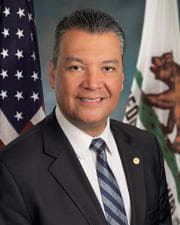
What’s My Rep Doing

Last sync: Oct 30, 2026, 12:17 AM UTC

Members

P000145

Alex Padilla

DemocraticCaliforniaCurrent Member
Sponsored
114
Cosponsored
696
Birth Year
1973

Stated Priorities & Legislative Record

Congress 119 · Automated analysis

Reviewed comparisons point both waysAll topics

511 reviewed comparisons · 184 scored · 178 measures

Comparison balance
+1.2/ 2
Supportive
180
Mixed
3
Opposing
1
Unscored
327

Health

Sponsored
1
Cosponsored
36
Linked House votes
0

What they say Official statements

Support for Medicare for All and increased access to mental health care.

Stated priority

“He is proud to support Medicare for All and is a champion for increased access to mental health care.”

Alex Padilla U.S. Senator for California · Captured 2026-10-28

Addressing systemic disparities that affect health care access.

Stated priority

“In the Senate, Alex has prioritized addressing the systemic disparities that affect health care access.”

Alex Padilla U.S. Senator for California · Captured 2026-10-28

Guaranteeing quality, affordable, and equitable health care for every American.

Stated priority

“Alex is working to guarantee quality, affordable, and equitable health care for every American.”

Alex Padilla U.S. Senator for California · Captured 2026-10-28

What they do Legislative evidence

SRES 464 · A resolution designating September 2025 as "National Cholesterol Education Month" and September 30, 2025, as "LDL-C Awareness Day".

Cosponsor

No direct connectionCosponsorship · Reviewed automated analysis

Compared with: Support for Medicare for All and increased access to mental health care.

The stated policy goal is support for Medicare for All and expanded mental health care. The cosponsorship action is a resolution about cholesterol education and LDL-C awareness, which does not directly advance or oppose Medicare for All or mental health access. It is a public health awareness measure, but it is too remote and topic-mismatched to count as evidence of support for the specific policy goal.

“He is proud to support Medicare for All and is a champion for increased access to mental health care.”

Official statement · Captured 2026-10-28

Official legislative summary

Summary-based analysis · Action predates captured statement

Assessed 2026-10-28 · Review: User-authorized automated publication. Published at the user request after the bounded production backfill. Automated evidence validation passed; comparisons have not been individually audited.

No direct connectionCosponsorship · Reviewed automated analysis

Compared with: Addressing systemic disparities that affect health care access.

The cited action is cosponsoring a resolution to designate an education/awareness month and day for cholesterol and LDL-C. That is a public health awareness measure, but the supplied text does not show any mechanism aimed at reducing systemic disparities in health care access, such as expanding coverage, access, or equity interventions. The connection is too indirect to score as support for the specific policy goal.

“In the Senate, Alex has prioritized addressing the systemic disparities that affect health care access.”

Official statement · Captured 2026-10-28

Opposing provisions

“This resolution designates September 2025 as National Cholesterol Education Month and September 30, 2025, as Low-Density Lipoprotein Cholesterol (LDL-C) Awareness Day.”
Official legislative summary

Summary-based analysis · Action predates captured statement

Assessed 2026-10-28 · Review: User-authorized automated publication. Published at the user request after the bounded production backfill. Automated evidence validation passed; comparisons have not been individually audited.

No direct connectionCosponsorship · Reviewed automated analysis

Compared with: Guaranteeing quality, affordable, and equitable health care for every American.

The stated policy goal is broad access to quality, affordable, and equitable health care. The action is cosponsoring a commemorative resolution designating awareness observances for cholesterol and LDL-C. That is a public-health awareness measure, but the supplied text does not show any direct mechanism for expanding coverage, lowering costs, or improving equitable access to health care, so a defensible comparison cannot be made.

“Alex is working to guarantee quality, affordable, and equitable health care for every American.”

Official statement · Captured 2026-10-28

Opposing provisions

“This resolution designates September 2025 as National Cholesterol Education Month and September 30, 2025, as Low-Density Lipoprotein Cholesterol (LDL-C) Awareness Day.”
Official legislative summary

Summary-based analysis · Action predates captured statement

Assessed 2026-10-28 · Review: User-authorized automated publication. Published at the user request after the bounded production backfill. Automated evidence validation passed; comparisons have not been individually audited.

“This resolution designates September 2025 as National Cholesterol Education Month and September 30, 2025, as Low-Density Lipoprotein Cholesterol (LDL-C) Awareness Day.”
Official summary source
SRES 422 · A resolution recognizing the seriousness of polycystic ovary syndrome (PCOS) and expressing support for the designation of September 2025 as "PCOS Awareness Month".

Cosponsor

No direct connectionCosponsorship · Reviewed automated analysis

Compared with: Support for Medicare for All and increased access to mental health care.

The stated policy goal is support for Medicare for All and increased access to mental health care. The cosponsored resolution concerns recognizing PCOS and designating September 2025 as PCOS Awareness Month. That is a health-awareness measure, but it does not directly advance Medicare for All or mental health access, and the supplied passages do not mention insurance coverage, healthcare financing, or mental health services.

“He is proud to support Medicare for All and is a champion for increased access to mental health care.”

Official statement · Captured 2026-10-28

Supporting provisions

“This resolution expresses support for designating September 2025 as PCOS Awareness Month.”
“Polycystic ovary syndrome (PCOS) is caused by a hormone imbalance and can cause symptoms such as infertility, weight gain, excess hair growth, and acne.”
Official legislative summary

Summary-based analysis · Action predates captured statement

Assessed 2026-10-28 · Review: User-authorized automated publication. Published at the user request after the bounded production backfill. Automated evidence validation passed; comparisons have not been individually audited.

No direct connectionCosponsorship · Reviewed automated analysis

Compared with: Addressing systemic disparities that affect health care access.

The cosponsored resolution is about recognizing PCOS and supporting a themed awareness month. While PCOS is a health condition, the available passages do not show any substantive policy mechanism to reduce systemic disparities in health care access, such as expanding coverage, access, or equity measures. The action is therefore too indirect to compare as support or opposition to the stated priority.

“In the Senate, Alex has prioritized addressing the systemic disparities that affect health care access.”

Official statement · Captured 2026-10-28

Supporting provisions

“This resolution expresses support for designating September 2025 as PCOS Awareness Month.”
“Polycystic ovary syndrome (PCOS) is caused by a hormone imbalance and can cause symptoms such as infertility, weight gain, excess hair growth, and acne.”
Official legislative summary

Summary-based analysis · Action predates captured statement · Narrower scope

Assessed 2026-10-28 · Review: User-authorized automated publication. Published at the user request after the bounded production backfill. Automated evidence validation passed; comparisons have not been individually audited.

No direct connectionCosponsorship · Reviewed automated analysis

Compared with: Guaranteeing quality, affordable, and equitable health care for every American.

The cosponsorship is of a resolution recognizing PCOS Awareness Month and expressing support for awareness of a specific medical condition. That is related to health in a general sense, but it does not directly advance the stated policy goal of guaranteeing quality, affordable, and equitable health care for every American. The passages describe awareness and the condition’s symptoms, not concrete actions on health care access, affordability, quality, or equity.

“Alex is working to guarantee quality, affordable, and equitable health care for every American.”

Official statement · Captured 2026-10-28

Supporting provisions

“This resolution expresses support for designating September 2025 as PCOS Awareness Month.”
“Polycystic ovary syndrome (PCOS) is caused by a hormone imbalance and can cause symptoms such as infertility, weight gain, excess hair growth, and acne.”
Official legislative summary

Summary-based analysis · Action predates captured statement

Assessed 2026-10-28 · Review: User-authorized automated publication. Published at the user request after the bounded production backfill. Automated evidence validation passed; comparisons have not been individually audited.

“Polycystic ovary syndrome (PCOS) is caused by a hormone imbalance and can cause symptoms such as infertility, weight gain, excess hair growth, and acne.”
Official summary source
SRES 416 · A resolution expressing support for the designation of September 2025 as "Sickle Cell Disease Awareness Month" in order to educate communities across the United States about sickle cell disease and the need for research, early detection methods, effective treatments, and preventative care programs with respect to complications from sickle cell disease and conditions related to sickle cell disease.

Cosponsor

No direct connectionCosponsorship · Reviewed automated analysis

Compared with: Support for Medicare for All and increased access to mental health care.

The stated priority is support for Medicare for All and increased access to mental health care. The cosponsored resolution concerns Sickle Cell Disease Awareness Month and broadly encourages education, research, early detection, treatment, and preventative care for sickle cell disease. That is a health-related awareness measure, but it does not directly address universal health coverage or mental health access, so a defensible policy comparison cannot be made.

“He is proud to support Medicare for All and is a champion for increased access to mental health care.”

Official statement · Captured 2026-10-28

Supporting provisions

“This resolution expresses support for the goals and ideals of Sickle Cell Disease Awareness Month.”
“Sickle cell disease is an inherited blood disorder than can lead to pain, anemia, infections, and stroke.”
Official legislative summary

Summary-based analysis · Action predates captured statement · Narrower scope

Assessed 2026-10-28 · Review: User-authorized automated publication. Published at the user request after the bounded production backfill. Automated evidence validation passed; comparisons have not been individually audited.

No direct connectionCosponsorship · Reviewed automated analysis

Compared with: Addressing systemic disparities that affect health care access.

The quoted priority is about addressing systemic disparities that affect health care access. The cosponsored resolution supports awareness of sickle cell disease and calls for education, research, early detection, effective treatments, and preventative care programs. While those goals relate to a health condition that can disproportionately affect some communities, the supplied passages do not specifically show a policy mechanism aimed at reducing systemic disparities in health care access. The action is therefore only an indirect and too-general fit for the stated priority.

“In the Senate, Alex has prioritized addressing the systemic disparities that affect health care access.”

Official statement · Captured 2026-10-28

Supporting provisions

“This resolution expresses support for the goals and ideals of Sickle Cell Disease Awareness Month.”
“Sickle cell disease is an inherited blood disorder than can lead to pain, anemia, infections, and stroke.”
Official legislative summary

Summary-based analysis · Action predates captured statement · Narrower scope · Timing unknown

Assessed 2026-10-28 · Review: User-authorized automated publication. Published at the user request after the bounded production backfill. Automated evidence validation passed; comparisons have not been individually audited.

Insufficient evidenceCosponsorship · Reviewed automated analysis

Compared with: Guaranteeing quality, affordable, and equitable health care for every American.

The cosponsorship is of a resolution supporting awareness, research, early detection, treatments, and preventive care for sickle cell disease. That is related to health care generally, but the supplied passages do not show a specific commitment to guaranteeing quality, affordable, and equitable health care for every American, nor do they address affordability, universal coverage, or equity in the broader health system. The evidence is too narrow and indirect to make a defensible alignment judgment.

“Alex is working to guarantee quality, affordable, and equitable health care for every American.”

Official statement · Captured 2026-10-28

Supporting provisions

“This resolution expresses support for the goals and ideals of Sickle Cell Disease Awareness Month.”
“Sickle cell disease is an inherited blood disorder than can lead to pain, anemia, infections, and stroke.”
Official legislative summary

Summary-based analysis · Action predates captured statement · Narrower scope

Assessed 2026-10-28 · Review: User-authorized automated publication. Published at the user request after the bounded production backfill. Automated evidence validation passed; comparisons have not been individually audited.

“Sickle cell disease is an inherited blood disorder than can lead to pain, anemia, infections, and stroke.”
Official summary source
S 2556 · Protecting Health Care and Lowering Costs Act

Cosponsor

Partly supportsCosponsorship · Reviewed automated analysis

Compared with: Support for Medicare for All and increased access to mental health care.

The cosponsored bill meaningfully supports broader health coverage access and lower costs by making permanent expanded premium tax credit eligibility, increasing premium tax credit amounts, and repealing some Medicare-related provisions. That aligns in part with the stated goal of supporting Medicare and increasing access to care, but it is not Medicare for All and does not directly establish universal Medicare coverage or specifically target mental health access. The fit is therefore supportive but narrower than the quoted priority.

“He is proud to support Medicare for All and is a champion for increased access to mental health care.”

Official statement · Captured 2026-10-28

Supporting provisions

“Protecting Health Care and Lowering Costs Act This bill makes permanent temporary provisions that generally expand eligibility for and increase the amount of the premium tax credit.”
“For 2021-2025, the maximum income limit is eliminated, which generally expands eligibility for the premium tax credit.”
“For 2021-2025, the applicable percentages are lowered and the adjustment of the applicable percentages for inflation is eliminated, which generally increases the amount of the premium tax credit.”
“The bill permanently eliminates the 400% maximum income limit, lowers the applicable percentages, and eliminates the inflation adjustment for the applicable percentages.”
“Finally, the bill repeals multiple Medicaid, Medicare, and health-related tax provisions enacted by the OBBBA, including certain Medicare and Medicare eligibility and verification requirements, the reduced window for retroactive Medicaid coverage, and premium tax credit verification requirements.”

Opposing provisions

“This bill also repeals multiple Medicaid, Medicare, and health-related tax provisions enacted by the One Big Beautiful Bill Act (OBBBA).”
“Currently, eligible taxpayers may claim the premium tax credit, which applies toward the cost of obtaining health insurance through health insurance exchanges.”
“To qualify, a taxpayer’s household income must meet or exceed 100% of the federal poverty level (FPL) and, after 2025, may not exceed 400% of the FPL (maximum income limit).”
“Further, under current law, the amount of the premium tax credit is partially based on the taxpayer’s household income multiplied by the applicable percentage.”
“The applicable percentage varies depending on which of six income ranges (adjusted for inflation after 2025) the taxpayer’s household income falls within.”
Official legislative summary

Summary-based analysis · Action predates captured statement · Narrower scope

Assessed 2026-10-28 · Review: User-authorized automated publication. Published at the user request after the bounded production backfill. Automated evidence validation passed; comparisons have not been individually audited.

Partly supportsCosponsorship · Reviewed automated analysis

Compared with: Addressing systemic disparities that affect health care access.

The cosponsored bill would expand access to subsidized health coverage by making permanent broader premium tax credit eligibility, lowering the credit amounts’ household-income-based contribution thresholds, and repealing certain Medicaid-related restrictions and verification requirements. That is a meaningful but still general mechanism for improving health care access; the supplied summary does not specifically target systemic disparities or identify measures aimed at disparity-driven barriers, so the support is partial rather than direct. The action therefore aligns in a narrower way with the stated goal of addressing systemic disparities affecting access to health care.

“In the Senate, Alex has prioritized addressing the systemic disparities that affect health care access.”

Official statement · Captured 2026-10-28

Supporting provisions

“Protecting Health Care and Lowering Costs Act This bill makes permanent temporary provisions that generally expand eligibility for and increase the amount of the premium tax credit.”
“For 2021-2025, the maximum income limit is eliminated, which generally expands eligibility for the premium tax credit.”
“For 2021-2025, the applicable percentages are lowered and the adjustment of the applicable percentages for inflation is eliminated, which generally increases the amount of the premium tax credit.”
“The bill permanently eliminates the 400% maximum income limit, lowers the applicable percentages, and eliminates the inflation adjustment for the applicable percentages.”
“Finally, the bill repeals multiple Medicaid, Medicare, and health-related tax provisions enacted by the OBBBA, including certain Medicare and Medicare eligibility and verification requirements, the reduced window for retroactive Medicaid coverage, and premium tax credit verification requirements.”
Official legislative summary

Summary-based analysis · Action predates captured statement · Narrower scope

Assessed 2026-10-28 · Review: User-authorized automated publication. Published at the user request after the bounded production backfill. Automated evidence validation passed; comparisons have not been individually audited.

Strongly supportsCosponsorship · Reviewed automated analysis

Compared with: Guaranteeing quality, affordable, and equitable health care for every American.

The cosponsored bill directly advances the stated goal of making health care more affordable and accessible by permanently expanding premium tax credit eligibility, increasing the size of the credit, and repealing provisions that would restrict Medicaid, Medicare, and related tax benefits. This is a substantive, direct support for lowering costs and improving access, though the passage does not itself show every aspect of “equitable” or “quality” care.

“Alex is working to guarantee quality, affordable, and equitable health care for every American.”

Official statement · Captured 2026-10-28

Supporting provisions

“Protecting Health Care and Lowering Costs Act This bill makes permanent temporary provisions that generally expand eligibility for and increase the amount of the premium tax credit.”
“This bill also repeals multiple Medicaid, Medicare, and health-related tax provisions enacted by the One Big Beautiful Bill Act (OBBBA).”
“For 2021-2025, the maximum income limit is eliminated, which generally expands eligibility for the premium tax credit.”
“For 2021-2025, the applicable percentages are lowered and the adjustment of the applicable percentages for inflation is eliminated, which generally increases the amount of the premium tax credit.”
“The bill permanently eliminates the 400% maximum income limit, lowers the applicable percentages, and eliminates the inflation adjustment for the applicable percentages.”
“Finally, the bill repeals multiple Medicaid, Medicare, and health-related tax provisions enacted by the OBBBA, including certain Medicare and Medicare eligibility and verification requirements, the reduced window for retroactive Medicaid coverage, and premium tax credit verification requirements.”
Official legislative summary

Summary-based analysis · Action predates captured statement · Narrower scope

Assessed 2026-10-28 · Review: User-authorized automated publication. Published at the user request after the bounded production backfill. Automated evidence validation passed; comparisons have not been individually audited.

“Protecting Health Care and Lowering Costs Act This bill makes permanent temporary provisions that generally expand eligibility for and increase the amount of the premium tax credit.”
Official summary source
S 2341 · Ensuring Safe and Toxic-Free Foods Act of 2025

Cosponsor

No direct connectionCosponsorship · Reviewed automated analysis

Compared with: Support for Medicare for All and increased access to mental health care.

The stated priority is support for Medicare for All and increased access to mental health care, but the cosponsored bill concerns FDA oversight of food additives and GRAS determinations. It does not address health coverage or mental health services in any direct way.

“He is proud to support Medicare for All and is a champion for increased access to mental health care.”

Official statement · Captured 2026-10-28

Supporting provisions

“Ensuring Safe and Toxic-Free Foods Act of 2025 This bill limits the circumstances in which a food additive may be considered generally recognized as safe (GRAS) and requires the Food and Drug Administration (FDA) to review the safety of all such additives.”
“Under the bill, before an additive may be used in food, it must be (1) approved by the FDA, or (2) the subject of a GRAS notification submitted up to two years after the bill’s enactment to which the FDA has not objected.”
“The FDA must publish and seek public comment on such notifications. The FDA must ultimately publish a written determination stating whether it objects to the GRAS determination along with its reasoning.”
“Separately, the FDA must regularly reassess the safety of approved food additives and those considered GRAS.”
“Finally, the bill makes toxic and carcinogenic substances ineligible to be considered GRAS.”
Official legislative summary

Summary-based analysis · Action predates captured statement · Narrower scope

Assessed 2026-10-28 · Review: User-authorized automated publication. Published at the user request after the bounded production backfill. Automated evidence validation passed; comparisons have not been individually audited.

No direct connectionCosponsorship · Reviewed automated analysis

Compared with: Addressing systemic disparities that affect health care access.

The cosponsored bill concerns FDA oversight of food additives and GRAS determinations, not a health-care-access measure or a remedy for systemic disparities in access to medical care. It is public-health related, but the mechanism does not directly address health care access or disparities in health care access.

“In the Senate, Alex has prioritized addressing the systemic disparities that affect health care access.”

Official statement · Captured 2026-10-28

Supporting provisions

“Ensuring Safe and Toxic-Free Foods Act of 2025 This bill limits the circumstances in which a food additive may be considered generally recognized as safe (GRAS) and requires the Food and Drug Administration (FDA) to review the safety of all such additives.”
“Under the bill, before an additive may be used in food, it must be (1) approved by the FDA, or (2) the subject of a GRAS notification submitted up to two years after the bill’s enactment to which the FDA has not objected.”
“The FDA must publish and seek public comment on such notifications. The FDA must ultimately publish a written determination stating whether it objects to the GRAS determination along with its reasoning.”
“Separately, the FDA must regularly reassess the safety of approved food additives and those considered GRAS.”
“Finally, the bill makes toxic and carcinogenic substances ineligible to be considered GRAS.”
Official legislative summary

Summary-based analysis · Action predates captured statement · Narrower scope

Assessed 2026-10-28 · Review: User-authorized automated publication. Published at the user request after the bounded production backfill. Automated evidence validation passed; comparisons have not been individually audited.

No direct connectionCosponsorship · Reviewed automated analysis

Compared with: Guaranteeing quality, affordable, and equitable health care for every American.

The stated priority is guaranteeing quality, affordable, and equitable health care for every American, while the cosponsored bill concerns FDA regulation of food additives and toxic substances. That is a public health and food safety measure, but it does not directly advance health care access, affordability, equity, or coverage. Any relationship is too indirect to score as support for the specific health care policy goal.

“Alex is working to guarantee quality, affordable, and equitable health care for every American.”

Official statement · Captured 2026-10-28

Supporting provisions

“Ensuring Safe and Toxic-Free Foods Act of 2025 This bill limits the circumstances in which a food additive may be considered generally recognized as safe (GRAS) and requires the Food and Drug Administration (FDA) to review the safety of all such additives.”
“Under the bill, before an additive may be used in food, it must be (1) approved by the FDA, or (2) the subject of a GRAS notification submitted up to two years after the bill’s enactment to which the FDA has not objected.”
“The FDA must publish and seek public comment on such notifications. The FDA must ultimately publish a written determination stating whether it objects to the GRAS determination along with its reasoning.”
“The FDA must annually review or reassess at least 50 GRAS notifications until all notifications have been reviewed or reassessed.”
“Separately, the FDA must regularly reassess the safety of approved food additives and those considered GRAS.”
“Finally, the bill makes toxic and carcinogenic substances ineligible to be considered GRAS.”
Official legislative summary

Summary-based analysis · Action predates captured statement · Narrower scope

Assessed 2026-10-28 · Review: User-authorized automated publication. Published at the user request after the bounded production backfill. Automated evidence validation passed; comparisons have not been individually audited.

“Ensuring Safe and Toxic-Free Foods Act of 2025 This bill limits the circumstances in which a food additive may be considered generally recognized as safe (GRAS) and requires the Food and Drug Administration (FDA) to review the safety of all such additives.”
Official summary source

Prepared Legislative Analysis

119th Congress · computed from the latest committed analytics snapshot

Updated Oct 29, 2026, 11:00 AM

Sponsored
114
Cosponsored
696
Progressed
196
Floor or later
124
Final success
87
Bill actions
2,891

Top Policy Areas

Health

104

Government Operations and Politics

69

Crime and Law Enforcement

64

Education

57

Public Lands and Natural Resources

45

Agriculture and Food

40

Armed Forces and National Security

40

Labor and Employment

37

Monthly Bill Activity

Jan 2025
105
Feb 2025
178
Mar 2025
130
Apr 2025
155
May 2025
146
Jun 2025
115
Jul 2025
142
Aug 2025
12
Sep 2025
186
Oct 2025
88
Nov 2025
62
Dec 2025
143
Jan 2026
96
Feb 2026
103
Mar 2026
152
Apr 2026
147
May 2026
211
Jun 2026
204
Jul 2026
141
Aug 2026
133
Sep 2026
230
Oct 2026
12

Terms

119th

Senate

Senator · California

2021
118th

Senate

Senator · California

2021 - 2025
117th

Senate

Senator · California

2021 - 2023

Committee Assignments

Committee on Energy and Natural Resources

Member · Senate.gov

0 bills · 1,625 reports · 610 nominations · 7,981 communications

Committee on Environment and Public Works

Member · Senate.gov

0 bills · 437 reports · 620 nominations · 10,126 communications

Committee on Rules and Administration

Member · Senate.gov

0 bills · 27 reports · 108 nominations · 782 communications

Committee on the Budget

Member · Senate.gov

0 bills · 0 reports · 0 nominations · 0 communications

Committee on the Judiciary

Member · Senate.gov

0 bills · 180 reports · 5,536 nominations · 2,179 communications

Joint Committee of Congress on the Library

Member · Senate.gov

0 bills · 0 reports · 0 nominations · 0 communications

Joint Committee on Printing

Member · Senate.gov

0 bills · 0 reports · 0 nominations · 0 communications