What’s My Rep Doing

Last sync: Oct 30, 2026, 12:17 AM UTC

Members

P000145

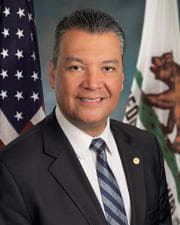
Alex Padilla

DemocraticCaliforniaCurrent Member
Sponsored
114
Cosponsored
696
Birth Year
1973

Stated Priorities & Legislative Record

Congress 119 · Automated analysis

Reviewed comparisons point both waysAll topics

511 reviewed comparisons · 184 scored · 178 measures

Comparison balance
+1.2/ 2
Supportive
180
Mixed
3
Opposing
1
Unscored
327

Environment

Sponsored
4
Cosponsored
10
Linked House votes
0

What they say Official statements

Ensuring that every family has access to clean air and clean water

Stated commitment

“Having grown up in a low-income, heavily polluted neighborhood, he is dedicated to ensuring that every family has access to clean air and clean water.”

Alex Padilla U.S. Senator for California · Captured 2026-10-28

Fighting the existential threat of climate change

Stated commitment

“Alex is determined to fight the existential threat of climate change.”

Alex Padilla U.S. Senator for California · Captured 2026-10-28

Clean up harmful PFAS chemicals on military bases

Stated commitment

“From improving immigration services for military families to addressing veteran homelessness and cleaning up harmful PFAS “forever chemicals” on military bases, Alex is working to ensure that service members, veterans, and their families receive the support they deserve.”

Alex Padilla U.S. Senator for California · Captured 2026-10-28

What they do Legislative evidence

S 720 · Empowering and Enforcing Environmental Justice Act of 2025

Primary sponsor

Partly supportsSponsorship · Reviewed automated analysis

Compared with: Ensuring that every family has access to clean air and clean water

The sponsorship meaningfully supports environmental justice enforcement by creating a DOJ Office of Environmental Justice and granting support to state, local, and tribal governments to enforce environmental laws on environmental justice matters. That is a concrete mechanism that can advance cleaner air and water access for affected communities, though the summary does not specifically guarantee clean air and clean water for every family or directly address all sources of pollution, so the support is narrower than the stated goal.

“Having grown up in a low-income, heavily polluted neighborhood, he is dedicated to ensuring that every family has access to clean air and clean water.”

Official statement · Captured 2026-10-28

Supporting provisions

“Empowering and Enforcing Environmental Justice Act of 2025 This bill establishes the Office of Environmental Justice within the Department of Justice (DOJ).”
“It also establishes grants to improve the capacity of state, local, and tribal governments to enforce environmental laws involving environmental justice matters.”
Official legislative summary

Summary-based analysis · Action predates captured statement · Narrower scope

Assessed 2026-10-28 · Review: User-authorized automated publication. Published at the user request after the bounded production backfill. Automated evidence validation passed; comparisons have not been individually audited.

Partly supportsSponsorship · Reviewed automated analysis

Compared with: Fighting the existential threat of climate change

The sponsored bill appears to modestly advance environmental enforcement by creating an Office of Environmental Justice within DOJ and providing grants to strengthen state, local, and tribal enforcement of environmental laws. That can support climate-related regulation, but the summary does not show any direct emissions-reduction, decarbonization, or broader climate-mitigation mechanism. So it is a narrower, indirect alignment with the stated goal of fighting climate change, not a direct substantive climate policy.

“Alex is determined to fight the existential threat of climate change.”

Official statement · Captured 2026-10-28

Supporting provisions

“Empowering and Enforcing Environmental Justice Act of 2025 This bill establishes the Office of Environmental Justice within the Department of Justice (DOJ).”
“It also establishes grants to improve the capacity of state, local, and tribal governments to enforce environmental laws involving environmental justice matters.”
Official legislative summary

Summary-based analysis · Action predates captured statement · Narrower scope

Assessed 2026-10-28 · Review: User-authorized automated publication. Published at the user request after the bounded production backfill. Automated evidence validation passed; comparisons have not been individually audited.

No direct connectionSponsorship · Reviewed automated analysis

Compared with: Clean up harmful PFAS chemicals on military bases

The stated goal is specifically to clean up harmful PFAS chemicals on military bases. The sponsored bill, based on the supplied summary passages, establishes an Office of Environmental Justice within DOJ and grants for state, local, and tribal enforcement capacity on environmental justice matters. That is a general environmental justice enforcement measure, but the supplied text does not mention PFAS, military bases, remediation, or any mechanism directly targeting those contamination sites. Because the connection is only broad and indirect, a defensible comparison cannot support a directional rating.

“From improving immigration services for military families to addressing veteran homelessness and cleaning up harmful PFAS “forever chemicals” on military bases, Alex is working to ensure that service members, veterans, and their families receive the support they deserve.”

Official statement · Captured 2026-10-28

Supporting provisions

“Empowering and Enforcing Environmental Justice Act of 2025 This bill establishes the Office of Environmental Justice within the Department of Justice (DOJ).”
“It also establishes grants to improve the capacity of state, local, and tribal governments to enforce environmental laws involving environmental justice matters.”
Official legislative summary

Summary-based analysis · Action predates captured statement · Narrower scope

Assessed 2026-10-28 · Review: User-authorized automated publication. Published at the user request after the bounded production backfill. Automated evidence validation passed; comparisons have not been individually audited.

“It also establishes grants to improve the capacity of state, local, and tribal governments to enforce environmental laws involving environmental justice matters.”
Official summary source
S 602 · Wildfire Resilience Through Grazing Research Act

Primary sponsor

Partly supportsSponsorship · Reviewed automated analysis

Compared with: Ensuring that every family has access to clean air and clean water

The sponsorship meaningfully supports a clean-water goal because the bill directs USDA research and grants toward wildfire-related grazing management techniques that are compatible with protecting against water quality degradation and watershed degradation. However, the bill’s main purpose is wildfire mitigation and land management, not a direct clean-air/clean-water access mandate for families, so the support is narrower and indirect rather than a direct advancement of the stated priority.

“Having grown up in a low-income, heavily polluted neighborhood, he is dedicated to ensuring that every family has access to clean air and clean water.”

Official statement · Captured 2026-10-28

Supporting provisions

“(An ungulate is a hooved grazing mammal.) Specifically, the bill allows USDA to provide grants to land-grant institutions for supporting the research and development of wildfire-related ungulate grazing land management techniques that improve soil health and are compatible with activities that protect against adverse environmental effects.”
“This includes compatibility with activities that protect against the spread of invasive plant species and disease, soil erosion, water quality degradation, and watershed degradation.”
Official legislative summary

Summary-based analysis · Action predates captured statement · Narrower scope

Assessed 2026-10-28 · Review: User-authorized automated publication. Published at the user request after the bounded production backfill. Automated evidence validation passed; comparisons have not been individually audited.

No direct connectionSponsorship · Reviewed automated analysis

Compared with: Clean up harmful PFAS chemicals on military bases

The stated priority is cleaning up harmful PFAS chemicals on military bases. The sponsored bill is about USDA research and extension grants for ungulate grazing techniques to reduce wildfire risk, improve soil health, and support post-fire recovery. It does not address PFAS, military bases, or chemical cleanup, so there is no direct substantive connection to the specific policy goal.

“From improving immigration services for military families to addressing veteran homelessness and cleaning up harmful PFAS “forever chemicals” on military bases, Alex is working to ensure that service members, veterans, and their families receive the support they deserve.”

Official statement · Captured 2026-10-28

Opposing provisions

“Wildfire Resilience Through Grazing Research Act This bill expands the high-priority research and extension areas at the Department of Agriculture (USDA) to include the research and development of ungulate grazing land management techniques to promote wildfire mitigation, fuel reduction, and post-fire recovery.”
“(An ungulate is a hooved grazing mammal.) Specifically, the bill allows USDA to provide grants to land-grant institutions for supporting the research and development of wildfire-related ungulate grazing land management techniques that improve soil health and are compatible with activities that protect against adverse environmental effects.”
“This includes compatibility with activities that protect against the spread of invasive plant species and disease, soil erosion, water quality degradation, and watershed degradation.”
“The grants to land-grant universities may also be used to disseminate information to public and private landowners, land managers, and livestock owners regarding these wildfire-related grazing land management techniques and compatible activities.”
Official legislative summary

Summary-based analysis · Action predates captured statement · Narrower scope

Assessed 2026-10-28 · Review: User-authorized automated publication. Published at the user request after the bounded production backfill. Automated evidence validation passed; comparisons have not been individually audited.

Partly supportsSponsorship · Reviewed automated analysis

Compared with: Fighting the existential threat of climate change

The sponsored bill advances wildfire mitigation, fuel reduction, and post-fire recovery through USDA research and extension on grazing-based land management. Those mechanisms can meaningfully contribute to climate adaptation and resilience, but the bill is narrower than a direct climate-change mitigation policy and does not specifically target greenhouse gas reduction or broader climate action.

“Alex is determined to fight the existential threat of climate change.”

Official statement · Captured 2026-10-28

Supporting provisions

“Wildfire Resilience Through Grazing Research Act This bill expands the high-priority research and extension areas at the Department of Agriculture (USDA) to include the research and development of ungulate grazing land management techniques to promote wildfire mitigation, fuel reduction, and post-fire recovery.”
“(An ungulate is a hooved grazing mammal.) Specifically, the bill allows USDA to provide grants to land-grant institutions for supporting the research and development of wildfire-related ungulate grazing land management techniques that improve soil health and are compatible with activities that protect against adverse environmental effects.”
“The grants to land-grant universities may also be used to disseminate information to public and private landowners, land managers, and livestock owners regarding these wildfire-related grazing land management techniques and compatible activities.”
Official legislative summary

Summary-based analysis · Action predates captured statement · Narrower scope

Assessed 2026-10-28 · Review: User-authorized automated publication. Published at the user request after the bounded production backfill. Automated evidence validation passed; comparisons have not been individually audited.

“Wildfire Resilience Through Grazing Research Act This bill expands the high-priority research and extension areas at the Department of Agriculture (USDA) to include the research and development of ungulate grazing land management techniques to promote wildfire mitigation, fuel reduction, and post-fire recovery.”
Official summary source
S 341 · Smoke and Heat Ready Communities Act of 2025

Cosponsor

No direct connectionCosponsorship · Reviewed automated analysis

Compared with: Ensuring that every family has access to clean air and clean water

The cosponsored bill focuses on wildfire smoke and extreme heat preparedness, monitoring, research, and mitigation. That is related to air quality in a broad sense, but it does not directly establish access to clean air and clean water for every family, and it contains no water-specific provision. Because the stated policy goal is broader and more specific than the bill’s targeted public-health measures, this is only an indirect and partial connection at best.

“Having grown up in a low-income, heavily polluted neighborhood, he is dedicated to ensuring that every family has access to clean air and clean water.”

Official statement · Captured 2026-10-28

Supporting provisions

“Smoke and Heat Ready Communities Act of 2025 This bill authorizes the Environmental Protection Agency (EPA) to make grants to air pollution control agencies to support the development and implementation of programs that support local communities in detecting, preparing for, communicating with the public about, or mitigating the environmental and public health aspects of wildfire smoke and extreme heat.”
“The bill requires the EPA to establish four Centers of Excellence for Wildfire Smoke and Extreme Heat at institutions of higher education to research (1) the effects of smoke emissions from wildland fires and extreme heat on public health, and (2) the means by which communities can better respond to impacts from such conditions.”
“Additionally, the EPA must begin to carry out research to study the health effects of smoke emissions from wildland fires and extreme heat; develop and disseminate personal and community-based interventions to reduce exposure to, and health effects of, wildland fire smoke emissions and extreme heat; increase the quality of smoke and extreme heat monitoring and prediction tools and techniques; and develop implementation and communication strategies.”
“The EPA must also establish a competitive grant program to assist certain entities (e.g., a state) in developing and implementing collaborative community plans for mitigating the impacts of smoke emissions from wildland fires and extreme heat.”
Official legislative summary

Summary-based analysis · Action predates captured statement · Narrower scope

Assessed 2026-10-28 · Review: User-authorized automated publication. Published at the user request after the bounded production backfill. Automated evidence validation passed; comparisons have not been individually audited.

No direct connectionCosponsorship · Reviewed automated analysis

Compared with: Clean up harmful PFAS chemicals on military bases

The stated policy goal is to clean up harmful PFAS chemicals on military bases, but the cosponsored bill is about wildfire smoke and extreme heat readiness, including EPA grants, research, and mitigation for those hazards. It does not address PFAS contamination or military bases, so there is no direct substantive connection to the specific goal.

“From improving immigration services for military families to addressing veteran homelessness and cleaning up harmful PFAS “forever chemicals” on military bases, Alex is working to ensure that service members, veterans, and their families receive the support they deserve.”

Official statement · Captured 2026-10-28

Supporting provisions

“Smoke and Heat Ready Communities Act of 2025 This bill authorizes the Environmental Protection Agency (EPA) to make grants to air pollution control agencies to support the development and implementation of programs that support local communities in detecting, preparing for, communicating with the public about, or mitigating the environmental and public health aspects of wildfire smoke and extreme heat.”
“The bill requires the EPA to establish four Centers of Excellence for Wildfire Smoke and Extreme Heat at institutions of higher education to research (1) the effects of smoke emissions from wildland fires and extreme heat on public health, and (2) the means by which communities can better respond to impacts from such conditions.”
“Additionally, the EPA must begin to carry out research to study the health effects of smoke emissions from wildland fires and extreme heat; develop and disseminate personal and community-based interventions to reduce exposure to, and health effects of, wildland fire smoke emissions and extreme heat; increase the quality of smoke and extreme heat monitoring and prediction tools and techniques; and develop implementation and communication strategies.”
“The EPA must also establish a competitive grant program to assist certain entities (e.g., a state) in developing and implementing collaborative community plans for mitigating the impacts of smoke emissions from wildland fires and extreme heat.”
Official legislative summary

Summary-based analysis · Action predates captured statement · Narrower scope

Assessed 2026-10-28 · Review: User-authorized automated publication. Published at the user request after the bounded production backfill. Automated evidence validation passed; comparisons have not been individually audited.

Partly supportsCosponsorship · Reviewed automated analysis

Compared with: Fighting the existential threat of climate change

The cosponsorship supports a climate-related response bill that addresses wildfire smoke and extreme heat through EPA grants, research, monitoring, and community preparedness. That meaningfully advances adaptation and public-health resilience to climate-linked harms, but it does not directly target reducing greenhouse-gas emissions or otherwise confront climate change’s root causes, so the support is narrower than the full policy goal of fighting the existential threat of climate change.

“Alex is determined to fight the existential threat of climate change.”

Official statement · Captured 2026-10-28

Supporting provisions

“Smoke and Heat Ready Communities Act of 2025 This bill authorizes the Environmental Protection Agency (EPA) to make grants to air pollution control agencies to support the development and implementation of programs that support local communities in detecting, preparing for, communicating with the public about, or mitigating the environmental and public health aspects of wildfire smoke and extreme heat.”
“The bill requires the EPA to establish four Centers of Excellence for Wildfire Smoke and Extreme Heat at institutions of higher education to research (1) the effects of smoke emissions from wildland fires and extreme heat on public health, and (2) the means by which communities can better respond to impacts from such conditions.”
“Additionally, the EPA must begin to carry out research to study the health effects of smoke emissions from wildland fires and extreme heat; develop and disseminate personal and community-based interventions to reduce exposure to, and health effects of, wildland fire smoke emissions and extreme heat; increase the quality of smoke and extreme heat monitoring and prediction tools and techniques; and develop implementation and communication strategies.”
“The EPA must also establish a competitive grant program to assist certain entities (e.g., a state) in developing and implementing collaborative community plans for mitigating the impacts of smoke emissions from wildland fires and extreme heat.”
Official legislative summary

Summary-based analysis · Action predates captured statement · Narrower scope

Assessed 2026-10-28 · Review: User-authorized automated publication. Published at the user request after the bounded production backfill. Automated evidence validation passed; comparisons have not been individually audited.

“Smoke and Heat Ready Communities Act of 2025 This bill authorizes the Environmental Protection Agency (EPA) to make grants to air pollution control agencies to support the development and implementation of programs that support local communities in detecting, preparing for, communicating with the public about, or mitigating the environmental and public health aspects of wildfire smoke and extreme heat.”
Official summary source
S 147 · Cleaner Air Spaces Act of 2025

Cosponsor

Partly supportsCosponsorship · Reviewed automated analysis

Compared with: Ensuring that every family has access to clean air and clean water

The cosponsored bill would advance access to clean air by funding cleaner air space programs, including clean air centers, filtration units for certain households, and education in areas at risk from wildfire smoke. That meaningfully supports the stated goal of ensuring families have access to clean air, though it is narrower than a general clean-air policy and does not address clean water.

“Having grown up in a low-income, heavily polluted neighborhood, he is dedicated to ensuring that every family has access to clean air and clean water.”

Official statement · Captured 2026-10-28

Supporting provisions

“Cleaner Air Spaces Act of 2025 This bill requires the Environmental Protection Agency to provide grants to air pollution control agencies, including at least one tribal agency with jurisdiction over air quality, to implement cleaner air space programs (i.e., programs to provide clean air to the public during wildland fire smoke events).”
“Generally, such programs must be located in areas at risk of exposure to wildland fire smoke and must help provide educational materials, clean air centers (i.e., one or more clean air rooms in a publicly accessible building), and air filtration units to certain households.”
“Clean air rooms are rooms designed to keep levels of harmful air pollutants as low as possible during wildland fire smoke events.”
Official legislative summary

Summary-based analysis · Action predates captured statement · Narrower scope

Assessed 2026-10-28 · Review: User-authorized automated publication. Published at the user request after the bounded production backfill. Automated evidence validation passed; comparisons have not been individually audited.

Partly supportsCosponsorship · Reviewed automated analysis

Compared with: Fighting the existential threat of climate change

The cosponsored bill would fund cleaner air space programs to reduce exposure to harmful wildfire smoke, including clean air rooms, filtration units, and educational materials in at-risk areas. That is a meaningful but narrower climate-related benefit because it addresses one consequence of climate change—wildland fire smoke—rather than directly advancing broader climate mitigation or emissions reduction.

“Alex is determined to fight the existential threat of climate change.”

Official statement · Captured 2026-10-28

Supporting provisions

“Cleaner Air Spaces Act of 2025 This bill requires the Environmental Protection Agency to provide grants to air pollution control agencies, including at least one tribal agency with jurisdiction over air quality, to implement cleaner air space programs (i.e., programs to provide clean air to the public during wildland fire smoke events).”
“Generally, such programs must be located in areas at risk of exposure to wildland fire smoke and must help provide educational materials, clean air centers (i.e., one or more clean air rooms in a publicly accessible building), and air filtration units to certain households.”
“Clean air rooms are rooms designed to keep levels of harmful air pollutants as low as possible during wildland fire smoke events.”
Official legislative summary

Summary-based analysis · Action predates captured statement · Narrower scope

Assessed 2026-10-28 · Review: User-authorized automated publication. Published at the user request after the bounded production backfill. Automated evidence validation passed; comparisons have not been individually audited.

No direct connectionCosponsorship · Reviewed automated analysis

Compared with: Clean up harmful PFAS chemicals on military bases

The stated policy goal is cleaning up harmful PFAS chemicals on military bases. The cosponsored bill instead concerns grants for cleaner air space programs during wildland fire smoke events, including clean air rooms, filtration, and educational materials. That is a different environmental health policy and does not directly address PFAS remediation on military bases.

“From improving immigration services for military families to addressing veteran homelessness and cleaning up harmful PFAS “forever chemicals” on military bases, Alex is working to ensure that service members, veterans, and their families receive the support they deserve.”

Official statement · Captured 2026-10-28

Supporting provisions

“Cleaner Air Spaces Act of 2025 This bill requires the Environmental Protection Agency to provide grants to air pollution control agencies, including at least one tribal agency with jurisdiction over air quality, to implement cleaner air space programs (i.e., programs to provide clean air to the public during wildland fire smoke events).”
“Generally, such programs must be located in areas at risk of exposure to wildland fire smoke and must help provide educational materials, clean air centers (i.e., one or more clean air rooms in a publicly accessible building), and air filtration units to certain households.”
“Clean air rooms are rooms designed to keep levels of harmful air pollutants as low as possible during wildland fire smoke events.”
“Under the bill, air pollution control agencies must partner with at least one community-based organization in implementing such programs.”
Official legislative summary

Summary-based analysis · Action predates captured statement · Narrower scope

Assessed 2026-10-28 · Review: User-authorized automated publication. Published at the user request after the bounded production backfill. Automated evidence validation passed; comparisons have not been individually audited.

“Cleaner Air Spaces Act of 2025 This bill requires the Environmental Protection Agency to provide grants to air pollution control agencies, including at least one tribal agency with jurisdiction over air quality, to implement cleaner air space programs (i.e., programs to provide clean air to the public during wildland fire smoke events).”
Official summary source

Prepared Legislative Analysis

119th Congress · computed from the latest committed analytics snapshot

Updated Oct 29, 2026, 11:00 AM

Sponsored
114
Cosponsored
696
Progressed
196
Floor or later
124
Final success
87
Bill actions
2,891

Top Policy Areas

Health

104

Government Operations and Politics

69

Crime and Law Enforcement

64

Education

57

Public Lands and Natural Resources

45

Agriculture and Food

40

Armed Forces and National Security

40

Labor and Employment

37

Monthly Bill Activity

Jan 2025
105
Feb 2025
178
Mar 2025
130
Apr 2025
155
May 2025
146
Jun 2025
115
Jul 2025
142
Aug 2025
12
Sep 2025
186
Oct 2025
88
Nov 2025
62
Dec 2025
143
Jan 2026
96
Feb 2026
103
Mar 2026
152
Apr 2026
147
May 2026
211
Jun 2026
204
Jul 2026
141
Aug 2026
133
Sep 2026
230
Oct 2026
12

Terms

119th

Senate

Senator · California

2021
118th

Senate

Senator · California

2021 - 2025
117th

Senate

Senator · California

2021 - 2023

Committee Assignments

Committee on Energy and Natural Resources

Member · Senate.gov

0 bills · 1,625 reports · 610 nominations · 7,981 communications

Committee on Environment and Public Works

Member · Senate.gov

0 bills · 437 reports · 620 nominations · 10,126 communications

Committee on Rules and Administration

Member · Senate.gov

0 bills · 27 reports · 108 nominations · 782 communications

Committee on the Budget

Member · Senate.gov

0 bills · 0 reports · 0 nominations · 0 communications

Committee on the Judiciary

Member · Senate.gov

0 bills · 180 reports · 5,536 nominations · 2,179 communications

Joint Committee of Congress on the Library

Member · Senate.gov

0 bills · 0 reports · 0 nominations · 0 communications

Joint Committee on Printing

Member · Senate.gov

0 bills · 0 reports · 0 nominations · 0 communications