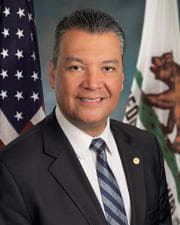
What’s My Rep Doing

Last sync: Oct 31, 2026, 1:52 AM UTC

Members

P000145

Alex Padilla

DemocraticCaliforniaCurrent Member
Sponsored
114
Cosponsored
696
Birth Year
1973

Stated Priorities & Legislative Record

Congress 119 · Automated analysis

Reviewed comparisons point both waysAll topics

511 reviewed comparisons · 184 scored · 178 measures

Comparison balance
+1.2/ 2
Supportive
180
Mixed
3
Opposing
1
Unscored
327

Civil Rights

Sponsored
3
Cosponsored
26
Linked House votes
0

What they say Official statements

Expand and preserve voting rights.

Stated commitment

“That’s why he’s spent his career fighting to expand and preserve voting rights.”

Alex Padilla U.S. Senator for California · Captured 2026-10-28

Protect the civil rights of all Americans.

Stated commitment

“And because Alex believes in an America made stronger by its diversity, he’s consistently fought to protect the civil rights of all Americans.”

Alex Padilla U.S. Senator for California · Captured 2026-10-28

Protect access to abortion services throughout the United States.

Stated commitment

“As a cosponsor of the Women’s Health Protection Act, Alex is fighting to protect access to abortion services throughout the United States.”

Alex Padilla U.S. Senator for California · Captured 2026-10-28

Protect a patient's right to travel freely between states to access care.

Stated commitment

“While Republican-led state legislatures work to strip away reproductive rights, he’s also fighting to protect a patient’s right to travel freely between states to access care.”

Alex Padilla U.S. Senator for California · Captured 2026-10-28

Take bold action from Congress to protect one of our most basic freedoms.

Stated commitment

“As the radical right wing of the Supreme Court strips away the rights of Americans, Alex believes we need bold action from Congress to protect one of our most basic freedoms.”

Alex Padilla U.S. Senator for California · Captured 2026-10-28

What they do Legislative evidence

S 2523 · John R. Lewis Voting Rights Advancement Act of 2025

Cosponsor

Strongly supportsCosponsorship · Reviewed automated analysis

Compared with: Expand and preserve voting rights.

The cosponsored bill directly advances the stated goal of expanding and preserving voting rights by strengthening federal voting-rights protections. It creates or expands preclearance requirements for jurisdictions with prior violations, requires notice of voting changes, authorizes DOJ information requests for enforcement, and adds protections related to election administration. These mechanisms substantively support preserving voting rights rather than merely addressing an adjacent issue.

“That’s why he’s spent his career fighting to expand and preserve voting rights.”

Official statement · Captured 2026-10-28

Supporting provisions

“John R. Lewis Voting Rights Advancement Act of 2025 This bill establishes new criteria for determining which states and political subdivisions must obtain preclearance before changes to voting practices may take effect.”
“Preclearance is the process of receiving preapproval from the Department of Justice (DOJ) or the U.S. District Court for the District of Columbia before making legal changes that would affect voting rights.”
“A state and all of its political subdivisions shall be subject to preclearance of voting practice changes for a 10-year period if, during the previous 25 years: 15 or more voting rights violations occurred in the state; or 10 or more violations occurred, at least 1 of which was committed by the state itself.”
“A political subdivision as a separate unit shall also be subject to preclearance for a 10-year period if three or more voting rights violations occurred there during the previous 25 years.”
“States and political subdivisions that meet certain thresholds regarding minority groups must preclear covered practices before implementation, such as redistricting.”
“States and political subdivisions must notify the public of changes to voting practices.”
Official legislative summary

Summary-based analysis · Action predates captured statement

Assessed 2026-10-28 · Review: User-authorized automated publication. Published at the user request after the bounded production backfill. Automated evidence validation passed; comparisons have not been individually audited.

No direct connectionCosponsorship · Reviewed automated analysis

Compared with: Protect access to abortion services throughout the United States.

The stated policy goal is to protect access to abortion services, but the cited action is cosponsorship of the John R. Lewis Voting Rights Advancement Act of 2025, which addresses voting rights preclearance, public notice, DOJ document authority, and related election protections. The supplied passages contain no abortion-related provisions, so this action does not directly advance or oppose the specific abortion-access goal.

“As a cosponsor of the Women’s Health Protection Act, Alex is fighting to protect access to abortion services throughout the United States.”

Official statement · Captured 2026-10-28

Opposing provisions

“John R. Lewis Voting Rights Advancement Act of 2025 This bill establishes new criteria for determining which states and political subdivisions must obtain preclearance before changes to voting practices may take effect.”
“Preclearance is the process of receiving preapproval from the Department of Justice (DOJ) or the U.S. District Court for the District of Columbia before making legal changes that would affect voting rights.”
“A state and all of its political subdivisions shall be subject to preclearance of voting practice changes for a 10-year period if, during the previous 25 years: 15 or more voting rights violations occurred in the state; or 10 or more violations occurred, at least 1 of which was committed by the state itself.”
“A political subdivision as a separate unit shall also be subject to preclearance for a 10-year period if three or more voting rights violations occurred there during the previous 25 years.”
“States and political subdivisions that meet certain thresholds regarding minority groups must preclear covered practices before implementation, such as redistricting.”
“States and political subdivisions must notify the public of changes to voting practices.”
Official legislative summary

Summary-based analysis · Action predates captured statement · Narrower scope

Assessed 2026-10-28 · Review: User-authorized automated publication. Published at the user request after the bounded production backfill. Automated evidence validation passed; comparisons have not been individually audited.

Strongly supportsCosponsorship · Reviewed automated analysis

Compared with: Protect the civil rights of all Americans.

Cosponsoring the John R. Lewis Voting Rights Advancement Act is a direct substantive step toward protecting civil rights in the specific area of voting rights. The bill strengthens federal safeguards against discriminatory voting changes by restoring/expanding preclearance for jurisdictions with documented voting-rights violations, requiring notice of voting practice changes, and adding enforcement tools for DOJ. Those mechanisms directly advance civil rights protections, with no meaningful opposing provision in the supplied summary.

“And because Alex believes in an America made stronger by its diversity, he’s consistently fought to protect the civil rights of all Americans.”

Official statement · Captured 2026-10-28

Supporting provisions

“John R. Lewis Voting Rights Advancement Act of 2025 This bill establishes new criteria for determining which states and political subdivisions must obtain preclearance before changes to voting practices may take effect.”
“Preclearance is the process of receiving preapproval from the Department of Justice (DOJ) or the U.S. District Court for the District of Columbia before making legal changes that would affect voting rights.”
“A state and all of its political subdivisions shall be subject to preclearance of voting practice changes for a 10-year period if, during the previous 25 years: 15 or more voting rights violations occurred in the state; or 10 or more violations occurred, at least 1 of which was committed by the state itself.”
“A political subdivision as a separate unit shall also be subject to preclearance for a 10-year period if three or more voting rights violations occurred there during the previous 25 years.”
“States and political subdivisions that meet certain thresholds regarding minority groups must preclear covered practices before implementation, such as redistricting.”
“States and political subdivisions must notify the public of changes to voting practices.”

Opposing provisions

“The bill outlines factors courts must consider when hearing challenges to voting practices, such as the extent of any history of official voting discrimination in the state or political subdivision.”
“The bill also includes certain protections for election workers, polling places, and election infrastructure.”
Official legislative summary

Summary-based analysis · Action predates captured statement · Narrower scope

Assessed 2026-10-28 · Review: User-authorized automated publication. Published at the user request after the bounded production backfill. Automated evidence validation passed; comparisons have not been individually audited.

No direct connectionCosponsorship · Reviewed automated analysis

Compared with: Protect a patient's right to travel freely between states to access care.

The stated policy goal is to protect a patient’s right to travel between states to access care. The cited cosponsorship is of the John R. Lewis Voting Rights Advancement Act, which concerns voting rights, preclearance of voting practice changes, public notice of voting changes, DOJ document requests, and election-worker/infrastructure protections. Those provisions do not directly advance or oppose interstate travel for medical care, so a defensible comparison cannot be made from the supplied text.

“While Republican-led state legislatures work to strip away reproductive rights, he’s also fighting to protect a patient’s right to travel freely between states to access care.”

Official statement · Captured 2026-10-28

Opposing provisions

“John R. Lewis Voting Rights Advancement Act of 2025 This bill establishes new criteria for determining which states and political subdivisions must obtain preclearance before changes to voting practices may take effect.”
“Preclearance is the process of receiving preapproval from the Department of Justice (DOJ) or the U.S. District Court for the District of Columbia before making legal changes that would affect voting rights.”
“A state and all of its political subdivisions shall be subject to preclearance of voting practice changes for a 10-year period if, during the previous 25 years: 15 or more voting rights violations occurred in the state; or 10 or more violations occurred, at least 1 of which was committed by the state itself.”
“A political subdivision as a separate unit shall also be subject to preclearance for a 10-year period if three or more voting rights violations occurred there during the previous 25 years.”
“States and political subdivisions that meet certain thresholds regarding minority groups must preclear covered practices before implementation, such as redistricting.”
“States and political subdivisions must notify the public of changes to voting practices.”
Official legislative summary

Summary-based analysis · Action predates captured statement · Narrower scope

Assessed 2026-10-28 · Review: User-authorized automated publication. Published at the user request after the bounded production backfill. Automated evidence validation passed; comparisons have not been individually audited.

Strongly supportsCosponsorship · Reviewed automated analysis

Compared with: Take bold action from Congress to protect one of our most basic freedoms.

The stated goal is to support bold congressional action to protect a basic freedom, and the cosponsored bill directly advances that goal by strengthening federal voting-rights protections. Its core mechanism is renewed preclearance: jurisdictions with specified histories of voting-rights violations must get DOJ or court approval before changing voting rules, and the bill also adds notice, enforcement, and election-worker protections. That is a direct substantive advancement of protecting voting rights through congressional action.

“As the radical right wing of the Supreme Court strips away the rights of Americans, Alex believes we need bold action from Congress to protect one of our most basic freedoms.”

Official statement · Captured 2026-10-28

Supporting provisions

“John R. Lewis Voting Rights Advancement Act of 2025 This bill establishes new criteria for determining which states and political subdivisions must obtain preclearance before changes to voting practices may take effect.”
“Preclearance is the process of receiving preapproval from the Department of Justice (DOJ) or the U.S. District Court for the District of Columbia before making legal changes that would affect voting rights.”
“A state and all of its political subdivisions shall be subject to preclearance of voting practice changes for a 10-year period if, during the previous 25 years: 15 or more voting rights violations occurred in the state; or 10 or more violations occurred, at least 1 of which was committed by the state itself.”
“A political subdivision as a separate unit shall also be subject to preclearance for a 10-year period if three or more voting rights violations occurred there during the previous 25 years.”
“States and political subdivisions that meet certain thresholds regarding minority groups must preclear covered practices before implementation, such as redistricting.”
“States and political subdivisions must notify the public of changes to voting practices.”

Opposing provisions

“The bill outlines factors courts must consider when hearing challenges to voting practices, such as the extent of any history of official voting discrimination in the state or political subdivision.”
“The bill also includes certain protections for election workers, polling places, and election infrastructure.”
Official legislative summary

Summary-based analysis · Action predates captured statement

Assessed 2026-10-28 · Review: User-authorized automated publication. Published at the user request after the bounded production backfill. Automated evidence validation passed; comparisons have not been individually audited.

“John R. Lewis Voting Rights Advancement Act of 2025 This bill establishes new criteria for determining which states and political subdivisions must obtain preclearance before changes to voting practices may take effect.”
Official summary source
S 2476 · Disability and Age in Jury Service Nondiscrimination Act

Cosponsor

No direct connectionCosponsorship · Reviewed automated analysis

Compared with: Protect access to abortion services throughout the United States.

The cited action is cosponsorship of a jury-service nondiscrimination bill, which concerns exclusion from jury duty based on disability or age. It does not address abortion access, reproductive health services, or the Women’s Health Protection Act. Because the action is unrelated to the stated policy goal, there is no direct basis to score it as supporting or opposing that goal.

“As a cosponsor of the Women’s Health Protection Act, Alex is fighting to protect access to abortion services throughout the United States.”

Official statement · Captured 2026-10-28

Official legislative summary

Summary-based analysis · Action predates captured statement

Assessed 2026-10-28 · Review: User-authorized automated publication. Published at the user request after the bounded production backfill. Automated evidence validation passed; comparisons have not been individually audited.

No direct connectionCosponsorship · Reviewed automated analysis

Compared with: Expand and preserve voting rights.

The cosponsored bill concerns nondiscrimination in jury service based on disability or age, including reasonable accommodations for jury qualification rules. That is related to access in civic participation, but it is not a direct or specific expansion or preservation of voting rights. The supplied passages do not mention voting, voter access, election administration, or protections for casting a ballot, so a defensible comparison to the stated voting-rights goal cannot be made from this evidence alone.

“That’s why he’s spent his career fighting to expand and preserve voting rights.”

Official statement · Captured 2026-10-28

Supporting provisions

“Disability and Age in Jury Service Nondiscrimination Act This bill prohibits the exclusion of individuals from jury service on the basis of their disability or age.”
“Further, the bill prohibits the disqualification of individuals from jury service who fail to meet certain qualifications (e.g., adequate proficiency in English) on the basis of their disability if reasonable accommodations can be made.”
Official legislative summary

Summary-based analysis · Action predates captured statement · Narrower scope

Assessed 2026-10-28 · Review: User-authorized automated publication. Published at the user request after the bounded production backfill. Automated evidence validation passed; comparisons have not been individually audited.

No direct connectionCosponsorship · Reviewed automated analysis

Compared with: Protect a patient's right to travel freely between states to access care.

The stated policy goal is about protecting a patient’s ability to travel between states to access care, which concerns interstate access to healthcare. The cosponsored bill instead addresses nondiscrimination in jury service based on disability or age, including reasonable accommodations in jury qualification. That is a separate subject with no direct connection to interstate travel for medical care.

“While Republican-led state legislatures work to strip away reproductive rights, he’s also fighting to protect a patient’s right to travel freely between states to access care.”

Official statement · Captured 2026-10-28

Opposing provisions

“Disability and Age in Jury Service Nondiscrimination Act This bill prohibits the exclusion of individuals from jury service on the basis of their disability or age.”
“Further, the bill prohibits the disqualification of individuals from jury service who fail to meet certain qualifications (e.g., adequate proficiency in English) on the basis of their disability if reasonable accommodations can be made.”
Official legislative summary

Summary-based analysis · Action predates captured statement · Narrower scope

Assessed 2026-10-28 · Review: User-authorized automated publication. Published at the user request after the bounded production backfill. Automated evidence validation passed; comparisons have not been individually audited.

Strongly supportsCosponsorship · Reviewed automated analysis

Compared with: Protect the civil rights of all Americans.

Cosponsoring this bill directly advances the stated goal of protecting civil rights by prohibiting discrimination in jury service based on disability or age, and by requiring reasonable accommodations for qualified individuals with disabilities. That is a specific civil-rights protection rather than a broad or indirect theme.

“And because Alex believes in an America made stronger by its diversity, he’s consistently fought to protect the civil rights of all Americans.”

Official statement · Captured 2026-10-28

Supporting provisions

“Disability and Age in Jury Service Nondiscrimination Act This bill prohibits the exclusion of individuals from jury service on the basis of their disability or age.”
“Further, the bill prohibits the disqualification of individuals from jury service who fail to meet certain qualifications (e.g., adequate proficiency in English) on the basis of their disability if reasonable accommodations can be made.”
Official legislative summary

Summary-based analysis · Action predates captured statement · Narrower scope

Assessed 2026-10-28 · Review: User-authorized automated publication. Published at the user request after the bounded production backfill. Automated evidence validation passed; comparisons have not been individually audited.

Insufficient evidenceCosponsorship · Reviewed automated analysis

Compared with: Take bold action from Congress to protect one of our most basic freedoms.

The stated goal is a broad call for Congress to take bold action to protect a basic freedom, but the available action evidence is only a cosponsorship of a bill about jury-service nondiscrimination. While that bill relates to equal participation in jury service, the materials do not show that this is the specific freedom being referenced or that the member's action was intended as the kind of broad congressional action described. The connection is too indirect to score confidently.

“As the radical right wing of the Supreme Court strips away the rights of Americans, Alex believes we need bold action from Congress to protect one of our most basic freedoms.”

Official statement · Captured 2026-10-28

Supporting provisions

“Disability and Age in Jury Service Nondiscrimination Act This bill prohibits the exclusion of individuals from jury service on the basis of their disability or age.”
“Further, the bill prohibits the disqualification of individuals from jury service who fail to meet certain qualifications (e.g., adequate proficiency in English) on the basis of their disability if reasonable accommodations can be made.”
Official legislative summary

Summary-based analysis · Action predates captured statement · Narrower scope

Assessed 2026-10-28 · Review: User-authorized automated publication. Published at the user request after the bounded production backfill. Automated evidence validation passed; comparisons have not been individually audited.

“Disability and Age in Jury Service Nondiscrimination Act This bill prohibits the exclusion of individuals from jury service on the basis of their disability or age.”
Official summary source
SRES 312 · A resolution recognizing June 2025, as "LGBTQ Pride Month".

Cosponsor

No direct connectionCosponsorship · Reviewed automated analysis

Compared with: Protect access to abortion services throughout the United States.

The stated policy goal is to protect access to abortion services throughout the United States. The cited action is cosponsoring a resolution recognizing LGBTQ Pride Month and supporting LGBTQ rights generally. That does not directly address abortion access, abortion services, or related legal protections, so a defensible comparison cannot be made from the provided materials.

“As a cosponsor of the Women’s Health Protection Act, Alex is fighting to protect access to abortion services throughout the United States.”

Official statement · Captured 2026-10-28

Official legislative summary

Summary-based analysis · Action predates captured statement

Assessed 2026-10-28 · Review: User-authorized automated publication. Published at the user request after the bounded production backfill. Automated evidence validation passed; comparisons have not been individually audited.

No direct connectionCosponsorship · Reviewed automated analysis

Compared with: Expand and preserve voting rights.

The stated policy goal is to expand and preserve voting rights, but the cosponsored resolution is about recognizing LGBTQ Pride Month and expressing support for LGBTQ rights generally. It does not address election access, ballot access, voter protections, or any voting-rights mechanism, so there is no direct substantive connection to the specific policy goal.

“That’s why he’s spent his career fighting to expand and preserve voting rights.”

Official statement · Captured 2026-10-28

Official legislative summary

Summary-based analysis · Action predates captured statement

Assessed 2026-10-28 · Review: User-authorized automated publication. Published at the user request after the bounded production backfill. Automated evidence validation passed; comparisons have not been individually audited.

No direct connectionCosponsorship · Reviewed automated analysis

Compared with: Protect a patient's right to travel freely between states to access care.

The stated policy goal is to protect a patient's right to travel between states to access care. The cited action is cosponsoring a resolution recognizing LGBTQ Pride Month and expressing support for LGBTQ rights generally. That is a broad symbolic statement and does not directly address interstate travel for medical care or access to treatment. No supplied passage links the resolution to the specific travel-to-care policy mechanism.

“While Republican-led state legislatures work to strip away reproductive rights, he’s also fighting to protect a patient’s right to travel freely between states to access care.”

Official statement · Captured 2026-10-28

Supporting provisions

“This resolution expresses support for the rights, freedoms, and equal treatment of lesbian, gay, bisexual, transgender, and queer (LGBTQ) individuals.”
“The resolution recognizes that LGBTQ rights are human rights and protected by the laws of the United States and international treaties.”
“Additionally, the resolution encourages the celebration of LGBTQ Pride Month in June.”
Official legislative summary

Summary-based analysis · Action predates captured statement

Assessed 2026-10-28 · Review: User-authorized automated publication. Published at the user request after the bounded production backfill. Automated evidence validation passed; comparisons have not been individually audited.

Partly supportsCosponsorship · Reviewed automated analysis

Compared with: Protect the civil rights of all Americans.

Cosponsoring a resolution that expressly supports the rights, freedoms, and equal treatment of LGBTQ individuals is a meaningful but narrow advance toward protecting civil rights. The action directly aligns with civil-rights protection for one protected group, but it does not by itself establish a broader, all-Americans civil-rights policy or cover the full scope of the stated goal.

“And because Alex believes in an America made stronger by its diversity, he’s consistently fought to protect the civil rights of all Americans.”

Official statement · Captured 2026-10-28

Supporting provisions

“This resolution expresses support for the rights, freedoms, and equal treatment of lesbian, gay, bisexual, transgender, and queer (LGBTQ) individuals.”
“The resolution recognizes that LGBTQ rights are human rights and protected by the laws of the United States and international treaties.”
Official legislative summary

Summary-based analysis · Action predates captured statement · Narrower scope

Assessed 2026-10-28 · Review: User-authorized automated publication. Published at the user request after the bounded production backfill. Automated evidence validation passed; comparisons have not been individually audited.

Partly supportsCosponsorship · Reviewed automated analysis

Compared with: Take bold action from Congress to protect one of our most basic freedoms.

The stated goal is broad: to take bold action from Congress to protect a basic freedom. Cosponsoring this resolution meaningfully supports that general rights-protective aim because the resolution explicitly supports the rights, freedoms, and equal treatment of LGBTQ individuals and recognizes LGBTQ rights as human rights. However, it is a commemorative resolution recognizing Pride Month rather than a direct legislative protection or enforcement measure, so the support is real but narrower and more symbolic than the stated goal implies.

“As the radical right wing of the Supreme Court strips away the rights of Americans, Alex believes we need bold action from Congress to protect one of our most basic freedoms.”

Official statement · Captured 2026-10-28

Supporting provisions

“This resolution expresses support for the rights, freedoms, and equal treatment of lesbian, gay, bisexual, transgender, and queer (LGBTQ) individuals.”
“The resolution recognizes that LGBTQ rights are human rights and protected by the laws of the United States and international treaties.”

Opposing provisions

“Additionally, the resolution encourages the celebration of LGBTQ Pride Month in June.”
Official legislative summary

Summary-based analysis · Action predates captured statement · Narrower scope

Assessed 2026-10-28 · Review: User-authorized automated publication. Published at the user request after the bounded production backfill. Automated evidence validation passed; comparisons have not been individually audited.

“This resolution expresses support for the rights, freedoms, and equal treatment of lesbian, gay, bisexual, transgender, and queer (LGBTQ) individuals.”
Official summary source
S 2124 · Election Worker Protection Act of 2025

Cosponsor

Partly supportsCosponsorship · Reviewed automated analysis

Compared with: Expand and preserve voting rights.

The cosponsored bill meaningfully supports voting rights by protecting election workers, expanding anti-intimidation rules to ballot processing and vote tabulation/canvassing/certification, and funding recruitment/training for poll workers and election volunteers. Those provisions can help preserve election administration and access, though the bill is narrower than a broad voting-rights expansion because it focuses on worker safety and election administration rather than direct voter access rules.

“That’s why he’s spent his career fighting to expand and preserve voting rights.”

Official statement · Captured 2026-10-28

Supporting provisions

“Specifically, the bill makes it a crime to intimidate, threaten, coerce, or harass an election worker with the intent to interfere with the official duties of, or retaliate against, the worker.”
“The bill extends (1) the prohibition on certain types of intimidation in federal elections to also prohibit intimidation for processing ballots or tabulating, canvassing, or certifying votes; and (2) the prohibition on public disclosure of restricted personal information to also prohibit the disclosure of information about election officials, poll workers, or election volunteers in connection with a federal election.”
“Additionally, the bill directs the Election Assistance Commission to award grants to states (or local governments under specified circumstances) for (1) recruiting and training individuals to serve as poll workers and election volunteers on dates of elections for public office, and (2) physical security services and social media threat monitoring for election workers.”
“The bill directs the Department of Justice to (1) provide training to law enforcement and federal attorneys on addressing threats to election workers, and (2) establish a grant program to support programs to prevent the disclosure of personally identifiable information of election workers.”
Official legislative summary

Summary-based analysis · Action predates captured statement · Narrower scope

Assessed 2026-10-28 · Review: User-authorized automated publication. Published at the user request after the bounded production backfill. Automated evidence validation passed; comparisons have not been individually audited.

No direct connectionCosponsorship · Reviewed automated analysis

Compared with: Protect access to abortion services throughout the United States.

The cited action is cosponsorship of the Election Worker Protection Act of 2025, which concerns protections for election workers, intimidation, disclosure of personal information, and related grants. That is not a direct substantive action on abortion access, so it does not provide evidence for or against the stated goal of protecting access to abortion services throughout the United States.

“As a cosponsor of the Women’s Health Protection Act, Alex is fighting to protect access to abortion services throughout the United States.”

Official statement · Captured 2026-10-28

Opposing provisions

“Election Worker Protection Act of 2025 This bill establishes certain protections for election workers.”
“Specifically, the bill makes it a crime to intimidate, threaten, coerce, or harass an election worker with the intent to interfere with the official duties of, or retaliate against, the worker.”
“The bill extends (1) the prohibition on certain types of intimidation in federal elections to also prohibit intimidation for processing ballots or tabulating, canvassing, or certifying votes; and (2) the prohibition on public disclosure of restricted personal information to also prohibit the disclosure of information about election officials, poll workers, or election volunteers in connection with a federal election.”
“The bill also authorizes election officials to remove poll observers who are interfering with or attempting to disrupt the administration of an election.”
“Additionally, the bill directs the Election Assistance Commission to award grants to states (or local governments under specified circumstances) for (1) recruiting and training individuals to serve as poll workers and election volunteers on dates of elections for public office, and (2) physical security services and social media threat monitoring for election workers.”
“The bill directs the Department of Justice to (1) provide training to law enforcement and federal attorneys on addressing threats to election workers, and (2) establish a grant program to support programs to prevent the disclosure of personally identifiable information of election workers.”
Official legislative summary

Summary-based analysis · Action predates captured statement · Narrower scope

Assessed 2026-10-28 · Review: User-authorized automated publication. Published at the user request after the bounded production backfill. Automated evidence validation passed; comparisons have not been individually audited.

No direct connectionCosponsorship · Reviewed automated analysis

Compared with: Protect a patient's right to travel freely between states to access care.

The cited cosponsorship is for a bill about protecting election workers, including anti-harassment, information-disclosure limits, and security grants. It does not address interstate travel for patients seeking care, reproductive access, or any mechanism that would advance or restrict a right to travel between states for medical treatment.

“While Republican-led state legislatures work to strip away reproductive rights, he’s also fighting to protect a patient’s right to travel freely between states to access care.”

Official statement · Captured 2026-10-28

Opposing provisions

“Election Worker Protection Act of 2025 This bill establishes certain protections for election workers.”
“Specifically, the bill makes it a crime to intimidate, threaten, coerce, or harass an election worker with the intent to interfere with the official duties of, or retaliate against, the worker.”
“The bill extends (1) the prohibition on certain types of intimidation in federal elections to also prohibit intimidation for processing ballots or tabulating, canvassing, or certifying votes; and (2) the prohibition on public disclosure of restricted personal information to also prohibit the disclosure of information about election officials, poll workers, or election volunteers in connection with a federal election.”
“The bill also authorizes election officials to remove poll observers who are interfering with or attempting to disrupt the administration of an election.”
“Additionally, the bill directs the Election Assistance Commission to award grants to states (or local governments under specified circumstances) for (1) recruiting and training individuals to serve as poll workers and election volunteers on dates of elections for public office, and (2) physical security services and social media threat monitoring for election workers.”
“The bill directs the Department of Justice to (1) provide training to law enforcement and federal attorneys on addressing threats to election workers, and (2) establish a grant program to support programs to prevent the disclosure of personally identifiable information of election workers.”
Official legislative summary

Summary-based analysis · Action predates captured statement

Assessed 2026-10-28 · Review: User-authorized automated publication. Published at the user request after the bounded production backfill. Automated evidence validation passed; comparisons have not been individually audited.

Partly supportsCosponsorship · Reviewed automated analysis

Compared with: Protect the civil rights of all Americans.

Cosponsoring this bill meaningfully supports the goal of protecting civil rights because the measure expands legal protections for election workers and election-related participants by criminalizing intimidation, threats, coercion, harassment, and certain disclosures tied to federal elections. That is a specific civil-rights protection mechanism, but it is narrower than the broad goal of protecting the civil rights of all Americans, so the fit is supportive but limited in scope.

“And because Alex believes in an America made stronger by its diversity, he’s consistently fought to protect the civil rights of all Americans.”

Official statement · Captured 2026-10-28

Supporting provisions

“Specifically, the bill makes it a crime to intimidate, threaten, coerce, or harass an election worker with the intent to interfere with the official duties of, or retaliate against, the worker.”
“The bill extends (1) the prohibition on certain types of intimidation in federal elections to also prohibit intimidation for processing ballots or tabulating, canvassing, or certifying votes; and (2) the prohibition on public disclosure of restricted personal information to also prohibit the disclosure of information about election officials, poll workers, or election volunteers in connection with a federal election.”
“Additionally, the bill directs the Election Assistance Commission to award grants to states (or local governments under specified circumstances) for (1) recruiting and training individuals to serve as poll workers and election volunteers on dates of elections for public office, and (2) physical security services and social media threat monitoring for election workers.”
“The bill directs the Department of Justice to (1) provide training to law enforcement and federal attorneys on addressing threats to election workers, and (2) establish a grant program to support programs to prevent the disclosure of personally identifiable information of election workers.”
Official legislative summary

Summary-based analysis · Action predates captured statement · Narrower scope

Assessed 2026-10-28 · Review: User-authorized automated publication. Published at the user request after the bounded production backfill. Automated evidence validation passed; comparisons have not been individually audited.

Strongly supportsCosponsorship · Reviewed automated analysis

Compared with: Take bold action from Congress to protect one of our most basic freedoms.

The cosponsored bill directly advances the stated goal of taking bold congressional action to protect a basic freedom by creating new federal protections for election workers. It criminalizes intimidation, threats, coercion, and harassment of election workers, expands protections against intimidation tied to ballot processing and vote certification, and funds security, training, and anti-doxxing measures. Those are substantive congressional protections rather than a symbolic or procedural step.

“As the radical right wing of the Supreme Court strips away the rights of Americans, Alex believes we need bold action from Congress to protect one of our most basic freedoms.”

Official statement · Captured 2026-10-28

Supporting provisions

“Election Worker Protection Act of 2025 This bill establishes certain protections for election workers.”
“Specifically, the bill makes it a crime to intimidate, threaten, coerce, or harass an election worker with the intent to interfere with the official duties of, or retaliate against, the worker.”
“The bill extends (1) the prohibition on certain types of intimidation in federal elections to also prohibit intimidation for processing ballots or tabulating, canvassing, or certifying votes; and (2) the prohibition on public disclosure of restricted personal information to also prohibit the disclosure of information about election officials, poll workers, or election volunteers in connection with a federal election.”
“The bill also authorizes election officials to remove poll observers who are interfering with or attempting to disrupt the administration of an election.”
“Additionally, the bill directs the Election Assistance Commission to award grants to states (or local governments under specified circumstances) for (1) recruiting and training individuals to serve as poll workers and election volunteers on dates of elections for public office, and (2) physical security services and social media threat monitoring for election workers.”
“The bill directs the Department of Justice to (1) provide training to law enforcement and federal attorneys on addressing threats to election workers, and (2) establish a grant program to support programs to prevent the disclosure of personally identifiable information of election workers.”
Official legislative summary

Summary-based analysis · Action predates captured statement

Assessed 2026-10-28 · Review: User-authorized automated publication. Published at the user request after the bounded production backfill. Automated evidence validation passed; comparisons have not been individually audited.

“The bill extends (1) the prohibition on certain types of intimidation in federal elections to also prohibit intimidation for processing ballots or tabulating, canvassing, or certifying votes; and (2) the prohibition on public disclosure of restricted personal information to also prohibit the disclosure of information about election officials, poll workers, or election volunteers in connection with a federal election.”
Official summary source
SRES 205 · A resolution condemning recent attacks on the free press by President Donald J. Trump and reaffirming the United States commitment to preserving and protecting freedom of the press as a cornerstone of democracy.

Cosponsor

No direct connectionCosponsorship · Reviewed automated analysis

Compared with: Expand and preserve voting rights.

The stated policy goal is to expand and preserve voting rights, but the cosponsored resolution concerns freedom of the press, not voting rights. The summary passage shows the measure condemns attacks on the press and supports press freedom, which is a different policy area and does not directly advance voting rights.

“That’s why he’s spent his career fighting to expand and preserve voting rights.”

Official statement · Captured 2026-10-28

Opposing provisions

“This resolution (1) condemns President Donald Trump's actions toward the press, (2) reaffirms the importance of the free press, and (3) urges continued efforts to secure the release of U.S. Agency for Global Media journalists imprisoned abroad.”
Official legislative summary

Summary-based analysis · Action predates captured statement · Narrower scope

Assessed 2026-10-28 · Review: User-authorized automated publication. Published at the user request after the bounded production backfill. Automated evidence validation passed; comparisons have not been individually audited.

No direct connectionCosponsorship · Reviewed automated analysis

Compared with: Protect access to abortion services throughout the United States.

The stated policy goal is to protect access to abortion services throughout the United States, but the action is cosponsorship of a resolution about the free press and imprisoned journalists. That resolution does not address abortion policy, abortion access, or related healthcare access mechanisms, so there is no direct substantive connection to the stated goal.

“As a cosponsor of the Women’s Health Protection Act, Alex is fighting to protect access to abortion services throughout the United States.”

Official statement · Captured 2026-10-28

Opposing provisions

“This resolution (1) condemns President Donald Trump's actions toward the press, (2) reaffirms the importance of the free press, and (3) urges continued efforts to secure the release of U.S. Agency for Global Media journalists imprisoned abroad.”
Official legislative summary

Summary-based analysis · Action predates captured statement

Assessed 2026-10-28 · Review: User-authorized automated publication. Published at the user request after the bounded production backfill. Automated evidence validation passed; comparisons have not been individually audited.

No direct connectionCosponsorship · Reviewed automated analysis

Compared with: Protect the civil rights of all Americans.

The cited action is a cosponsorship of a resolution about condemning attacks on the free press and supporting press freedom, including efforts related to imprisoned journalists abroad. That is related to civil liberties in a broad sense, but it does not directly and specifically advance the stated goal of protecting the civil rights of all Americans. The supplied summary does not show a mechanism aimed at civil-rights enforcement, anti-discrimination protections, voting rights, or comparable civil-rights policy, so a defensible comparison cannot be made.

“And because Alex believes in an America made stronger by its diversity, he’s consistently fought to protect the civil rights of all Americans.”

Official statement · Captured 2026-10-28

Official legislative summary

Summary-based analysis · Action predates captured statement

Assessed 2026-10-28 · Review: User-authorized automated publication. Published at the user request after the bounded production backfill. Automated evidence validation passed; comparisons have not been individually audited.

No direct connectionCosponsorship · Reviewed automated analysis

Compared with: Protect a patient's right to travel freely between states to access care.

The stated policy goal is to protect a patient's right to travel freely between states to access care, which concerns interstate access to medical services. The cited action is cosponsoring a resolution about freedom of the press and journalists imprisoned abroad. That resolution does not address interstate travel for patients, reproductive care access, or related legal protections, so there is no direct substantive connection to the priority.

“While Republican-led state legislatures work to strip away reproductive rights, he’s also fighting to protect a patient’s right to travel freely between states to access care.”

Official statement · Captured 2026-10-28

Opposing provisions

“This resolution (1) condemns President Donald Trump's actions toward the press, (2) reaffirms the importance of the free press, and (3) urges continued efforts to secure the release of U.S. Agency for Global Media journalists imprisoned abroad.”
Official legislative summary

Summary-based analysis · Action predates captured statement

Assessed 2026-10-28 · Review: User-authorized automated publication. Published at the user request after the bounded production backfill. Automated evidence validation passed; comparisons have not been individually audited.

Partly supportsCosponsorship · Reviewed automated analysis

Compared with: Take bold action from Congress to protect one of our most basic freedoms.

The stated goal is broad congressional action to protect a basic freedom. Cosponsoring a resolution that condemns attacks on the free press and reaffirms commitment to protecting freedom of the press is a meaningful but narrower form of support for that goal. It advances protection of a basic freedom in the specific context of press freedom, but it does not itself create protective legislation or directly address the broader claim about congressional action in response to Supreme Court rights rulings.

“As the radical right wing of the Supreme Court strips away the rights of Americans, Alex believes we need bold action from Congress to protect one of our most basic freedoms.”

Official statement · Captured 2026-10-28

Supporting provisions

“This resolution (1) condemns President Donald Trump's actions toward the press, (2) reaffirms the importance of the free press, and (3) urges continued efforts to secure the release of U.S. Agency for Global Media journalists imprisoned abroad.”
Official legislative summary

Summary-based analysis · Action predates captured statement · Narrower scope

Assessed 2026-10-28 · Review: User-authorized automated publication. Published at the user request after the bounded production backfill. Automated evidence validation passed; comparisons have not been individually audited.

“This resolution (1) condemns President Donald Trump's actions toward the press, (2) reaffirms the importance of the free press, and (3) urges continued efforts to secure the release of U.S. Agency for Global Media journalists imprisoned abroad.”
Official summary source

Prepared Legislative Analysis

119th Congress · computed from the latest committed analytics snapshot

Updated Oct 30, 2026, 11:00 AM

Sponsored
114
Cosponsored
696
Progressed
196
Floor or later
124
Final success
87
Bill actions
2,891

Top Policy Areas

Health

104

Government Operations and Politics

69

Crime and Law Enforcement

64

Education

57

Public Lands and Natural Resources

45

Agriculture and Food

40

Armed Forces and National Security

40

Labor and Employment

37

Monthly Bill Activity

Jan 2025
105
Feb 2025
178
Mar 2025
130
Apr 2025
155
May 2025
146
Jun 2025
115
Jul 2025
142
Aug 2025
12
Sep 2025
186
Oct 2025
88
Nov 2025
62
Dec 2025
143
Jan 2026
96
Feb 2026
103
Mar 2026
152
Apr 2026
147
May 2026
211
Jun 2026
204
Jul 2026
141
Aug 2026
133
Sep 2026
230
Oct 2026
12

Terms

119th

Senate

Senator · California

2021
118th

Senate

Senator · California

2021 - 2025
117th

Senate

Senator · California

2021 - 2023

Committee Assignments

Committee on Energy and Natural Resources

Member · Senate.gov

0 bills · 1,625 reports · 610 nominations · 7,981 communications

Committee on Environment and Public Works

Member · Senate.gov

0 bills · 437 reports · 620 nominations · 10,126 communications

Committee on Rules and Administration

Member · Senate.gov

0 bills · 27 reports · 108 nominations · 782 communications

Committee on the Budget

Member · Senate.gov

0 bills · 0 reports · 0 nominations · 0 communications

Committee on the Judiciary

Member · Senate.gov

0 bills · 180 reports · 5,536 nominations · 2,179 communications

Joint Committee of Congress on the Library

Member · Senate.gov

0 bills · 0 reports · 0 nominations · 0 communications

Joint Committee on Printing

Member · Senate.gov

0 bills · 0 reports · 0 nominations · 0 communications