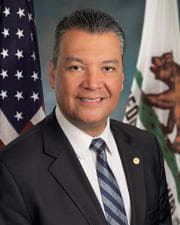
What’s My Rep Doing

Last sync: Oct 30, 2026, 1:27 AM UTC

Members

P000145

Alex Padilla

DemocraticCaliforniaCurrent Member
Sponsored
114
Cosponsored
696
Birth Year
1973

Stated Priorities & Legislative Record

Congress 119 · Automated analysis

Reviewed comparisons point both waysAll topics

511 reviewed comparisons · 184 scored · 178 measures

Comparison balance
+1.2/ 2
Supportive
180
Mixed
3
Opposing
1
Unscored
327

Health

Sponsored
1
Cosponsored
36
Linked House votes
0

What they say Official statements

Support for Medicare for All and increased access to mental health care.

Stated priority

“He is proud to support Medicare for All and is a champion for increased access to mental health care.”

Alex Padilla U.S. Senator for California · Captured 2026-10-28

Addressing systemic disparities that affect health care access.

Stated priority

“In the Senate, Alex has prioritized addressing the systemic disparities that affect health care access.”

Alex Padilla U.S. Senator for California · Captured 2026-10-28

Guaranteeing quality, affordable, and equitable health care for every American.

Stated priority

“Alex is working to guarantee quality, affordable, and equitable health care for every American.”

Alex Padilla U.S. Senator for California · Captured 2026-10-28

What they do Legislative evidence

S 2347 · Equal Health Care for All Act

Primary sponsor

Partly supportsSponsorship · Reviewed automated analysis

Compared with: Support for Medicare for All and increased access to mental health care.

The sponsor action meaningfully supports increased access to health care and includes Medicare-related equity provisions, but it does not establish Medicare for All or directly expand mental health coverage. The bill mainly targets discriminatory health care provision, reporting, enforcement, and equity measures within Medicare and hospital programs, so it is a narrower, qualified advancement of the stated goal rather than a full match.

“He is proud to support Medicare for All and is a champion for increased access to mental health care.”

Official statement · Captured 2026-10-28

Supporting provisions

“It also revises reporting requirements, adds equity-related measures to certain Medicare programs, and makes other changes to reduce health disparities.”
“Additionally, the Centers for Medicare & Medicaid Services must include measures related to equitable health care in the Medicare value-based purchasing program for hospitals.”
“This program provides incentive payments based on quality of care. The bill also establishes (1) the Federal Health Equity Commission to monitor implementation of the bill, and (2) grants for hospitals to promote equitable health care.”
Official legislative summary

Summary-based analysis · Action predates captured statement · Narrower scope

Assessed 2026-10-28 · Review: User-authorized automated publication. Published at the user request after the bounded production backfill. Automated evidence validation passed; comparisons have not been individually audited.

Strongly supportsSponsorship · Reviewed automated analysis

Compared with: Addressing systemic disparities that affect health care access.

The sponsorship directly advances the stated goal of addressing systemic disparities affecting health care access. The bill explicitly prohibits inequitable provision of health care based on protected characteristics, requires complaint and enforcement processes, adds equity-related measures to Medicare, and includes data reporting and grants intended to reduce health disparities. These mechanisms are substantively aligned with reducing systemic barriers in health care access.

“In the Senate, Alex has prioritized addressing the systemic disparities that affect health care access.”

Official statement · Captured 2026-10-28

Supporting provisions

“Equal Health Care for All Act This bill prohibits the inequitable provision of health care (i.e., failure to meet a high-quality care standard that is discriminatory in intent or effect) based on race, religion, or other characteristics.”
“It also revises reporting requirements, adds equity-related measures to certain Medicare programs, and makes other changes to reduce health disparities.”
“To enforce the prohibition, the Department of Health and Human Services (HHS) must establish an administrative process to resolve complaints about inequitable health care.”
“HHS must investigate these complaints and mediate agreements to resolve issues. In the event of noncompliance with a mediated agreement, an aggrieved individual may bring a civil action.”
“HHS may exclude from federal health care programs providers HHS determines engaged in the inequitable provision of health care.”
“The Department of Justice may bring civil actions against health care providers to enforce the prohibition, including for punitive damages.”

Opposing provisions

“Health care providers must also report data in formats that allow disaggregation by demographic factors.”
“Within 90 days after the bill's enactment, HHS must issue proposed regulations to carry out this requirement.”
“Additionally, the Centers for Medicare & Medicaid Services must include measures related to equitable health care in the Medicare value-based purchasing program for hospitals.”
“This program provides incentive payments based on quality of care. The bill also establishes (1) the Federal Health Equity Commission to monitor implementation of the bill, and (2) grants for hospitals to promote equitable health care.”
Official legislative summary

Summary-based analysis · Action predates captured statement

Assessed 2026-10-28 · Review: User-authorized automated publication. Published at the user request after the bounded production backfill. Automated evidence validation passed; comparisons have not been individually audited.

Strongly supportsSponsorship · Reviewed automated analysis

Compared with: Guaranteeing quality, affordable, and equitable health care for every American.

The sponsored bill directly advances the stated goal of guaranteeing quality, affordable, and equitable health care by prohibiting inequitable provision of care, adding equity measures to Medicare programs, requiring demographic reporting, creating enforcement mechanisms, and funding hospital equity efforts. These provisions are a substantive match to the equity and quality components of the priority, even though the passages do not clearly address affordability for every American.

“Alex is working to guarantee quality, affordable, and equitable health care for every American.”

Official statement · Captured 2026-10-28

Supporting provisions

“Equal Health Care for All Act This bill prohibits the inequitable provision of health care (i.e., failure to meet a high-quality care standard that is discriminatory in intent or effect) based on race, religion, or other characteristics.”
“It also revises reporting requirements, adds equity-related measures to certain Medicare programs, and makes other changes to reduce health disparities.”
“To enforce the prohibition, the Department of Health and Human Services (HHS) must establish an administrative process to resolve complaints about inequitable health care.”
“HHS must investigate these complaints and mediate agreements to resolve issues. In the event of noncompliance with a mediated agreement, an aggrieved individual may bring a civil action.”
“HHS may exclude from federal health care programs providers HHS determines engaged in the inequitable provision of health care.”
“The Department of Justice may bring civil actions against health care providers to enforce the prohibition, including for punitive damages.”
Official legislative summary

Summary-based analysis · Action predates captured statement · Narrower scope · Conditions or exceptions

Assessed 2026-10-28 · Review: User-authorized automated publication. Published at the user request after the bounded production backfill. Automated evidence validation passed; comparisons have not been individually audited.

“Equal Health Care for All Act This bill prohibits the inequitable provision of health care (i.e., failure to meet a high-quality care standard that is discriminatory in intent or effect) based on race, religion, or other characteristics.”
Official summary source
SRES 322 · A resolution expressing support for the designation of the month of June 2025 as "National Post-Traumatic Stress Awareness Month" and June 27, 2025, as "National Post-Traumatic Stress Awareness Day".

Cosponsor

No direct connectionCosponsorship · Reviewed automated analysis

Compared with: Support for Medicare for All and increased access to mental health care.

The cited cosponsorship is for a resolution recognizing Post-Traumatic Stress Awareness Month/Day and supporting education about PTSD causes, symptoms, and treatment. That is related to mental health awareness in a broad sense, but it does not directly advance Medicare for All or a general increase in access to mental health care through coverage, financing, provider access, or benefit expansion. The action is therefore only an indirect, topic-adjacent signal and not a defensible substantive match to the stated policy goal.

“He is proud to support Medicare for All and is a champion for increased access to mental health care.”

Official statement · Captured 2026-10-28

Supporting provisions

“The resolution also supports the efforts of the Department of Veterans Affairs (VA), Department of Defense (DOD), and the medical community to educate people about the causes, symptoms, and treatment of post-traumatic stress.”

Opposing provisions

“This resolution designates June 2025 as National Post-Traumatic Stress Awareness Month and June 27, 2025, as National Post-Traumatic Stress Awareness Day.”
“Additionally, it supports efforts by the VA and DOD to foster cultural change around post-traumatic stress.”
Official legislative summary

Summary-based analysis · Action predates captured statement · Narrower scope

Assessed 2026-10-28 · Review: User-authorized automated publication. Published at the user request after the bounded production backfill. Automated evidence validation passed; comparisons have not been individually audited.

No direct connectionCosponsorship · Reviewed automated analysis

Compared with: Addressing systemic disparities that affect health care access.

The cited cosponsorship is for a resolution recognizing Post-Traumatic Stress Awareness Month/Day and supporting education and cultural change around post-traumatic stress. That is related to awareness of a mental health issue, but it does not directly advance the stated policy goal of addressing systemic disparities affecting health care access, nor does the supplied text show any mechanism aimed at reducing access disparities. Because the connection is too indirect and specific health access disparity effects are not established, a scored comparison is not defensible.

“In the Senate, Alex has prioritized addressing the systemic disparities that affect health care access.”

Official statement · Captured 2026-10-28

Supporting provisions

“The resolution also supports the efforts of the Department of Veterans Affairs (VA), Department of Defense (DOD), and the medical community to educate people about the causes, symptoms, and treatment of post-traumatic stress.”
“Additionally, it supports efforts by the VA and DOD to foster cultural change around post-traumatic stress.”

Opposing provisions

“This resolution designates June 2025 as National Post-Traumatic Stress Awareness Month and June 27, 2025, as National Post-Traumatic Stress Awareness Day.”
Official legislative summary

Summary-based analysis · Action predates captured statement · Narrower scope

Assessed 2026-10-28 · Review: User-authorized automated publication. Published at the user request after the bounded production backfill. Automated evidence validation passed; comparisons have not been individually audited.

No direct connectionCosponsorship · Reviewed automated analysis

Compared with: Guaranteeing quality, affordable, and equitable health care for every American.

The stated priority is a broad commitment to guarantee quality, affordable, and equitable health care for every American. The cosponsored resolution is a commemorative measure recognizing PTSD Awareness Month and supporting education about causes, symptoms, and treatment of post-traumatic stress, but it does not create, expand, fund, or guarantee health care access or affordability. At most it has an indirect thematic connection to mental health awareness, which is not enough to compare directly to the specific health-care guarantee goal.

“Alex is working to guarantee quality, affordable, and equitable health care for every American.”

Official statement · Captured 2026-10-28

Supporting provisions

“The resolution also supports the efforts of the Department of Veterans Affairs (VA), Department of Defense (DOD), and the medical community to educate people about the causes, symptoms, and treatment of post-traumatic stress.”

Opposing provisions

“This resolution designates June 2025 as National Post-Traumatic Stress Awareness Month and June 27, 2025, as National Post-Traumatic Stress Awareness Day.”
“Additionally, it supports efforts by the VA and DOD to foster cultural change around post-traumatic stress.”
Official legislative summary

Summary-based analysis · Action predates captured statement · Narrower scope

Assessed 2026-10-28 · Review: User-authorized automated publication. Published at the user request after the bounded production backfill. Automated evidence validation passed; comparisons have not been individually audited.

“The resolution also supports the efforts of the Department of Veterans Affairs (VA), Department of Defense (DOD), and the medical community to educate people about the causes, symptoms, and treatment of post-traumatic stress.”
Official summary source
S 2050 · ASSIST Act

Cosponsor

Partly supportsCosponsorship · Reviewed automated analysis

Compared with: Support for Medicare for All and increased access to mental health care.

The cosponsorship meaningfully supports the mental health access portion of the stated goal because the ASSIST Act expands school-based mental health and substance use disorder services, increases provider numbers, and boosts Medicaid reimbursement for those services. However, it is narrower than the full priority because it does not address Medicare for All, so the support is partial rather than direct and complete.

“He is proud to support Medicare for All and is a champion for increased access to mental health care.”

Official statement · Captured 2026-10-28

Supporting provisions

“Advancing Student Services In Schools Today Act or the ASSIST Act This bill establishes programs and requirements to support the provision of mental health and substance use disorder services at schools.”
“Specifically, the bill provides for a 90% Federal Medical Assistance Percentage (i.e., federal matching rate) under Medicaid for services that are furnished by mental health and substance use disorder providers at schools or school-based health centers.”
“The bill also establishes a grant program to increase the number of mental health and substance use disorder providers at schools, colleges, and other educational institutions.”
Official legislative summary

Summary-based analysis · Action predates captured statement · Narrower scope

Assessed 2026-10-28 · Review: User-authorized automated publication. Published at the user request after the bounded production backfill. Automated evidence validation passed; comparisons have not been individually audited.

Partly supportsCosponsorship · Reviewed automated analysis

Compared with: Addressing systemic disparities that affect health care access.

The cosponsored bill meaningfully supports access to care in school-based settings by expanding Medicaid reimbursement for mental health and substance use disorder services furnished at schools or school-based health centers and by creating grants to increase providers in educational institutions. That advances access, but it is narrower than the stated goal because it focuses on school-based mental health and substance use disorder services rather than systemic disparities across health care access generally.

“In the Senate, Alex has prioritized addressing the systemic disparities that affect health care access.”

Official statement · Captured 2026-10-28

Supporting provisions

“Specifically, the bill provides for a 90% Federal Medical Assistance Percentage (i.e., federal matching rate) under Medicaid for services that are furnished by mental health and substance use disorder providers at schools or school-based health centers.”
“The bill also establishes a grant program to increase the number of mental health and substance use disorder providers at schools, colleges, and other educational institutions.”
Official legislative summary

Summary-based analysis · Action predates captured statement · Narrower scope

Assessed 2026-10-28 · Review: User-authorized automated publication. Published at the user request after the bounded production backfill. Automated evidence validation passed; comparisons have not been individually audited.

Partly supportsCosponsorship · Reviewed automated analysis

Compared with: Guaranteeing quality, affordable, and equitable health care for every American.

The cosponsored bill meaningfully advances access to care by increasing federal Medicaid support for mental health and substance use disorder services delivered at schools and by creating grants to expand the number of such providers. That supports affordability and access for a subset of Americans, but it is narrower than a guarantee of quality, affordable, and equitable health care for every American because it focuses on school-based behavioral health services rather than comprehensive health coverage or care for all people.

“Alex is working to guarantee quality, affordable, and equitable health care for every American.”

Official statement · Captured 2026-10-28

Supporting provisions

“Specifically, the bill provides for a 90% Federal Medical Assistance Percentage (i.e., federal matching rate) under Medicaid for services that are furnished by mental health and substance use disorder providers at schools or school-based health centers.”
“The bill also establishes a grant program to increase the number of mental health and substance use disorder providers at schools, colleges, and other educational institutions.”
Official legislative summary

Summary-based analysis · Action predates captured statement · Narrower scope

Assessed 2026-10-28 · Review: User-authorized automated publication. Published at the user request after the bounded production backfill. Automated evidence validation passed; comparisons have not been individually audited.

“Advancing Student Services In Schools Today Act or the ASSIST Act This bill establishes programs and requirements to support the provision of mental health and substance use disorder services at schools.”
Official summary source
S 2071 · Disaster Relief Medicaid Act

Cosponsor

Partly supportsCosponsorship · Reviewed automated analysis

Compared with: Support for Medicare for All and increased access to mental health care.

The cosponsorship of the Disaster Relief Medicaid Act meaningfully supports expanded Medicaid coverage and thus aligns in a limited way with the stated goal of increasing access to health care, including mental health care, but it does not specifically address Medicare for All or mental health services. The bill’s mechanism is narrow and temporary: it creates Medicaid coverage for disaster- or emergency-affected individuals for two years and requires coverage at least as comprehensive as existing Medicaid coverage, with full federal matching. That is supportive of broader access, but it is not a direct advancement of universal Medicare or a targeted mental health access measure.

“He is proud to support Medicare for All and is a champion for increased access to mental health care.”

Official statement · Captured 2026-10-28

Supporting provisions

“Disaster Relief Medicaid Act This bill establishes a series of programs and requirements relating to Medicaid coverage of individuals affected by a federally declared major disaster, national emergency, or public health emergency.”
“In particular, the bill provides for specific coverage under Medicaid for individuals who meet specified income eligibility standards and were either residents of the impacted area or were employed in the impacted area (and subsequently lost employment).”
“Coverage is effective for two years after the date of the disaster or emergency declaration.”
“State Medicaid programs must provide coverage that is at least as comprehensive as the state's Medicaid coverage and the Medicaid coverage of the individual's home state, as applicable.”
“The bill applies a 100% Federal Medical Assistance Percentage (i.e., federal matching rate) to such coverage and related administrative expenses.”
Official legislative summary

Summary-based analysis · Action predates captured statement · Narrower scope · Conditions or exceptions · Timing unknown

Assessed 2026-10-28 · Review: User-authorized automated publication. Published at the user request after the bounded production backfill. Automated evidence validation passed; comparisons have not been individually audited.

Partly supportsCosponsorship · Reviewed automated analysis

Compared with: Addressing systemic disparities that affect health care access.

The cosponsored bill would expand Medicaid coverage for people affected by disasters, emergencies, or public health emergencies, including eligible low-income residents or workers in the impacted area. That meaningfully advances access to health care for a specific group facing emergency-related coverage gaps, but it is limited to disaster/emergency contexts rather than addressing broader systemic disparities in health care access overall.

“In the Senate, Alex has prioritized addressing the systemic disparities that affect health care access.”

Official statement · Captured 2026-10-28

Supporting provisions

“Disaster Relief Medicaid Act This bill establishes a series of programs and requirements relating to Medicaid coverage of individuals affected by a federally declared major disaster, national emergency, or public health emergency.”
“In particular, the bill provides for specific coverage under Medicaid for individuals who meet specified income eligibility standards and were either residents of the impacted area or were employed in the impacted area (and subsequently lost employment).”
“State Medicaid programs must provide coverage that is at least as comprehensive as the state's Medicaid coverage and the Medicaid coverage of the individual's home state, as applicable.”
“The bill applies a 100% Federal Medical Assistance Percentage (i.e., federal matching rate) to such coverage and related administrative expenses.”
Official legislative summary

Summary-based analysis · Action predates captured statement · Narrower scope

Assessed 2026-10-28 · Review: User-authorized automated publication. Published at the user request after the bounded production backfill. Automated evidence validation passed; comparisons have not been individually audited.

Partly supportsCosponsorship · Reviewed automated analysis

Compared with: Guaranteeing quality, affordable, and equitable health care for every American.

The cosponsored bill would expand Medicaid coverage to eligible people affected by disasters, emergencies, or public health emergencies, which supports access to health care. It also requires coverage to be at least as comprehensive as existing Medicaid and applies a 100% federal matching rate, helping affordability. However, the scope is limited to certain affected individuals and is temporary, so it is narrower than guaranteeing affordable and equitable health care for every American.

“Alex is working to guarantee quality, affordable, and equitable health care for every American.”

Official statement · Captured 2026-10-28

Supporting provisions

“Disaster Relief Medicaid Act This bill establishes a series of programs and requirements relating to Medicaid coverage of individuals affected by a federally declared major disaster, national emergency, or public health emergency.”
“In particular, the bill provides for specific coverage under Medicaid for individuals who meet specified income eligibility standards and were either residents of the impacted area or were employed in the impacted area (and subsequently lost employment).”
“State Medicaid programs must provide coverage that is at least as comprehensive as the state's Medicaid coverage and the Medicaid coverage of the individual's home state, as applicable.”
“The bill applies a 100% Federal Medical Assistance Percentage (i.e., federal matching rate) to such coverage and related administrative expenses.”

Opposing provisions

“Coverage is effective for two years after the date of the disaster or emergency declaration.”
Official legislative summary

Summary-based analysis · Action predates captured statement · Narrower scope · Timing unknown

Assessed 2026-10-28 · Review: User-authorized automated publication. Published at the user request after the bounded production backfill. Automated evidence validation passed; comparisons have not been individually audited.

“Disaster Relief Medicaid Act This bill establishes a series of programs and requirements relating to Medicaid coverage of individuals affected by a federally declared major disaster, national emergency, or public health emergency.”
Official summary source
S 2077 · Expanded Coverage for Former Foster Youth Act

Cosponsor

Partly supportsCosponsorship · Reviewed automated analysis

Compared with: Support for Medicare for All and increased access to mental health care.

The cosponsored bill would expand Medicaid eligibility and outreach for former foster youth, which is a meaningful but narrower healthcare-access measure. It does not directly establish Medicare for All, so it only partially advances the stated goal of expanded health coverage, and there is no specific evidence here that it addresses mental health care access.

“He is proud to support Medicare for All and is a champion for increased access to mental health care.”

Official statement · Captured 2026-10-28

Supporting provisions

“Expanded Coverage for Former Foster Youth Act This bill modifies provisions relating to the coverage of former foster youths under Medicaid.”
“The bill requires state Medicaid programs to also cover former foster youths who were placed in a legal guardianship with a kinship caregiver or were emancipated from foster care before the age of 18.”
“The bill repeals the provision that requires former foster youths to have been enrolled in a state Medicaid program while in foster care in order to qualify for Medicaid coverage until the age of 26.”
“The bill also requires states to establish Medicaid outreach and enrollment programs for former foster youths.”

Opposing provisions

“Under current law, a state Medicaid program must cover former foster youths until the age of 26 if the youths were in a state's foster care system at the age of 18 and were enrolled in a state's Medicaid program while in foster care.”
Official legislative summary

Summary-based analysis · Action predates captured statement · Narrower scope

Assessed 2026-10-28 · Review: User-authorized automated publication. Published at the user request after the bounded production backfill. Automated evidence validation passed; comparisons have not been individually audited.

Partly supportsCosponsorship · Reviewed automated analysis

Compared with: Addressing systemic disparities that affect health care access.

The cosponsorship supports a narrower health-access policy: it expands Medicaid eligibility for certain former foster youths and adds outreach/enrollment requirements, which can reduce coverage gaps and access barriers. However, it targets a specific subgroup rather than broadly addressing systemic disparities in health care access across populations, so the support is meaningful but limited in scope.

“In the Senate, Alex has prioritized addressing the systemic disparities that affect health care access.”

Official statement · Captured 2026-10-28

Supporting provisions

“Expanded Coverage for Former Foster Youth Act This bill modifies provisions relating to the coverage of former foster youths under Medicaid.”
“The bill requires state Medicaid programs to also cover former foster youths who were placed in a legal guardianship with a kinship caregiver or were emancipated from foster care before the age of 18.”
“The bill repeals the provision that requires former foster youths to have been enrolled in a state Medicaid program while in foster care in order to qualify for Medicaid coverage until the age of 26.”
“The bill also requires states to establish Medicaid outreach and enrollment programs for former foster youths.”
Official legislative summary

Summary-based analysis · Action predates captured statement · Narrower scope

Assessed 2026-10-28 · Review: User-authorized automated publication. Published at the user request after the bounded production backfill. Automated evidence validation passed; comparisons have not been individually audited.

Partly supportsCosponsorship · Reviewed automated analysis

Compared with: Guaranteeing quality, affordable, and equitable health care for every American.

The cosponsored bill would expand Medicaid eligibility for former foster youths by covering additional groups and removing an enrollment requirement, which meaningfully supports broader access to health coverage. But it is a targeted coverage expansion rather than a direct guarantee of quality, affordability, and equitable health care for every American, so the support is narrower than the stated goal.

“Alex is working to guarantee quality, affordable, and equitable health care for every American.”

Official statement · Captured 2026-10-28

Supporting provisions

“Expanded Coverage for Former Foster Youth Act This bill modifies provisions relating to the coverage of former foster youths under Medicaid.”
“The bill requires state Medicaid programs to also cover former foster youths who were placed in a legal guardianship with a kinship caregiver or were emancipated from foster care before the age of 18.”
“The bill repeals the provision that requires former foster youths to have been enrolled in a state Medicaid program while in foster care in order to qualify for Medicaid coverage until the age of 26.”
“The bill also requires states to establish Medicaid outreach and enrollment programs for former foster youths.”
Official legislative summary

Summary-based analysis · Action predates captured statement · Narrower scope

Assessed 2026-10-28 · Review: User-authorized automated publication. Published at the user request after the bounded production backfill. Automated evidence validation passed; comparisons have not been individually audited.

“Expanded Coverage for Former Foster Youth Act This bill modifies provisions relating to the coverage of former foster youths under Medicaid.”
Official summary source

Prepared Legislative Analysis

119th Congress · computed from the latest committed analytics snapshot

Updated Oct 29, 2026, 11:00 AM

Sponsored
114
Cosponsored
696
Progressed
196
Floor or later
124
Final success
87
Bill actions
2,891

Top Policy Areas

Health

104

Government Operations and Politics

69

Crime and Law Enforcement

64

Education

57

Public Lands and Natural Resources

45

Agriculture and Food

40

Armed Forces and National Security

40

Labor and Employment

37

Monthly Bill Activity

Jan 2025
105
Feb 2025
178
Mar 2025
130
Apr 2025
155
May 2025
146
Jun 2025
115
Jul 2025
142
Aug 2025
12
Sep 2025
186
Oct 2025
88
Nov 2025
62
Dec 2025
143
Jan 2026
96
Feb 2026
103
Mar 2026
152
Apr 2026
147
May 2026
211
Jun 2026
204
Jul 2026
141
Aug 2026
133
Sep 2026
230
Oct 2026
12

Terms

119th

Senate

Senator · California

2021
118th

Senate

Senator · California

2021 - 2025
117th

Senate

Senator · California

2021 - 2023

Committee Assignments

Committee on Energy and Natural Resources

Member · Senate.gov

0 bills · 1,625 reports · 610 nominations · 7,981 communications

Committee on Environment and Public Works

Member · Senate.gov

0 bills · 437 reports · 620 nominations · 10,126 communications

Committee on Rules and Administration

Member · Senate.gov

0 bills · 27 reports · 108 nominations · 782 communications

Committee on the Budget

Member · Senate.gov

0 bills · 0 reports · 0 nominations · 0 communications

Committee on the Judiciary

Member · Senate.gov

0 bills · 180 reports · 5,536 nominations · 2,179 communications

Joint Committee of Congress on the Library

Member · Senate.gov

0 bills · 0 reports · 0 nominations · 0 communications

Joint Committee on Printing

Member · Senate.gov

0 bills · 0 reports · 0 nominations · 0 communications