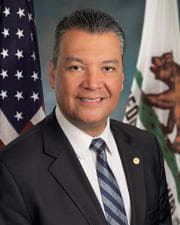
What’s My Rep Doing

Last sync: Oct 30, 2026, 1:27 AM UTC

Members

P000145

Alex Padilla

DemocraticCaliforniaCurrent Member
Sponsored
114
Cosponsored
696
Birth Year
1973

Stated Priorities & Legislative Record

Congress 119 · Automated analysis

Reviewed comparisons point both waysAll topics

511 reviewed comparisons · 184 scored · 178 measures

Comparison balance
+1.2/ 2
Supportive
180
Mixed
3
Opposing
1
Unscored
327

Education

Sponsored
1
Cosponsored
26
Linked House votes
0

What they say Official statements

Support funding for teachers and staff, school infrastructure, and student well-being.

Stated priority

“He is proud to advocate for funding to support teachers and staff, school infrastructure, and student well-being.”

Alex Padilla U.S. Senator for California · Captured 2026-10-28

Make higher education accessible for all.

Stated priority

“As a first-generation college graduate, Alex knows the hurdles that too many Californians face in accessing quality, affordable higher education, and he is determined to make higher education accessible for all.”

Alex Padilla U.S. Senator for California · Captured 2026-10-28

Support STEM educational opportunities inside and outside the classroom.

Stated priority

“As a graduate of the Massachusetts Institute of Technology with a degree in mechanical engineering, Alex is a strong supporter of Science, Technology, Engineering, and Math (STEM) educational opportunities inside and outside the classroom.”

Alex Padilla U.S. Senator for California · Captured 2026-10-28

What they do Legislative evidence

S 2862 · CCAMPIS Reauthorization Act

Cosponsor

No direct connectionCosponsorship · Reviewed automated analysis

Compared with: Support funding for teachers and staff, school infrastructure, and student well-being.

The cosponsored bill reauthorizes and revises a campus child care grant program for low-income parents in postsecondary education. That is only indirectly related to the stated goal of funding teachers and staff, school infrastructure, and student well-being; it does not directly fund K-12 teachers/staff or school infrastructure, and the child care support is for parents in college rather than the specific school-focused policy goal stated.

“He is proud to advocate for funding to support teachers and staff, school infrastructure, and student well-being.”

Official statement · Captured 2026-10-28

Supporting provisions

“The program awards grants to support the participation of eligible low-income parents in postsecondary education through the provision of campus-based child care services.”
“Among other revisions to the program, the bill increases the minimum and maximum grant amounts, allows grant funds to be used for additional purposes (e.g., child care subsidies and support services), and specifies additional grant application requirements.”

Opposing provisions

“Child Care Access Means Parents In Schools Reauthorization Act or the CCAMPIS Reauthorization Act This bill reauthorizes through FY2031 and revises the Child Care Access Means Parents in School Program.”
Official legislative summary

Summary-based analysis · Action predates captured statement · Narrower scope · Timing unknown

Assessed 2026-10-28 · Review: User-authorized automated publication. Published at the user request after the bounded production backfill. Automated evidence validation passed; comparisons have not been individually audited.

Partly supportsCosponsorship · Reviewed automated analysis

Compared with: Make higher education accessible for all.

The cosponsored bill reauthorizes and expands CCAMPIS, a program that supports eligible low-income parents' participation in postsecondary education through campus-based child care services, with higher grant amounts and additional allowable uses like child care subsidies and support services. That is a meaningful but narrower form of support for making higher education more accessible, especially for student parents, rather than a general across-the-board higher education access measure.

“As a first-generation college graduate, Alex knows the hurdles that too many Californians face in accessing quality, affordable higher education, and he is determined to make higher education accessible for all.”

Official statement · Captured 2026-10-28

Supporting provisions

“Child Care Access Means Parents In Schools Reauthorization Act or the CCAMPIS Reauthorization Act This bill reauthorizes through FY2031 and revises the Child Care Access Means Parents in School Program.”
“The program awards grants to support the participation of eligible low-income parents in postsecondary education through the provision of campus-based child care services.”
“Among other revisions to the program, the bill increases the minimum and maximum grant amounts, allows grant funds to be used for additional purposes (e.g., child care subsidies and support services), and specifies additional grant application requirements.”
Official legislative summary

Summary-based analysis · Action predates captured statement · Narrower scope

Assessed 2026-10-28 · Review: User-authorized automated publication. Published at the user request after the bounded production backfill. Automated evidence validation passed; comparisons have not been individually audited.

Partly supportsCosponsorship · Reviewed automated analysis

Compared with: Support STEM educational opportunities inside and outside the classroom.

The cosponsored bill supports educational access for parents in postsecondary settings by funding campus-based child care and related support services, which can help students remain enrolled and complete schooling. That is a meaningful but indirect and narrower form of support for educational opportunities, not a direct STEM-specific education measure and not clearly inside-and-outside-the-classroom STEM programming.

“As a graduate of the Massachusetts Institute of Technology with a degree in mechanical engineering, Alex is a strong supporter of Science, Technology, Engineering, and Math (STEM) educational opportunities inside and outside the classroom.”

Official statement · Captured 2026-10-28

Supporting provisions

“The program awards grants to support the participation of eligible low-income parents in postsecondary education through the provision of campus-based child care services.”
“Among other revisions to the program, the bill increases the minimum and maximum grant amounts, allows grant funds to be used for additional purposes (e.g., child care subsidies and support services), and specifies additional grant application requirements.”
Official legislative summary

Summary-based analysis · Action predates captured statement · Narrower scope

Assessed 2026-10-28 · Review: User-authorized automated publication. Published at the user request after the bounded production backfill. Automated evidence validation passed; comparisons have not been individually audited.

“The program awards grants to support the participation of eligible low-income parents in postsecondary education through the provision of campus-based child care services.”
Official summary source
SRES 405 · A resolution expressing support for the recognition of September 22, 2025, to September 28, 2025, as "Asian American and Native American Pacific Islander-Serving Institutions Week".

Cosponsor

No direct connectionCosponsorship · Reviewed automated analysis

Compared with: Support funding for teachers and staff, school infrastructure, and student well-being.

The stated priority is about funding teachers and staff, school infrastructure, and student well-being. The cosponsored resolution only recognizes and supports AANAPISI Week; it does not authorize or appropriate education funding, infrastructure spending, or student-support resources. This is too indirect to compare as support for the specific policy goal.

“He is proud to advocate for funding to support teachers and staff, school infrastructure, and student well-being.”

Official statement · Captured 2026-10-28

Opposing provisions

“This resolution recognizes the 18th anniversary of the establishment of Asian American and Native American Pacific Islander-Serving Institutions and expresses support for the designation of Asian American and Native American Pacific Islander-Serving Institutions Week.”
Official legislative summary

Summary-based analysis · Action predates captured statement · Narrower scope

Assessed 2026-10-28 · Review: User-authorized automated publication. Published at the user request after the bounded production backfill. Automated evidence validation passed; comparisons have not been individually audited.

No direct connectionCosponsorship · Reviewed automated analysis

Compared with: Make higher education accessible for all.

The stated goal is to make higher education accessible for all. The cosponsored measure is a commemorative resolution supporting recognition of AANAPISI Week, which acknowledges institutions serving Asian American, Native American, and Pacific Islander students, but it does not create, expand, or change access to higher education. That makes the connection too indirect to score as support or opposition.

“As a first-generation college graduate, Alex knows the hurdles that too many Californians face in accessing quality, affordable higher education, and he is determined to make higher education accessible for all.”

Official statement · Captured 2026-10-28

Official legislative summary

Summary-based analysis · Action predates captured statement · Narrower scope

Assessed 2026-10-28 · Review: User-authorized automated publication. Published at the user request after the bounded production backfill. Automated evidence validation passed; comparisons have not been individually audited.

Procedural / indirectCosponsorship · Reviewed automated analysis

Compared with: Support STEM educational opportunities inside and outside the classroom.

The cosponsored resolution is a symbolic recognition of Asian American and Native American Pacific Islander-Serving Institutions Week. While that topic is related to education broadly, the supplied summary does not show a direct policy mechanism advancing STEM educational opportunities inside or outside the classroom. The connection is too indirect to score as support for the specific STEM goal.

“As a graduate of the Massachusetts Institute of Technology with a degree in mechanical engineering, Alex is a strong supporter of Science, Technology, Engineering, and Math (STEM) educational opportunities inside and outside the classroom.”

Official statement · Captured 2026-10-28

Official legislative summary

Summary-based analysis · Action predates captured statement · Narrower scope

Assessed 2026-10-28 · Review: User-authorized automated publication. Published at the user request after the bounded production backfill. Automated evidence validation passed; comparisons have not been individually audited.

“This resolution recognizes the 18th anniversary of the establishment of Asian American and Native American Pacific Islander-Serving Institutions and expresses support for the designation of Asian American and Native American Pacific Islander-Serving Institutions Week.”
Official summary source
S 1832 · College for All Act of 2025

Cosponsor

Insufficient evidenceCosponsorship · Reviewed automated analysis

Compared with: Support funding for teachers and staff, school infrastructure, and student well-being.

The stated priority is about funding teachers and staff, school infrastructure, and student well-being in K-12 schooling. The cosponsored bill is about higher education access, tuition elimination, Pell Grants, and student outcome programs, with no direct provision for K-12 teachers, school facilities, or student well-being in the priority’s sense. That makes a defensible comparison unavailable from the supplied text.

“He is proud to advocate for funding to support teachers and staff, school infrastructure, and student well-being.”

Official statement · Captured 2026-10-28

Opposing provisions

“College for All Act of 2025 This bill establishes measures to expand access to higher education, including by eliminating tuition and required fees for eligible students, revising the Federal Pell Grant program, and reauthorizing certain programs to assist students from disadvantaged backgrounds.”
“Specifically, the bill provides funding to enable states and tribal colleges and universities, through a federal-state partnership, to eliminate tuition and required fees for (1) all students at community colleges and two-year tribal colleges and universities, and (2) working- and middle-class students at four-year public institutions of higher education and tribal colleges and universities.”
“The bill provides funding to enable private, nonprofit historically Black colleges and universities and minority-serving institutions to eliminate tuition and required fees for eligible students.”
“The bill permanently reauthorizes and otherwise revises the Federal Pell Grant program by providing funding to increase the maximum award for each eligible student, increasing the duration limit for the use of Pell Grants, allowing students to use their awards to cover living and nontuition expenses, and expanding eligibility to Dreamer students (i.e., students who have been granted Deferred Action for Childhood Arrivals status and who entered the United States before the age of 16) and students with other immigration statuses.”
“Further, the bill requires the Department of Education to award grants to eligible states and tribal colleges and universities for improving student outcomes.”
“The bill reauthorizes through FY2035 the Federal TRIO Programs and reauthorizes through FY2029 the Gaining Early Awareness and Readiness for Undergraduate Programs.”
Official legislative summary

Summary-based analysis · Action predates captured statement · Narrower scope

Assessed 2026-10-28 · Review: User-authorized automated publication. Published at the user request after the bounded production backfill. Automated evidence validation passed; comparisons have not been individually audited.

Strongly supportsCosponsorship · Reviewed automated analysis

Compared with: Make higher education accessible for all.

The cosponsored bill directly advances the stated goal of making higher education accessible for all by expanding access through multiple concrete mechanisms: eliminating tuition and required fees for broad groups of students, increasing Pell Grant support, allowing Pell funds for living and other nontuition expenses, and expanding eligibility for additional students. This is a substantive direct match to the policy goal, not just a general education-related measure.

“As a first-generation college graduate, Alex knows the hurdles that too many Californians face in accessing quality, affordable higher education, and he is determined to make higher education accessible for all.”

Official statement · Captured 2026-10-28

Supporting provisions

“College for All Act of 2025 This bill establishes measures to expand access to higher education, including by eliminating tuition and required fees for eligible students, revising the Federal Pell Grant program, and reauthorizing certain programs to assist students from disadvantaged backgrounds.”
“Specifically, the bill provides funding to enable states and tribal colleges and universities, through a federal-state partnership, to eliminate tuition and required fees for (1) all students at community colleges and two-year tribal colleges and universities, and (2) working- and middle-class students at four-year public institutions of higher education and tribal colleges and universities.”
“The bill provides funding to enable private, nonprofit historically Black colleges and universities and minority-serving institutions to eliminate tuition and required fees for eligible students.”
“The bill permanently reauthorizes and otherwise revises the Federal Pell Grant program by providing funding to increase the maximum award for each eligible student, increasing the duration limit for the use of Pell Grants, allowing students to use their awards to cover living and nontuition expenses, and expanding eligibility to Dreamer students (i.e., students who have been granted Deferred Action for Childhood Arrivals status and who entered the United States before the age of 16) and students with other immigration statuses.”
“Further, the bill requires the Department of Education to award grants to eligible states and tribal colleges and universities for improving student outcomes.”
“The bill reauthorizes through FY2035 the Federal TRIO Programs and reauthorizes through FY2029 the Gaining Early Awareness and Readiness for Undergraduate Programs.”
Official legislative summary

Summary-based analysis · Action predates captured statement · Narrower scope · Conditions or exceptions

Assessed 2026-10-28 · Review: User-authorized automated publication. Published at the user request after the bounded production backfill. Automated evidence validation passed; comparisons have not been individually audited.

Insufficient evidenceCosponsorship · Reviewed automated analysis

Compared with: Support STEM educational opportunities inside and outside the classroom.

The stated priority is support for STEM educational opportunities inside and outside the classroom. The cosponsored bill is a broad higher-education affordability and student-aid measure: it eliminates or subsidizes tuition, revises Pell Grants, and reauthorizes general student-support programs. The supplied passages do not show any STEM-specific program, funding stream, curriculum, or extracurricular STEM initiative, so the connection to the specific STEM priority is too indirect to score confidently.

“As a graduate of the Massachusetts Institute of Technology with a degree in mechanical engineering, Alex is a strong supporter of Science, Technology, Engineering, and Math (STEM) educational opportunities inside and outside the classroom.”

Official statement · Captured 2026-10-28

Official legislative summary

Summary-based analysis · Action predates captured statement

Assessed 2026-10-28 · Review: User-authorized automated publication. Published at the user request after the bounded production backfill. Automated evidence validation passed; comparisons have not been individually audited.

“College for All Act of 2025 This bill establishes measures to expand access to higher education, including by eliminating tuition and required fees for eligible students, revising the Federal Pell Grant program, and reauthorizing certain programs to assist students from disadvantaged backgrounds.”
Official summary source
S 1697 · RAISE Act of 2025

Cosponsor

Partly supportsCosponsorship · Reviewed automated analysis

Compared with: Support funding for teachers and staff, school infrastructure, and student well-being.

The cosponsored bill meaningfully supports the stated goal by providing education funding and educator support mechanisms: it creates refundable tax credits for educators, expands a deduction for classroom and professional development expenses, and adds funding for teacher salary incentive grants and professional development/certification programs. However, the available summary does not show direct funding for school infrastructure or a broader student well-being package, so the support is real but narrower than the full stated priority.

“He is proud to advocate for funding to support teachers and staff, school infrastructure, and student well-being.”

Official statement · Captured 2026-10-28

Supporting provisions

“Respect, Advancement, and Increasing Support for Educators Act of 2025 or the RAISE Act of 2025 This bill establishes a refundable federal tax credit for eligible educators and increases and expands the federal tax deduction for certain classroom and professional development expenses.”
“The bill also increases federal funding for programs that support effective instruction.”
“Further, the bill increases to $500 ($300 in 2025) and continues to adjust annually the above-the-line tax deduction for certain classroom and professional development expenses of educators.”
“The bill also expands eligibility for the credit to include early childhood educators.”
“Finally, the bill provides additional funding for education programs, including teacher salary incentive grants and professional development, certificate, and credentialing programs.”
Official legislative summary

Summary-based analysis · Action predates captured statement · Narrower scope

Assessed 2026-10-28 · Review: User-authorized automated publication. Published at the user request after the bounded production backfill. Automated evidence validation passed; comparisons have not been individually audited.

No direct connectionCosponsorship · Reviewed automated analysis

Compared with: Make higher education accessible for all.

The member’s stated goal is to make higher education accessible for all, but the cosponsored bill is a K-12/early-childhood educator support measure. It provides tax credits, deductions, and program funding for teachers and educator training, not direct access-expanding policies for higher education such as college affordability, admissions, aid, or completion support. Any connection is too indirect to score as supporting the specific higher-education access goal.

“As a first-generation college graduate, Alex knows the hurdles that too many Californians face in accessing quality, affordable higher education, and he is determined to make higher education accessible for all.”

Official statement · Captured 2026-10-28

Official legislative summary

Summary-based analysis · Action predates captured statement · Narrower scope

Assessed 2026-10-28 · Review: User-authorized automated publication. Published at the user request after the bounded production backfill. Automated evidence validation passed; comparisons have not been individually audited.

Partly supportsCosponsorship · Reviewed automated analysis

Compared with: Support STEM educational opportunities inside and outside the classroom.

The cosponsorship of the RAISE Act of 2025 meaningfully supports STEM educational opportunities only in a broad, indirect way. The bill increases support for educators through tax credits, expanded deductions, and funding for professional development and credentialing programs, which can help classroom instruction and educator capacity. However, the supplied passages do not mention STEM-specific programs, curricula, or student opportunities inside and outside the classroom, so the support is broader education support rather than a direct advancement of the stated STEM goal.

“As a graduate of the Massachusetts Institute of Technology with a degree in mechanical engineering, Alex is a strong supporter of Science, Technology, Engineering, and Math (STEM) educational opportunities inside and outside the classroom.”

Official statement · Captured 2026-10-28

Supporting provisions

“Respect, Advancement, and Increasing Support for Educators Act of 2025 or the RAISE Act of 2025 This bill establishes a refundable federal tax credit for eligible educators and increases and expands the federal tax deduction for certain classroom and professional development expenses.”
“The bill also increases federal funding for programs that support effective instruction.”
“Further, the bill increases to $500 ($300 in 2025) and continues to adjust annually the above-the-line tax deduction for certain classroom and professional development expenses of educators.”
“Finally, the bill provides additional funding for education programs, including teacher salary incentive grants and professional development, certificate, and credentialing programs.”
Official legislative summary

Summary-based analysis · Action predates captured statement · Narrower scope

Assessed 2026-10-28 · Review: User-authorized automated publication. Published at the user request after the bounded production backfill. Automated evidence validation passed; comparisons have not been individually audited.

“Respect, Advancement, and Increasing Support for Educators Act of 2025 or the RAISE Act of 2025 This bill establishes a refundable federal tax credit for eligible educators and increases and expands the federal tax deduction for certain classroom and professional development expenses.”
Official summary source
S 1220 · Savings Opportunity and Affordable Repayment Act

Cosponsor

No direct connectionCosponsorship · Reviewed automated analysis

Compared with: Support funding for teachers and staff, school infrastructure, and student well-being.

The cosponsored bill is a federal student loan repayment measure. It does not directly fund teachers or school infrastructure, and only indirectly relates to student well-being through loan repayment terms. The supplied passages do not show support for the specific priority of funding teachers/staff, school infrastructure, or student well-being in schools.

“He is proud to advocate for funding to support teachers and staff, school infrastructure, and student well-being.”

Official statement · Captured 2026-10-28

Opposing provisions

“Savings Opportunity and Affordable Repayment Act This bill creates a new income-driven repayment plan for student loans called the Savings Opportunity and Affordable Repayment (SOAR) plan.”
“The SAVE plan was blocked by federal courts. The bill directs ED to carry out a SOAR plan program that complies with specified requirements.”
“The bill allows all federal student loan types to be eligible for repayment under the SOAR plan, including Parent PLUS Loans and Federal Family Education Loans.”
“Under the SOAR plan, a federal student loan borrower whose income is at or below 250% of the federal poverty level (FPL) has $0 monthly payments.”
“A borrower whose income is over 250% of the FPL pays 5% of their discretionary income on loans obtained for undergraduate study and 10% of their discretionary income for all other outstanding loans (e.g., loans obtained for graduate study).”
“Additionally, under the SOAR plan, holders of eligible federal student loans (e.g., ED or private lenders) must apply 50% of the borrower's monthly payment toward outstanding principal.”
Official legislative summary

Summary-based analysis · Action predates captured statement · Narrower scope · Timing unknown

Assessed 2026-10-28 · Review: User-authorized automated publication. Published at the user request after the bounded production backfill. Automated evidence validation passed; comparisons have not been individually audited.

Partly supportsCosponsorship · Reviewed automated analysis

Compared with: Make higher education accessible for all.

The cosponsored bill meaningfully advances making higher education more accessible by making federal student loan repayment cheaper and more manageable. It creates a new income-driven repayment plan, sets $0 monthly payments for borrowers at or below 250% of the federal poverty level, lowers payments to 5% for undergraduate debt and 10% for other debt, expands eligibility to all federal loan types, and provides forgiveness after a maximum repayment period. This supports affordability and access, though it addresses repayment after enrollment rather than directly reducing tuition or expanding admissions.

“As a first-generation college graduate, Alex knows the hurdles that too many Californians face in accessing quality, affordable higher education, and he is determined to make higher education accessible for all.”

Official statement · Captured 2026-10-28

Supporting provisions

“Savings Opportunity and Affordable Repayment Act This bill creates a new income-driven repayment plan for student loans called the Savings Opportunity and Affordable Repayment (SOAR) plan.”
“The bill allows all federal student loan types to be eligible for repayment under the SOAR plan, including Parent PLUS Loans and Federal Family Education Loans.”
“Under the SOAR plan, a federal student loan borrower whose income is at or below 250% of the federal poverty level (FPL) has $0 monthly payments.”
“A borrower whose income is over 250% of the FPL pays 5% of their discretionary income on loans obtained for undergraduate study and 10% of their discretionary income for all other outstanding loans (e.g., loans obtained for graduate study).”
“Additionally, under the SOAR plan, holders of eligible federal student loans (e.g., ED or private lenders) must apply 50% of the borrower's monthly payment toward outstanding principal.”
“ED must forgive any loan balance that remains outstanding after a specified maximum repayment period (e.g., 10 years or 15 years).”
Official legislative summary

Summary-based analysis · Action predates captured statement · Narrower scope

Assessed 2026-10-28 · Review: User-authorized automated publication. Published at the user request after the bounded production backfill. Automated evidence validation passed; comparisons have not been individually audited.

No direct connectionCosponsorship · Reviewed automated analysis

Compared with: Support STEM educational opportunities inside and outside the classroom.

The stated priority is support for STEM educational opportunities inside and outside the classroom. The cosponsored bill instead creates and modifies an income-driven student loan repayment plan (SOAR), including payment formulas and forgiveness terms. That is a higher-education financing and debt-repayment measure, not a direct STEM education or STEM opportunity provision. Any benefit to students generally is too indirect to count as substantive support for the specific STEM policy goal.

“As a graduate of the Massachusetts Institute of Technology with a degree in mechanical engineering, Alex is a strong supporter of Science, Technology, Engineering, and Math (STEM) educational opportunities inside and outside the classroom.”

Official statement · Captured 2026-10-28

Supporting provisions

“Savings Opportunity and Affordable Repayment Act This bill creates a new income-driven repayment plan for student loans called the Savings Opportunity and Affordable Repayment (SOAR) plan.”
“The bill allows all federal student loan types to be eligible for repayment under the SOAR plan, including Parent PLUS Loans and Federal Family Education Loans.”
“Under the SOAR plan, a federal student loan borrower whose income is at or below 250% of the federal poverty level (FPL) has $0 monthly payments.”
“A borrower whose income is over 250% of the FPL pays 5% of their discretionary income on loans obtained for undergraduate study and 10% of their discretionary income for all other outstanding loans (e.g., loans obtained for graduate study).”
“Additionally, under the SOAR plan, holders of eligible federal student loans (e.g., ED or private lenders) must apply 50% of the borrower's monthly payment toward outstanding principal.”
“The other 50% must be applied in the following order: (1) accrued charges and collection costs on the loan, (2) outstanding interest, and (3) outstanding principal.”
Official legislative summary

Summary-based analysis · Action predates captured statement

Assessed 2026-10-28 · Review: User-authorized automated publication. Published at the user request after the bounded production backfill. Automated evidence validation passed; comparisons have not been individually audited.

“Savings Opportunity and Affordable Repayment Act This bill creates a new income-driven repayment plan for student loans called the Savings Opportunity and Affordable Repayment (SOAR) plan.”
Official summary source

Prepared Legislative Analysis

119th Congress · computed from the latest committed analytics snapshot

Updated Oct 29, 2026, 11:00 AM

Sponsored
114
Cosponsored
696
Progressed
196
Floor or later
124
Final success
87
Bill actions
2,891

Top Policy Areas

Health

104

Government Operations and Politics

69

Crime and Law Enforcement

64

Education

57

Public Lands and Natural Resources

45

Agriculture and Food

40

Armed Forces and National Security

40

Labor and Employment

37

Monthly Bill Activity

Jan 2025
105
Feb 2025
178
Mar 2025
130
Apr 2025
155
May 2025
146
Jun 2025
115
Jul 2025
142
Aug 2025
12
Sep 2025
186
Oct 2025
88
Nov 2025
62
Dec 2025
143
Jan 2026
96
Feb 2026
103
Mar 2026
152
Apr 2026
147
May 2026
211
Jun 2026
204
Jul 2026
141
Aug 2026
133
Sep 2026
230
Oct 2026
12

Terms

119th

Senate

Senator · California

2021
118th

Senate

Senator · California

2021 - 2025
117th

Senate

Senator · California

2021 - 2023

Committee Assignments

Committee on Energy and Natural Resources

Member · Senate.gov

0 bills · 1,625 reports · 610 nominations · 7,981 communications

Committee on Environment and Public Works

Member · Senate.gov

0 bills · 437 reports · 620 nominations · 10,126 communications

Committee on Rules and Administration

Member · Senate.gov

0 bills · 27 reports · 108 nominations · 782 communications

Committee on the Budget

Member · Senate.gov

0 bills · 0 reports · 0 nominations · 0 communications

Committee on the Judiciary

Member · Senate.gov

0 bills · 180 reports · 5,536 nominations · 2,179 communications

Joint Committee of Congress on the Library

Member · Senate.gov

0 bills · 0 reports · 0 nominations · 0 communications

Joint Committee on Printing

Member · Senate.gov

0 bills · 0 reports · 0 nominations · 0 communications