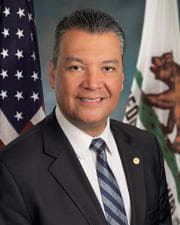
What’s My Rep Doing

Last sync: Oct 30, 2026, 2:26 AM UTC

Members

P000145

Alex Padilla

DemocraticCaliforniaCurrent Member
Sponsored
114
Cosponsored
696
Birth Year
1973

Stated Priorities & Legislative Record

Congress 119 · Automated analysis

Reviewed comparisons point both waysAll topics

511 reviewed comparisons · 184 scored · 178 measures

Comparison balance
+1.2/ 2
Supportive
180
Mixed
3
Opposing
1
Unscored
327

Health

Sponsored
1
Cosponsored
36
Linked House votes
0

What they say Official statements

Support for Medicare for All and increased access to mental health care.

Stated priority

“He is proud to support Medicare for All and is a champion for increased access to mental health care.”

Alex Padilla U.S. Senator for California · Captured 2026-10-28

Addressing systemic disparities that affect health care access.

Stated priority

“In the Senate, Alex has prioritized addressing the systemic disparities that affect health care access.”

Alex Padilla U.S. Senator for California · Captured 2026-10-28

Guaranteeing quality, affordable, and equitable health care for every American.

Stated priority

“Alex is working to guarantee quality, affordable, and equitable health care for every American.”

Alex Padilla U.S. Senator for California · Captured 2026-10-28

What they do Legislative evidence

S 1973 · Treat and Reduce Obesity Act of 2025

Cosponsor

Partly supportsCosponsorship · Reviewed automated analysis

Compared with: Support for Medicare for All and increased access to mental health care.

The cosponsored bill meaningfully expands Medicare-covered behavioral therapy for obesity, which supports broader access to Medicare-covered health services. That overlaps only partially with the stated goal of supporting Medicare for All and increased access to mental health care: it is a Medicare coverage expansion, but it is limited to obesity treatment and behavioral therapy rather than establishing Medicare for All or directly expanding mental health care services generally.

“He is proud to support Medicare for All and is a champion for increased access to mental health care.”

Official statement · Captured 2026-10-28

Supporting provisions

“Treat and Reduce Obesity Act of 2025 This bill expands Medicare coverage of intensive behavioral therapy for obesity.”
“Specifically, the bill allows coverage for therapy that is provided by (1) a physician who is not a primary care physician; or (2) other health care providers (e.g., physician assistants and nurse practitioners) and approved counseling programs, if provided upon a referral from, and in coordination with, a physician or primary care practitioner.”
“Currently, such therapy is covered only if provided by a primary care practitioner.”

Opposing provisions

“The bill also allows coverage under Medicare's prescription drug benefit of drugs used for the treatment of obesity or for weight loss management for individuals who are overweight.”
Official legislative summary

Summary-based analysis · Action predates captured statement · Narrower scope

Assessed 2026-10-28 · Review: User-authorized automated publication. Published at the user request after the bounded production backfill. Automated evidence validation passed; comparisons have not been individually audited.

Partly supportsCosponsorship · Reviewed automated analysis

Compared with: Addressing systemic disparities that affect health care access.

The cosponsored bill would expand Medicare coverage for obesity treatment, including behavioral therapy and weight-loss drugs, and it broadens the types of providers who can furnish covered therapy. That can modestly improve access to care, which is directionally consistent with a goal of addressing systemic disparities in health care access. However, the summary does not specifically target inequities or disadvantaged groups, so the support is indirect and narrower than the stated priority.

“In the Senate, Alex has prioritized addressing the systemic disparities that affect health care access.”

Official statement · Captured 2026-10-28

Supporting provisions

“Treat and Reduce Obesity Act of 2025 This bill expands Medicare coverage of intensive behavioral therapy for obesity.”
“Specifically, the bill allows coverage for therapy that is provided by (1) a physician who is not a primary care physician; or (2) other health care providers (e.g., physician assistants and nurse practitioners) and approved counseling programs, if provided upon a referral from, and in coordination with, a physician or primary care practitioner.”
“Currently, such therapy is covered only if provided by a primary care practitioner.”
“The bill also allows coverage under Medicare's prescription drug benefit of drugs used for the treatment of obesity or for weight loss management for individuals who are overweight.”
Official legislative summary

Summary-based analysis · Action predates captured statement · Narrower scope

Assessed 2026-10-28 · Review: User-authorized automated publication. Published at the user request after the bounded production backfill. Automated evidence validation passed; comparisons have not been individually audited.

Partly supportsCosponsorship · Reviewed automated analysis

Compared with: Guaranteeing quality, affordable, and equitable health care for every American.

The cosponsored bill would expand Medicare coverage for obesity treatment, including intensive behavioral therapy and certain prescription drugs. That meaningfully supports the affordability and access side of the stated goal of guaranteeing quality, affordable, and equitable health care, but it is a narrower, condition-specific Medicare expansion rather than a broad guarantee of health care for every American.

“Alex is working to guarantee quality, affordable, and equitable health care for every American.”

Official statement · Captured 2026-10-28

Supporting provisions

“Treat and Reduce Obesity Act of 2025 This bill expands Medicare coverage of intensive behavioral therapy for obesity.”
“Specifically, the bill allows coverage for therapy that is provided by (1) a physician who is not a primary care physician; or (2) other health care providers (e.g., physician assistants and nurse practitioners) and approved counseling programs, if provided upon a referral from, and in coordination with, a physician or primary care practitioner.”
“The bill also allows coverage under Medicare's prescription drug benefit of drugs used for the treatment of obesity or for weight loss management for individuals who are overweight.”
Official legislative summary

Summary-based analysis · Action predates captured statement · Narrower scope

Assessed 2026-10-28 · Review: User-authorized automated publication. Published at the user request after the bounded production backfill. Automated evidence validation passed; comparisons have not been individually audited.

“Treat and Reduce Obesity Act of 2025 This bill expands Medicare coverage of intensive behavioral therapy for obesity.”
Official summary source
S 599 · DRIVE Act of 2025

Cosponsor

No direct connectionCosponsorship · Reviewed automated analysis

Compared with: Support for Medicare for All and increased access to mental health care.

The cosponsored DRIVE Act of 2025 increases travel reimbursement for veterans to access VA vocational rehabilitation, counseling, examination, treatment, or care. That is a veterans' reimbursement measure, not a direct policy advancement for Medicare for All or broader mental health care access. While it references counseling and treatment travel, the bill does not expand health coverage or mental health services themselves, so a defensible comparison cannot be made.

“He is proud to support Medicare for All and is a champion for increased access to mental health care.”

Official statement · Captured 2026-10-28

Opposing provisions

“Driver Reimbursement Increase for Veteran Equity Act of 2025 or the DRIVE Act of 2025 This bill increases the mileage reimbursement rate available to beneficiaries for travel to or from Department of Veterans Affairs (VA) facilities in connection with vocational rehabilitation, required counseling, or for the purpose of examination, treatment, or care.”
“Specifically, the bill makes the reimbursement rate for such travel equal to or greater than the mileage reimbursement rate for government employees using private vehicles when no government vehicle is available.”
“The bill also requires the VA to ensure that an allowance based on mileage is paid not later than 90 days after the request is properly submitted to the VA.”
Official legislative summary

Summary-based analysis · Action predates captured statement · Narrower scope

Assessed 2026-10-28 · Review: User-authorized automated publication. Published at the user request after the bounded production backfill. Automated evidence validation passed; comparisons have not been individually audited.

Partly supportsCosponsorship · Reviewed automated analysis

Compared with: Addressing systemic disparities that affect health care access.

The cosponsored bill would increase travel reimbursement for beneficiaries going to VA facilities for treatment, counseling, rehabilitation, or examinations, which can improve access to care by reducing transportation cost barriers. That is a meaningful but narrow mechanism and it is limited to VA-related travel reimbursement, not a broader program to address systemic disparities in health care access generally.

“In the Senate, Alex has prioritized addressing the systemic disparities that affect health care access.”

Official statement · Captured 2026-10-28

Supporting provisions

“Driver Reimbursement Increase for Veteran Equity Act of 2025 or the DRIVE Act of 2025 This bill increases the mileage reimbursement rate available to beneficiaries for travel to or from Department of Veterans Affairs (VA) facilities in connection with vocational rehabilitation, required counseling, or for the purpose of examination, treatment, or care.”
“Specifically, the bill makes the reimbursement rate for such travel equal to or greater than the mileage reimbursement rate for government employees using private vehicles when no government vehicle is available.”
“The bill also requires the VA to ensure that an allowance based on mileage is paid not later than 90 days after the request is properly submitted to the VA.”
Official legislative summary

Summary-based analysis · Action predates captured statement · Narrower scope

Assessed 2026-10-28 · Review: User-authorized automated publication. Published at the user request after the bounded production backfill. Automated evidence validation passed; comparisons have not been individually audited.

Partly supportsCosponsorship · Reviewed automated analysis

Compared with: Guaranteeing quality, affordable, and equitable health care for every American.

The cosponsored bill would improve affordability for a specific group by increasing VA travel reimbursement for care-related trips and requiring timely payment, which supports access to health care. However, it is limited to veterans using VA facilities and does not directly guarantee quality, affordability, and equity of health care for every American, so the support is meaningful but narrow.

“Alex is working to guarantee quality, affordable, and equitable health care for every American.”

Official statement · Captured 2026-10-28

Supporting provisions

“Driver Reimbursement Increase for Veteran Equity Act of 2025 or the DRIVE Act of 2025 This bill increases the mileage reimbursement rate available to beneficiaries for travel to or from Department of Veterans Affairs (VA) facilities in connection with vocational rehabilitation, required counseling, or for the purpose of examination, treatment, or care.”
“Specifically, the bill makes the reimbursement rate for such travel equal to or greater than the mileage reimbursement rate for government employees using private vehicles when no government vehicle is available.”
“The bill also requires the VA to ensure that an allowance based on mileage is paid not later than 90 days after the request is properly submitted to the VA.”
Official legislative summary

Summary-based analysis · Action predates captured statement · Narrower scope

Assessed 2026-10-28 · Review: User-authorized automated publication. Published at the user request after the bounded production backfill. Automated evidence validation passed; comparisons have not been individually audited.

“Driver Reimbursement Increase for Veteran Equity Act of 2025 or the DRIVE Act of 2025 This bill increases the mileage reimbursement rate available to beneficiaries for travel to or from Department of Veterans Affairs (VA) facilities in connection with vocational rehabilitation, required counseling, or for the purpose of examination, treatment, or care.”
Official summary source
S 605 · CHAMPVA Children's Care Protection Act of 2025

Cosponsor

No direct connectionCosponsorship · Reviewed automated analysis

Compared with: Support for Medicare for All and increased access to mental health care.

The quoted priority is support for Medicare for All and increased access to mental health care. The cosponsored bill would extend CHAMPVA eligibility for certain children until age 26, which is a targeted veterans' health coverage change. It does not directly address Medicare for All, and the supplied summary does not mention mental health services, so a substantive comparison cannot be made.

“He is proud to support Medicare for All and is a champion for increased access to mental health care.”

Official statement · Captured 2026-10-28

Official legislative summary

Summary-based analysis · Action predates captured statement · Narrower scope

Assessed 2026-10-28 · Review: User-authorized automated publication. Published at the user request after the bounded production backfill. Automated evidence validation passed; comparisons have not been individually audited.

Insufficient evidenceCosponsorship · Reviewed automated analysis

Compared with: Addressing systemic disparities that affect health care access.

The quoted priority is a general goal about addressing systemic disparities in health care access. The cosponsored bill expands CHAMPVA eligibility for certain children up to age 26 regardless of marital status, but the supplied passage does not indicate that it is aimed at systemic disparities or that it specifically targets access gaps. Based on the provided text alone, a defensible comparison cannot be made.

“In the Senate, Alex has prioritized addressing the systemic disparities that affect health care access.”

Official statement · Captured 2026-10-28

Official legislative summary

Summary-based analysis · Action predates captured statement · Narrower scope

Assessed 2026-10-28 · Review: User-authorized automated publication. Published at the user request after the bounded production backfill. Automated evidence validation passed; comparisons have not been individually audited.

Insufficient evidenceCosponsorship · Reviewed automated analysis

Compared with: Guaranteeing quality, affordable, and equitable health care for every American.

The cited bill summary shows a narrow extension of CHAMPVA eligibility for certain children of eligible veterans until age 26. That is a specific benefit for one covered group, but the supplied material does not establish a direct connection to guaranteeing quality, affordable, and equitable health care for every American. It is too limited in scope to assess as a clear support or opposition to the broad universal health-care goal.

“Alex is working to guarantee quality, affordable, and equitable health care for every American.”

Official statement · Captured 2026-10-28

Supporting provisions

“CHAMPVA Children's Care Protection Act of 2025 This bill provides that a child shall be eligible for medical care under the Civilian Health and Medical Program of the Department of Veterans Affairs (CHAMPVA) until the child's 26th birthday, regardless of the child's marital status.”
Official legislative summary

Summary-based analysis · Action predates captured statement · Narrower scope

Assessed 2026-10-28 · Review: User-authorized automated publication. Published at the user request after the bounded production backfill. Automated evidence validation passed; comparisons have not been individually audited.

“CHAMPVA Children's Care Protection Act of 2025 This bill provides that a child shall be eligible for medical care under the Civilian Health and Medical Program of the Department of Veterans Affairs (CHAMPVA) until the child's 26th birthday, regardless of the child's marital status.”
Official summary source
S 784 · Rural Veterans Transportation to Care Act

Cosponsor

Partly supportsCosponsorship · Reviewed automated analysis

Compared with: Support for Medicare for All and increased access to mental health care.

The cosponsored bill meaningfully supports access to health care by expanding and making permanent a VA transportation grant program for veterans to reach medical care, including broader rural eligibility and assistance through county veterans service organizations and tribal organizations. That is a direct access-to-care measure, but it is narrower than Medicare for All and does not address mental health care specifically, so the support is partial rather than direct and comprehensive.

“He is proud to support Medicare for All and is a champion for increased access to mental health care.”

Official statement · Captured 2026-10-28

Supporting provisions

“Rural Veterans Transportation to Care Act This bill expands and makes permanent the Department of Veterans Affairs (VA) grant program that provides transportation options to veterans for medical purposes.”
“First, the bill expands the program to cover transportation for veterans in rural areas, in addition to veterans in highly rural areas (who are already eligible under the program).”
“The bill also authorizes the VA to award such grants to county veterans service organizations and tribal organizations to assist veterans with transportation for medical care.”
“Further, the bill increases the maximum grant amount to $60,000. However, if a grant recipient is required to purchase a vehicle to comply with the Americans with Disabilities Act of 1990, such grant amount may be increased to not more than $80,000.”
Official legislative summary

Summary-based analysis · Action predates captured statement · Narrower scope

Assessed 2026-10-28 · Review: User-authorized automated publication. Published at the user request after the bounded production backfill. Automated evidence validation passed; comparisons have not been individually audited.

Partly supportsCosponsorship · Reviewed automated analysis

Compared with: Addressing systemic disparities that affect health care access.

The cosponsored bill would expand VA medical transportation support to additional rural veterans and allow more eligible organizations to provide transportation assistance, which is meaningfully consistent with improving access to care. However, it is targeted to transportation access for veterans in rural areas rather than broadly addressing systemic disparities in health care access across populations, so the support is partial and narrower than the stated priority.

“In the Senate, Alex has prioritized addressing the systemic disparities that affect health care access.”

Official statement · Captured 2026-10-28

Supporting provisions

“Rural Veterans Transportation to Care Act This bill expands and makes permanent the Department of Veterans Affairs (VA) grant program that provides transportation options to veterans for medical purposes.”
“First, the bill expands the program to cover transportation for veterans in rural areas, in addition to veterans in highly rural areas (who are already eligible under the program).”
“The bill also authorizes the VA to award such grants to county veterans service organizations and tribal organizations to assist veterans with transportation for medical care.”
Official legislative summary

Summary-based analysis · Action predates captured statement · Narrower scope

Assessed 2026-10-28 · Review: User-authorized automated publication. Published at the user request after the bounded production backfill. Automated evidence validation passed; comparisons have not been individually audited.

Partly supportsCosponsorship · Reviewed automated analysis

Compared with: Guaranteeing quality, affordable, and equitable health care for every American.

The cosponsored bill would expand and make permanent a VA transportation grant program for medical travel, extend eligibility from highly rural to rural veterans, and increase grant amounts. That meaningfully supports access to health care, but it is targeted to veterans and transportation assistance rather than guaranteeing affordable, equitable health care for every American, so the match is partial and narrower in scope.

“Alex is working to guarantee quality, affordable, and equitable health care for every American.”

Official statement · Captured 2026-10-28

Supporting provisions

“Rural Veterans Transportation to Care Act This bill expands and makes permanent the Department of Veterans Affairs (VA) grant program that provides transportation options to veterans for medical purposes.”
“First, the bill expands the program to cover transportation for veterans in rural areas, in addition to veterans in highly rural areas (who are already eligible under the program).”
“The bill also authorizes the VA to award such grants to county veterans service organizations and tribal organizations to assist veterans with transportation for medical care.”
“Further, the bill increases the maximum grant amount to $60,000. However, if a grant recipient is required to purchase a vehicle to comply with the Americans with Disabilities Act of 1990, such grant amount may be increased to not more than $80,000.”
Official legislative summary

Summary-based analysis · Action predates captured statement · Narrower scope · Conditions or exceptions

Assessed 2026-10-28 · Review: User-authorized automated publication. Published at the user request after the bounded production backfill. Automated evidence validation passed; comparisons have not been individually audited.

“Rural Veterans Transportation to Care Act This bill expands and makes permanent the Department of Veterans Affairs (VA) grant program that provides transportation options to veterans for medical purposes.”
Official summary source
S 1816 · Improving Seniors’ Timely Access to Care Act of 2025

Cosponsor

Partly supportsCosponsorship · Reviewed automated analysis

Compared with: Support for Medicare for All and increased access to mental health care.

The cosponsored bill would make Medicare Advantage prior authorization more timely and transparent, which can modestly improve access to care for Medicare beneficiaries. However, it does not establish Medicare for All, nor does it directly create broader mental health care access; it is a narrower Medicare Advantage administrative reform, so it only partially advances the stated priority.

“He is proud to support Medicare for All and is a champion for increased access to mental health care.”

Official statement · Captured 2026-10-28

Supporting provisions

“Improving Seniors' Timely Access to Care Act of 2025 This bill establishes several requirements and standards relating to prior authorization processes under Medicare Advantage (MA) plans.”
“Specifically, MA plans must (1) establish an electronic prior authorization program that meets specified standards; (2) annually submit to the CMS for publication specified prior authorization information, including the percentage of requests approved and the average response time; and (3) meet other standards, as set by the Centers for Medicare & Medicaid Services (CMS), relating to the quality and timeliness of prior authorization determinations.”
“The CMS and the Office of the National Coordinator for Health Information Technology must publish on the CMS' website a report that analyzes the information received from MA plans, the feasibility of implementing real-time decision making with respect to prior authorization requests, and the impact of decisions that are made using artificial intelligence on patient access.”
Official legislative summary

Summary-based analysis · Action predates captured statement · Narrower scope

Assessed 2026-10-28 · Review: User-authorized automated publication. Published at the user request after the bounded production backfill. Automated evidence validation passed; comparisons have not been individually audited.

No direct connectionCosponsorship · Reviewed automated analysis

Compared with: Addressing systemic disparities that affect health care access.

The cosponsored bill focuses on Medicare Advantage prior authorization standards, reporting, and timeliness for seniors. That may relate to access to care in a general sense, but the supplied text does not directly address systemic disparities in health care access or any disparity-reduction mechanism. Because the stated priority is specifically about systemic disparities, the connection here is too indirect to score confidently.

“In the Senate, Alex has prioritized addressing the systemic disparities that affect health care access.”

Official statement · Captured 2026-10-28

Supporting provisions

“Improving Seniors' Timely Access to Care Act of 2025 This bill establishes several requirements and standards relating to prior authorization processes under Medicare Advantage (MA) plans.”
“Specifically, MA plans must (1) establish an electronic prior authorization program that meets specified standards; (2) annually submit to the CMS for publication specified prior authorization information, including the percentage of requests approved and the average response time; and (3) meet other standards, as set by the Centers for Medicare & Medicaid Services (CMS), relating to the quality and timeliness of prior authorization determinations.”
“The CMS and the Office of the National Coordinator for Health Information Technology must publish on the CMS' website a report that analyzes the information received from MA plans, the feasibility of implementing real-time decision making with respect to prior authorization requests, and the impact of decisions that are made using artificial intelligence on patient access.”
Official legislative summary

Summary-based analysis · Action predates captured statement · Narrower scope

Assessed 2026-10-28 · Review: User-authorized automated publication. Published at the user request after the bounded production backfill. Automated evidence validation passed; comparisons have not been individually audited.

Partly supportsCosponsorship · Reviewed automated analysis

Compared with: Guaranteeing quality, affordable, and equitable health care for every American.

The cosponsored bill would improve the timeliness and transparency of prior authorization under Medicare Advantage, which can support access to care and reduce delays for seniors. That meaningfully advances the affordability/access side of the stated goal, but it is narrower than guaranteeing quality, affordable, and equitable health care for every American, since it only addresses a specific administrative process in Medicare Advantage and does not broadly establish universal or equitable coverage.

“Alex is working to guarantee quality, affordable, and equitable health care for every American.”

Official statement · Captured 2026-10-28

Supporting provisions

“Improving Seniors' Timely Access to Care Act of 2025 This bill establishes several requirements and standards relating to prior authorization processes under Medicare Advantage (MA) plans.”
“Specifically, MA plans must (1) establish an electronic prior authorization program that meets specified standards; (2) annually submit to the CMS for publication specified prior authorization information, including the percentage of requests approved and the average response time; and (3) meet other standards, as set by the Centers for Medicare & Medicaid Services (CMS), relating to the quality and timeliness of prior authorization determinations.”
“The CMS and the Office of the National Coordinator for Health Information Technology must publish on the CMS' website a report that analyzes the information received from MA plans, the feasibility of implementing real-time decision making with respect to prior authorization requests, and the impact of decisions that are made using artificial intelligence on patient access.”
Official legislative summary

Summary-based analysis · Action predates captured statement · Narrower scope

Assessed 2026-10-28 · Review: User-authorized automated publication. Published at the user request after the bounded production backfill. Automated evidence validation passed; comparisons have not been individually audited.

“Improving Seniors' Timely Access to Care Act of 2025 This bill establishes several requirements and standards relating to prior authorization processes under Medicare Advantage (MA) plans.”
Official summary source

Prepared Legislative Analysis

119th Congress · computed from the latest committed analytics snapshot

Updated Oct 29, 2026, 11:00 AM

Sponsored
114
Cosponsored
696
Progressed
196
Floor or later
124
Final success
87
Bill actions
2,891

Top Policy Areas

Health

104

Government Operations and Politics

69

Crime and Law Enforcement

64

Education

57

Public Lands and Natural Resources

45

Agriculture and Food

40

Armed Forces and National Security

40

Labor and Employment

37

Monthly Bill Activity

Jan 2025
105
Feb 2025
178
Mar 2025
130
Apr 2025
155
May 2025
146
Jun 2025
115
Jul 2025
142
Aug 2025
12
Sep 2025
186
Oct 2025
88
Nov 2025
62
Dec 2025
143
Jan 2026
96
Feb 2026
103
Mar 2026
152
Apr 2026
147
May 2026
211
Jun 2026
204
Jul 2026
141
Aug 2026
133
Sep 2026
230
Oct 2026
12

Terms

119th

Senate

Senator · California

2021
118th

Senate

Senator · California

2021 - 2025
117th

Senate

Senator · California

2021 - 2023

Committee Assignments

Committee on Energy and Natural Resources

Member · Senate.gov

0 bills · 1,625 reports · 610 nominations · 7,981 communications

Committee on Environment and Public Works

Member · Senate.gov

0 bills · 437 reports · 620 nominations · 10,126 communications

Committee on Rules and Administration

Member · Senate.gov

0 bills · 27 reports · 108 nominations · 782 communications

Committee on the Budget

Member · Senate.gov

0 bills · 0 reports · 0 nominations · 0 communications

Committee on the Judiciary

Member · Senate.gov

0 bills · 180 reports · 5,536 nominations · 2,179 communications

Joint Committee of Congress on the Library

Member · Senate.gov

0 bills · 0 reports · 0 nominations · 0 communications

Joint Committee on Printing

Member · Senate.gov

0 bills · 0 reports · 0 nominations · 0 communications